The Laundry System That Actually Closes
A complete routine for moving laundry from basket to wardrobe without creating piles of unfinished work.
At a Glance
- Begin with realistic categories
- Wash only what can be completed
- Create a regular rhythm
- Prepare clothing before washing
- Dry with the next step in mind
- Create a folding point
- Return immediately
- The repair basket
- The wardrobe limit
Laundry is not complete when the washing machine stops. It is complete when clothing and household textiles are clean, dry and returned to their place.
Many laundry systems fail in the middle. Washing is started easily. Clean items remain in baskets. Folding becomes a separate future task. Clothing waits on a chair.
A useful laundry system includes the entire cycle: collect, sort, wash, dry, fold or hang, and return.
Begin With Realistic Categories
Possible categories include light clothing, dark clothing, delicates, towels, bed linen and cleaning cloths.
Do not create more sorting categories than the household can maintain. Use separate baskets only when they make the process easier - otherwise, sort immediately before washing.
Wash Only What Can Be Completed
Avoid starting several loads when there is not enough time or space to dry and return them. Ask: can this load be dried today? Can it be folded or hung? Can it be returned before another load is started?
One fully completed load is often more useful than several clean piles.
Create a Regular Rhythm
Possible rhythm: one clothing load during the week, towels on a fixed day, bed linen on a fixed or rotating day, delicates when enough items have gathered, and household cloths separately where appropriate.
The exact schedule depends on household size and equipment. Use a rhythm that prevents both shortage and excessive washing.
Prepare Clothing Before Washing
Check pockets, fastenings, stains, care labels, delicate details, and items requiring a laundry bag.
Treat stains before they become permanent. Do not rely on the washing cycle to solve every type of mark.
Dry With the Next Step in Mind
Hang items in a way that reduces later work - place shirts and dresses on hangers where suitable, smooth garments before air-drying, keep matching items together, and remove items from the dryer promptly where relevant.
The drying stage can make folding and ironing easier.
Create a Folding Point
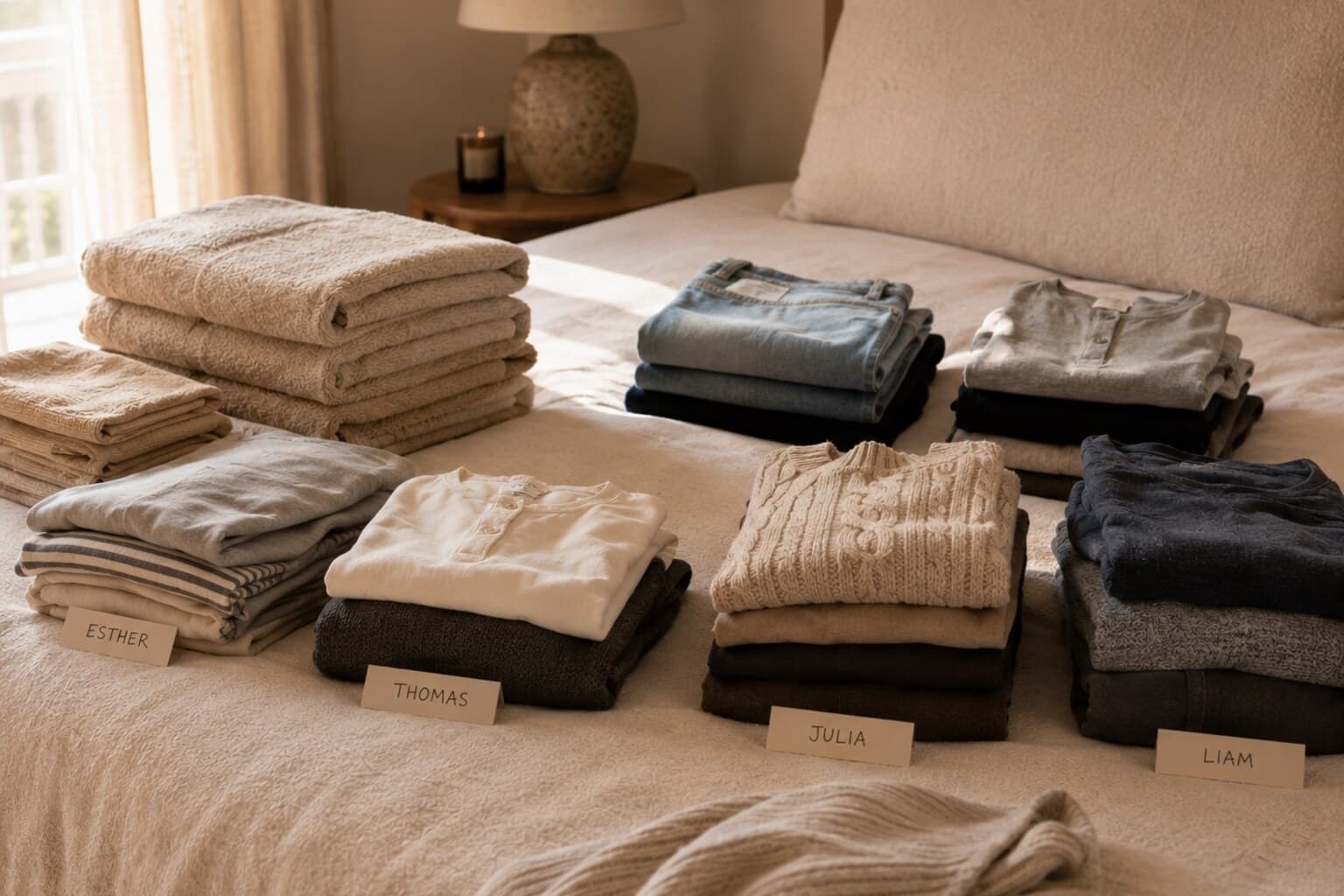
Choose one clean, clear surface - a bed, dining table or laundry counter. Do not fold into a mixed pile.
Create categories such as person, room, drawer or wardrobe. This makes returning items faster.
Return Immediately
Whenever possible, return laundry in the same session. If this is not possible, use separate baskets for each destination.
Avoid placing clean laundry in an undifferentiated household pile. The basket should make the final step easier, not hide it.
The Repair Basket
Create one small place for items needing a button, a hem, a stain treatment, alteration, or professional cleaning.
Review the basket regularly. Do not allow damaged items to circulate repeatedly through the laundry.
The Wardrobe Limit
When clothing no longer fits comfortably into its storage, the issue may not be the folding method. Review unused items, poorly fitting clothing, duplicates, out-of-season pieces, and items awaiting repair.
Storage should support the quantity owned.
The Checklist
- Load sorted
- Care labels checked
- Stains treated
- Washing completed
- Items dried correctly
- Clothing folded or hung
- Laundry returned
- Repair items separated
- Basket empty
Pair It With
A successful laundry system is not measured by how often the machine runs.
It is measured by whether the clothes return to everyday life without becoming another unfinished task.
Enjoyed this?
The Seasonal Letter brings more stories, recipes and rituals like this one - a few times a season, never more.

Written by Esther
Esther is a photographer and storyteller, and the founder of Essy's Essentials - a seasonal home for stories, rituals, recipes and everyday luxuries.
More about Esther →