Home Styling
Art, Mirrors and the Walls Between
A practical guide to creating walls that feel balanced, personal and connected to the room.
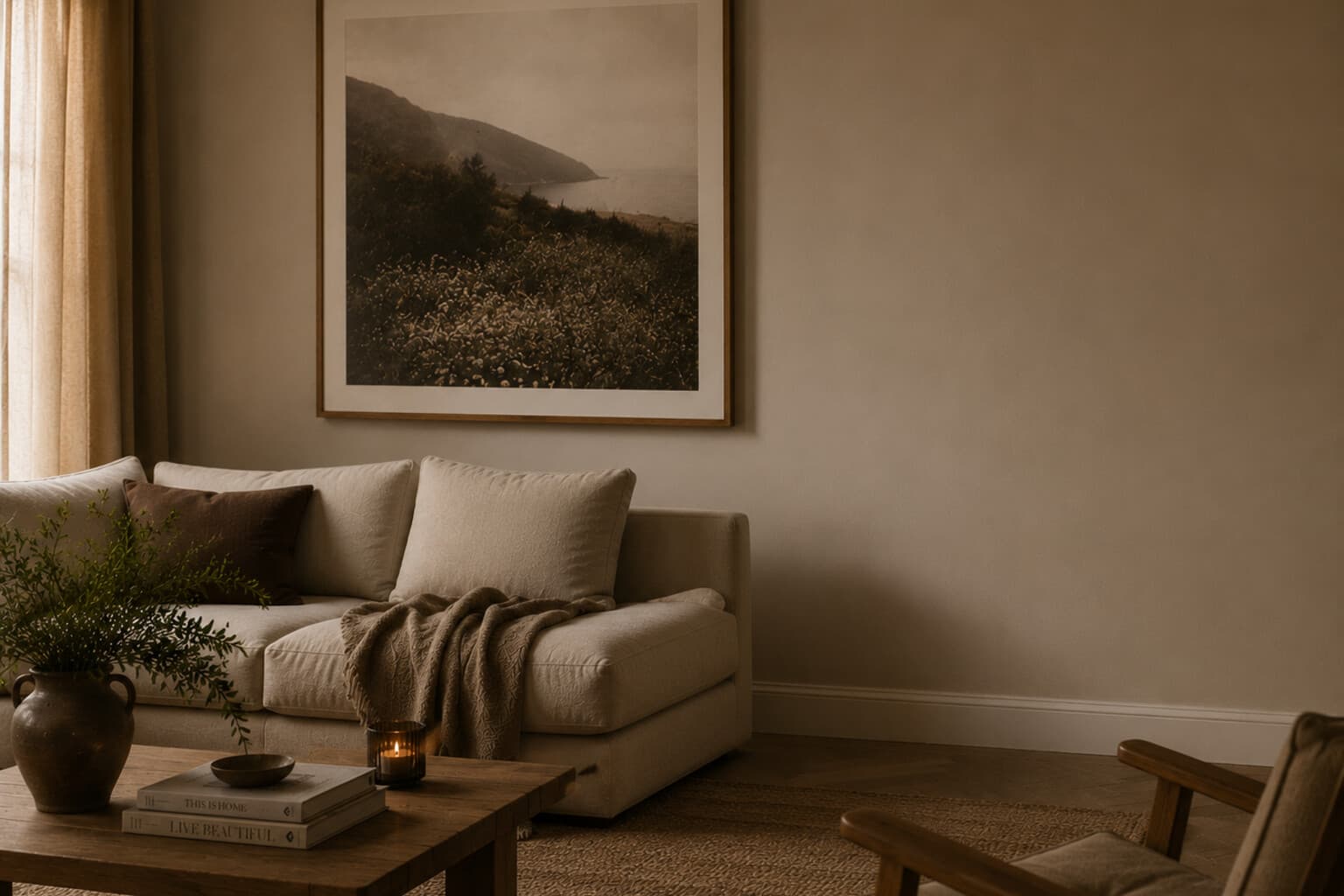
Walls shape the atmosphere of a room even when they are left empty.
Artwork, mirrors and wall objects can add scale, colour and personality. But not every wall needs to be filled.
The aim is to create a deliberate relationship between the wall, the furniture and the surrounding space.
Begin With the Furniture
Artwork should normally relate to what sits beneath or beside it - the width of the sofa, the size of the console, the height of the headboard, the position of a dining table, or the shape of an architectural feature.
A small artwork floating above a large sofa may feel disconnected. A larger piece or grouped arrangement creates a stronger relationship.
Choose the Right Scale
For a large wall, consider one substantial artwork, a diptych, a triptych, a coherent gallery wall, a large textile or an oversized mirror. For a smaller area, consider one medium print, a framed photograph, a small mirror or a sculptural wall object.
Do not use many small items simply because the wall is large. Scale creates calm.
Hang at a Comfortable Viewing Height
Artwork is often placed too high. In many rooms, the visual centre of the piece should sit near eye level.
When artwork hangs above furniture, allow it to connect visually with the furniture below rather than floating close to the ceiling. Adjust for ceiling height, furniture height, whether the room is mainly viewed while seated, and the size of the artwork.
Create a Gallery Wall With One Logic
A gallery wall may be connected by frame colour, subject, palette, photography style, paper tone or consistent spacing.
It does not need identical frames, but there should be enough repetition to make the group feel intentional. Plan the arrangement on the floor or with paper templates before making holes in the wall.
Mixing Art and Photography
A collected home may include photography, paintings, prints, illustrations, textiles, personal objects and vintage pieces.
The mix works when the palette, frame choices or subject matter create a relationship. Avoid selecting art only because it matches the sofa. The work should have enough personal value to remain meaningful when the room changes.
Use Mirrors Strategically
Mirrors can reflect natural light, make a narrow area feel more open, create a focal point, add shape and material, or reflect an attractive view.
Before hanging a mirror, check what it will reflect - a mirror facing clutter, harsh lighting or an awkward doorway may amplify the problem. Choose mirrors with frames that support the room’s material palette, such as dark wood, antique brass, bronze, blackened metal or a plaster or stone effect.
Allow Some Walls to Remain Quiet
A blank wall may balance a detailed gallery wall, create calm beside open shelving, emphasise architectural shape, allow a statement piece to dominate, or support visual rest.
Do not fill a wall simply because it is empty. Ask whether it needs an object or whether the room benefits from the pause.
Frame Thoughtfully
Frames may match, coordinate, or contrast intentionally. A restrained frame palette might include dark wood, antique brass, warm black, soft cream and natural oak.
Use mounts to give smaller artwork more presence. A generous mount can make an affordable print feel more considered.
Wall Styling Checklist
Before calling a wall finished, confirm: artwork is scaled to the wall, the relationship with furniture has been considered, viewing height has been checked, the frame palette is consistent, mirror reflection has been reviewed, gallery spacing has been planned, some visual rest is retained, and personal meaning is included.
Pair It With
Walls do not need to tell every story at once.
A few well-placed pieces can create more atmosphere than a room filled with decoration. Choose work that deserves space. Then give it enough room to be seen.

Written by Esther
Esther is a photographer and storyteller, and the founder of Essy's Essentials - a seasonal home for stories, rituals, recipes and everyday luxuries.
More about Esther →