Travel
The Grown-Up Guide to Bonaire
Where to stay, snorkel, eat and explore - without the family-resort feeling.
“This is an island for people who like freedom.”
Bonaire is usually introduced as a diver’s island. Which is true, but it also rather undersells the place for those of us who do not own an oxygen tank or feel any particular need to identify twelve varieties of coral before lunch.
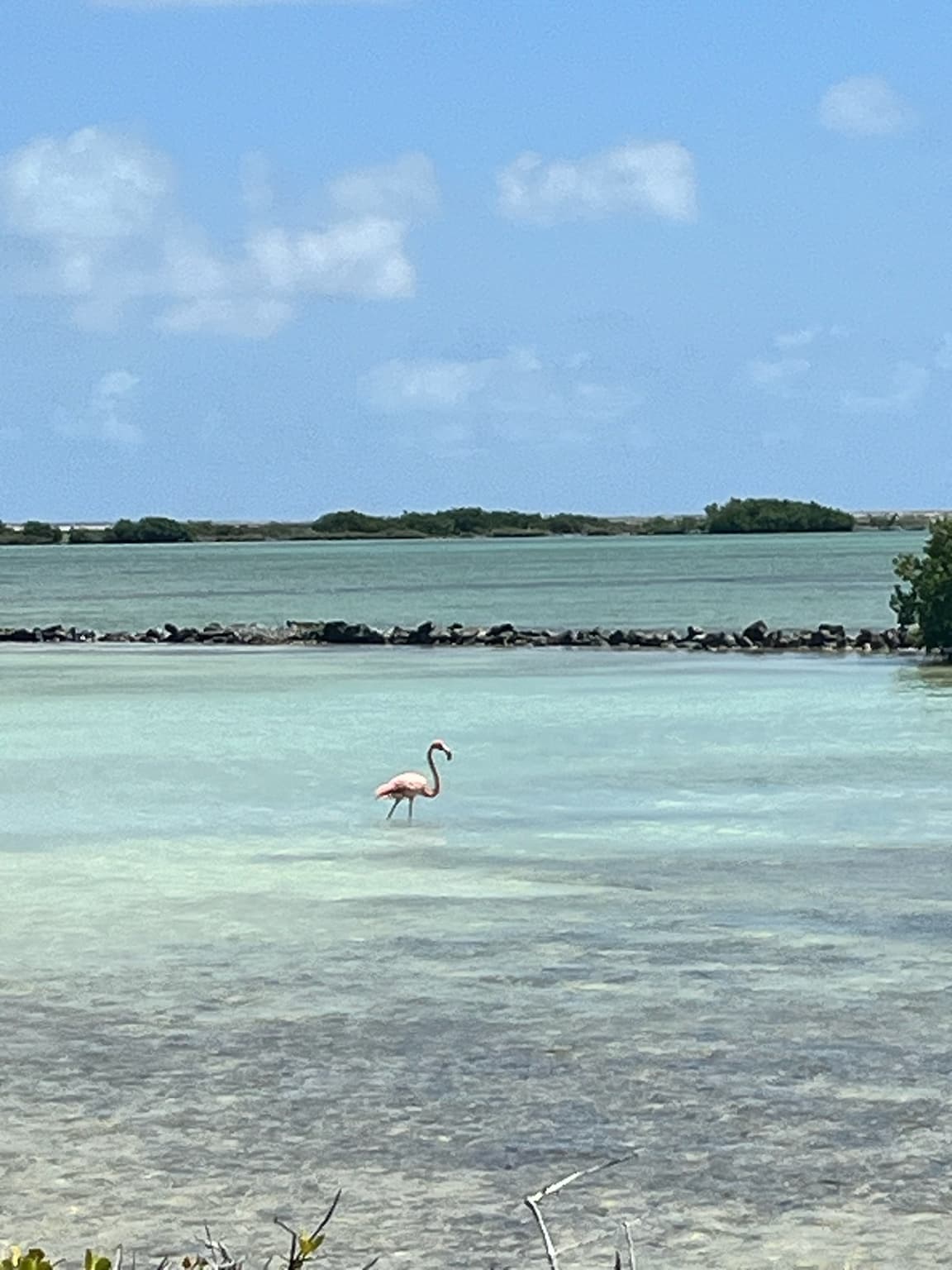
This is an island for people who like freedom. Hire a car, put your swimwear in the back, choose one of the yellow-marked coastal stops and see where the day takes you. You will find flamingos standing in pale-blue water, salt pans shimmering in the heat, tiny beaches reached by stone steps and some of the clearest snorkelling water we have ever seen.
We spent nine days on Bonaire in September 2024, staying in a marina-view apartment at Ocean Breeze Boutique Hotel & Marina. We booked and paid for the trip ourselves through TUI Netherlands, explored almost the entire island by car and tested rather a lot of places for swimming, snorkelling, eating and drinking.
This guide brings together the places genuinely worth your time, the practical details we wish every travel article included, and an honest review of the quiet, small-scale hotel we would book again without hesitation.
There will also be good coffee, overenthusiastic donkeys, one deeply disappointing pasta and a warning about currents that I learned in a slightly more dramatic way than necessary.
The Escape at a Glance
- Best for
- Couples and independent travellers who want clear water, quiet mornings and the freedom to explore without a family-resort programme.
- Where we stayed
- Ocean Breeze Boutique Hotel & Marina in Kralendijk, in a marina-view apartment with a balcony.
- The hotel atmosphere
- Not officially adults-only, but quiet, small-scale and distinctly grown-up. We saw no children during our September stay and there was no animation programme.
- How long we stayed
- Nine days.
- How we travelled
- With TUI fly from Amsterdam, including a stop in Curaçao.
- Do you need a car?
- Yes. We arranged ours through Ocean Breeze and would strongly recommend having one.
- Breakfast verdict
- Book it. The breakfast was lovely, the coffee was genuinely good and starting slowly became one of the best parts of our day.
- Best for snorkelling
- Klein Bonaire was our standout experience.
- Best beach-club atmosphere
- Sorobon Beach, for its relaxed, Ibiza-like energy.
- Most unexpected highlight
- Donkey Sanctuary Bonaire - although your hire car may leave considerably less clean than it arrived.
- The place that tested my nerves
- The steep, unpaved roads through Washington Slagbaai National Park.
- One important swimming lesson
- Clear, calm-looking water can still have a strong current. Always check conditions and keep watching your position against the shore.
- Would we return?
- To Bonaire and Ocean Breeze: absolutely.
Bonaire
The Pin Ratio
IN ONE SENTENCE
Nine independently booked days at a quiet marina-view hotel, exploring Bonaire’s beaches, salt flats and national park by hire car - the good, the honestly disappointing, and the current that nearly got the better of me.
Where to Stay: Ocean Breeze Boutique Hotel & Marina
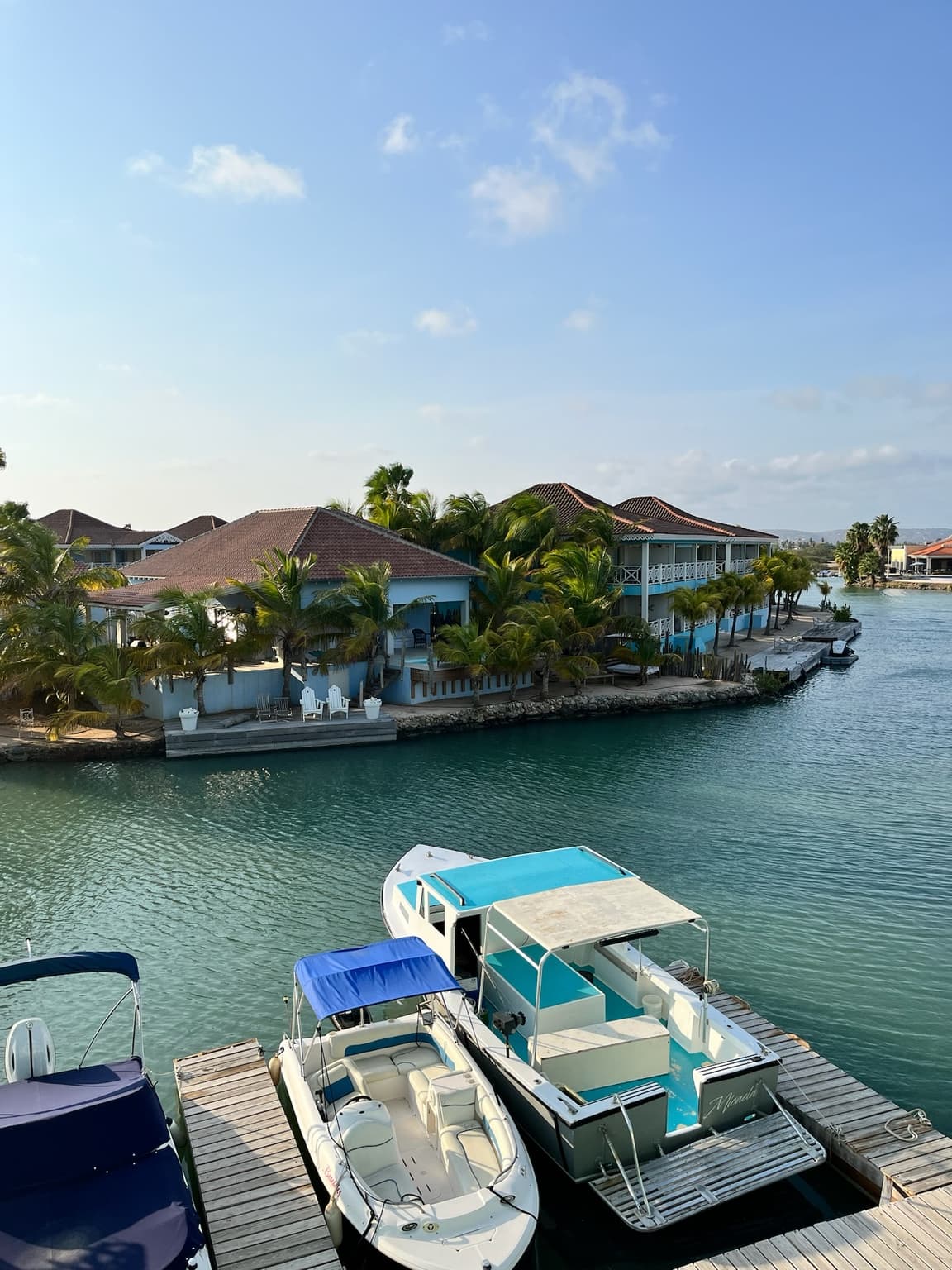
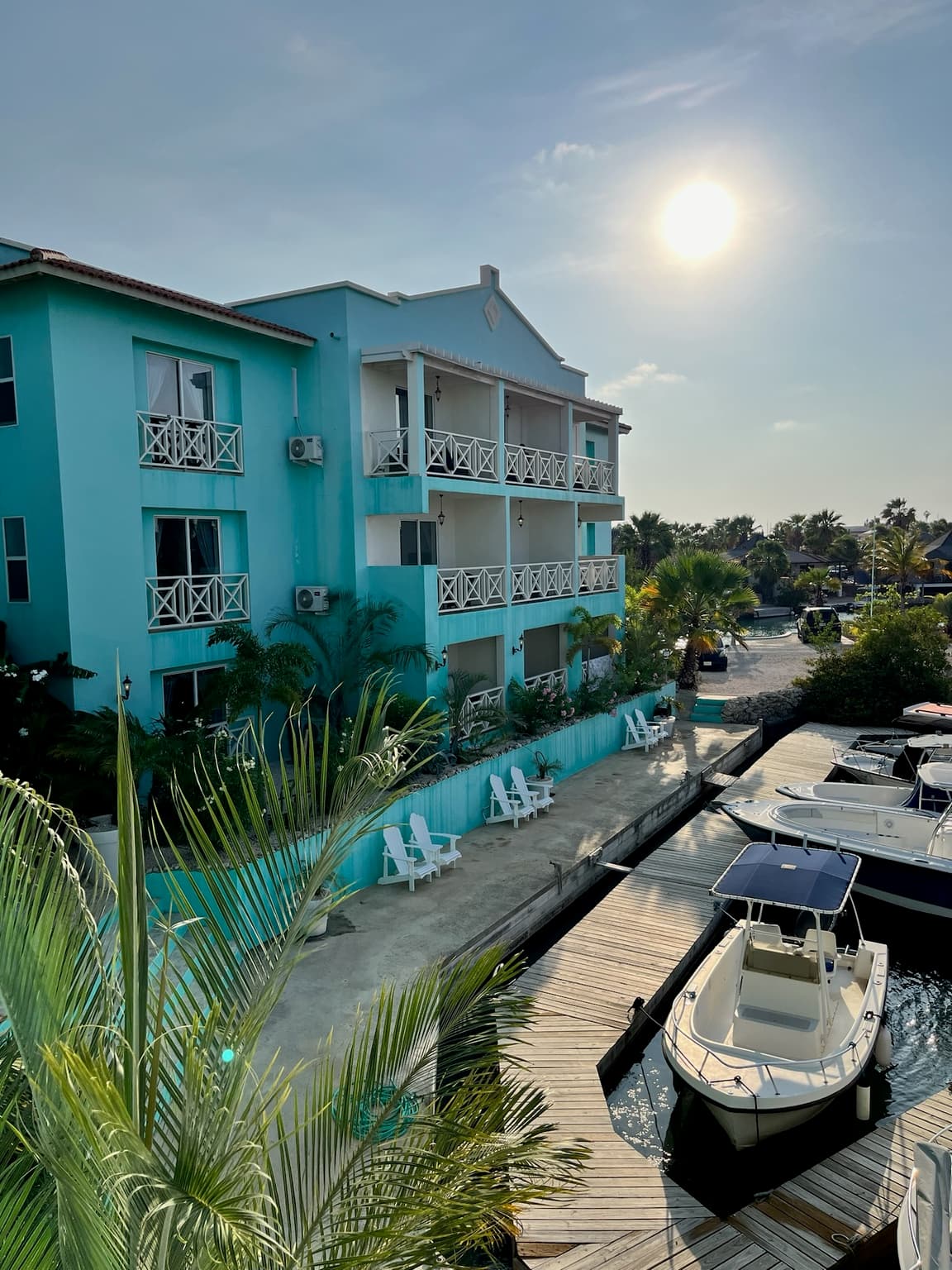
Ocean Breeze is the hotel I would recommend to couples who want a quiet, small-scale base from which to explore Bonaire - without the crowds, entertainment schedule or enclosed feeling of a large all-inclusive resort. It is not officially adults-only. Yet during our nine-day stay in September, we did not see a single child. There was no animation team, no thumping programme of poolside activities and no sense that we had accidentally booked ourselves into somebody else’s family holiday. It simply felt grown-up.
The hotel sits beside a marina, close to Kralendijk and Flamingo International Airport. The airport location sounds considerably less romantic on paper than the hotel feels in reality - remarkably, we heard no aircraft noise at all during our stay. What we noticed instead were the water, boats, palms and the quiet rhythm of guests leaving in the morning and returning sandy and sun-warmed later in the day. This is not a resort designed to keep you inside its gates; it is a comfortable, attractive place from which to experience the rest of the island.
We stayed in a marina-view apartment with a balcony, without a kitchen - which suited the way we travelled perfectly: breakfast at the hotel, then lunch or dinner wherever we happened to be on the island. The apartment was spotless, comfortable and well maintained; it was cleaned every day and we received fresh towels daily. Room categories and cleaning schedules may have changed since our visit, so check the exact room description and service included when booking.
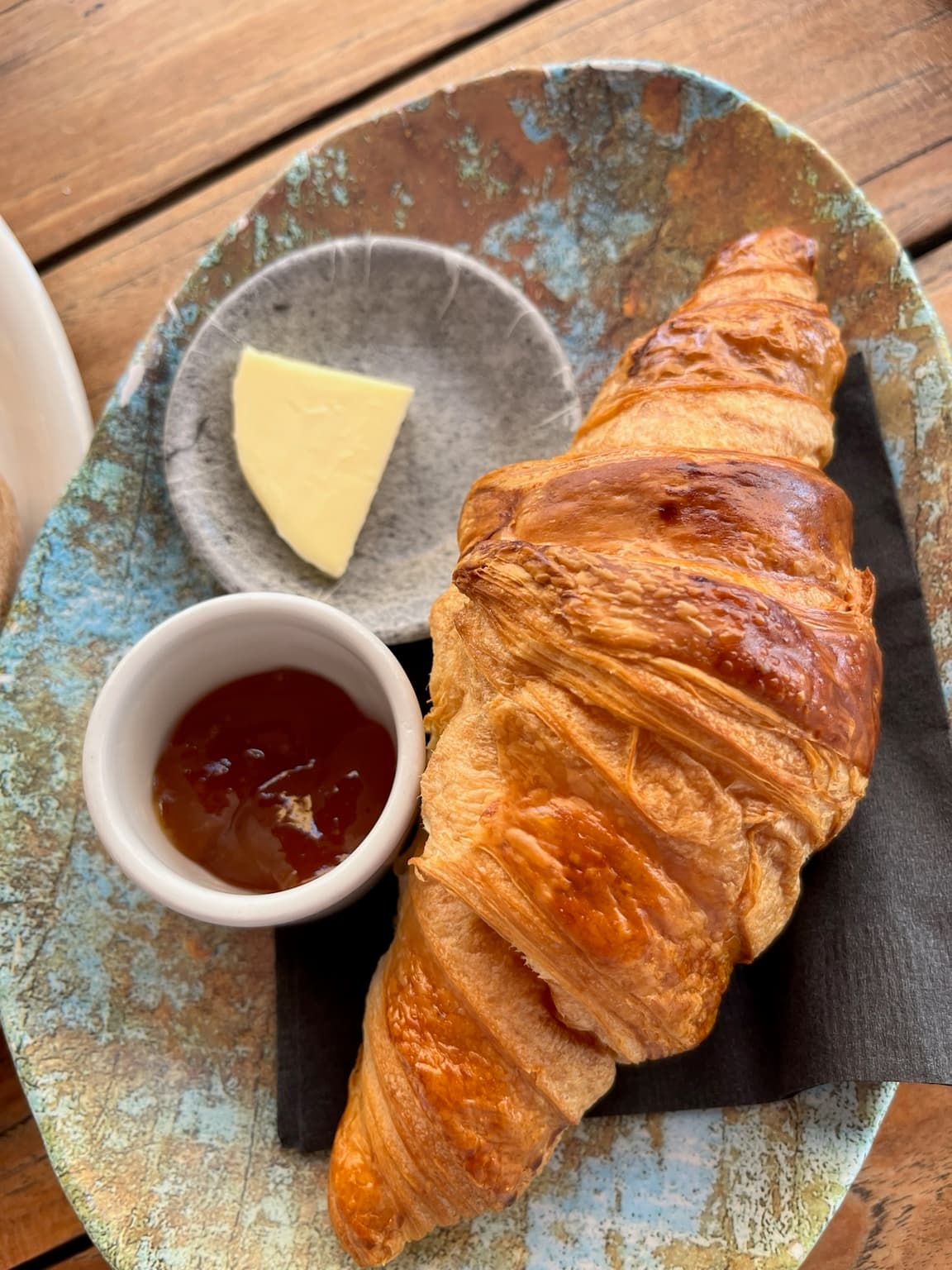
Bas and I almost always add breakfast to our hotel booking, not because we can’t find a bakery, but because our holiday does not properly begin until we have had coffee and breakfast at an unhurried pace. Ocean Breeze passed what we call the Long-Breakfast Test beautifully: the breakfast was delicious, the coffee was genuinely good, and we could start the morning slowly before deciding what the rest of the day might become. If coffee comes before ambition on your holidays too, I would book it.
One day, the electricity went out across the entire island - not an Ocean Breeze problem, but it affected the hotel too. The air-conditioning stopped and a Caribbean apartment without it becomes warm with impressive efficiency. What mattered was the response: the team directed everyone towards the pool, kept drinks available and prepared food on the barbecue. There was no drama and no sense that guests had been left to work things out for themselves. An island-wide power cut could easily have become the worst day of the stay. Instead, it became one of the clearest examples of how well Ocean Breeze was run.
Book Ocean Breeze if you want a quiet, small-scale hotel rather than a vast resort, a grown-up atmosphere without needing an official adults-only label, a marina setting close to Kralendijk, a comfortable base for exploring by car, and freedom from organised entertainment. Consider somewhere else if you want a large sandy beach directly outside your room, an extensive all-inclusive programme, multiple restaurants and resort facilities in one place, or a holiday spent mainly inside the resort. For a more luxurious, full-resort experience, Chogogo Dive & Beach Resort is worth considering - we spent a day there using a beach pass, made enthusiastic use of the lazy river and ate very well at Biña. I would certainly consider staying there on a future trip. Ocean Breeze, however, remains the place I would choose for quiet, intimacy and the freedom to explore.
I would book Ocean Breeze again without hesitation. It was clean, quiet, friendly and exceptionally well run. More importantly, it gave us exactly what we wanted from Bonaire: good coffee in the morning, a beautiful place to return to in the evening and absolutely no pressure to spend the entire holiday inside the resort.
The Beach & Snorkelling Edit
Bonaire is not an island of endless soft-sand beaches lined with identical sunbeds. Many of its best swimming and snorkelling spots are small, rocky or reached by steps from the road - which is part of the charm. It also means that water shoes, drinking water, serious sun protection and a little judgement are usually more useful than an elaborate beach bag.
The yellow stones beside Bonaire’s coastal roads mark many of the island’s dive and snorkelling sites. Before entering the water, you need a valid STINAPA Nature Fee - as checked in August 2026, USD 40, covering water activities within Bonaire National Marine Park as well as entry to Washington Slagbaai National Park.
We are snorkellers rather than serious divers, and the stop that genuinely stayed with us was Klein Bonaire: a small, uninhabited island just off the coast of Kralendijk, reached by boat, with some of the clearest water and richest marine life we have ever snorkelled in. If snorkelling is one of the reasons you are visiting, make room for it.
Not every stop was flawless. At the Beach at Grand Windsock, the water looked entirely manageable - right up until I drifted a considerable distance from the entry point without noticing. Bas had; I had not, and he was understandably furious while I was mainly surprised to discover my leisurely swim had quietly become an unscheduled journey along the coastline. Clear, inviting water can still carry a powerful current: ask staff about conditions before entering, and keep checking your position against a fixed point on shore while you swim.
Which Bonaire Beach Should You Choose?
Six stops worth knowing before you pack the car.
01
Te Amo Beach
Easy access, clear water
A public white-sand beach near the airport with easy water entry, clear water and a good, low-effort snorkel. Limited facilities - bring what you need.
02
Bachelor’s Beach
A short coastal stop
A tiny sandy beach in Belnem reached by a short limestone staircase - a quick swim or snorkel while driving the southern coast. Water shoes help on the rocky final step.
03
Sorobon Beach & Lac Bay
Beach-club energy
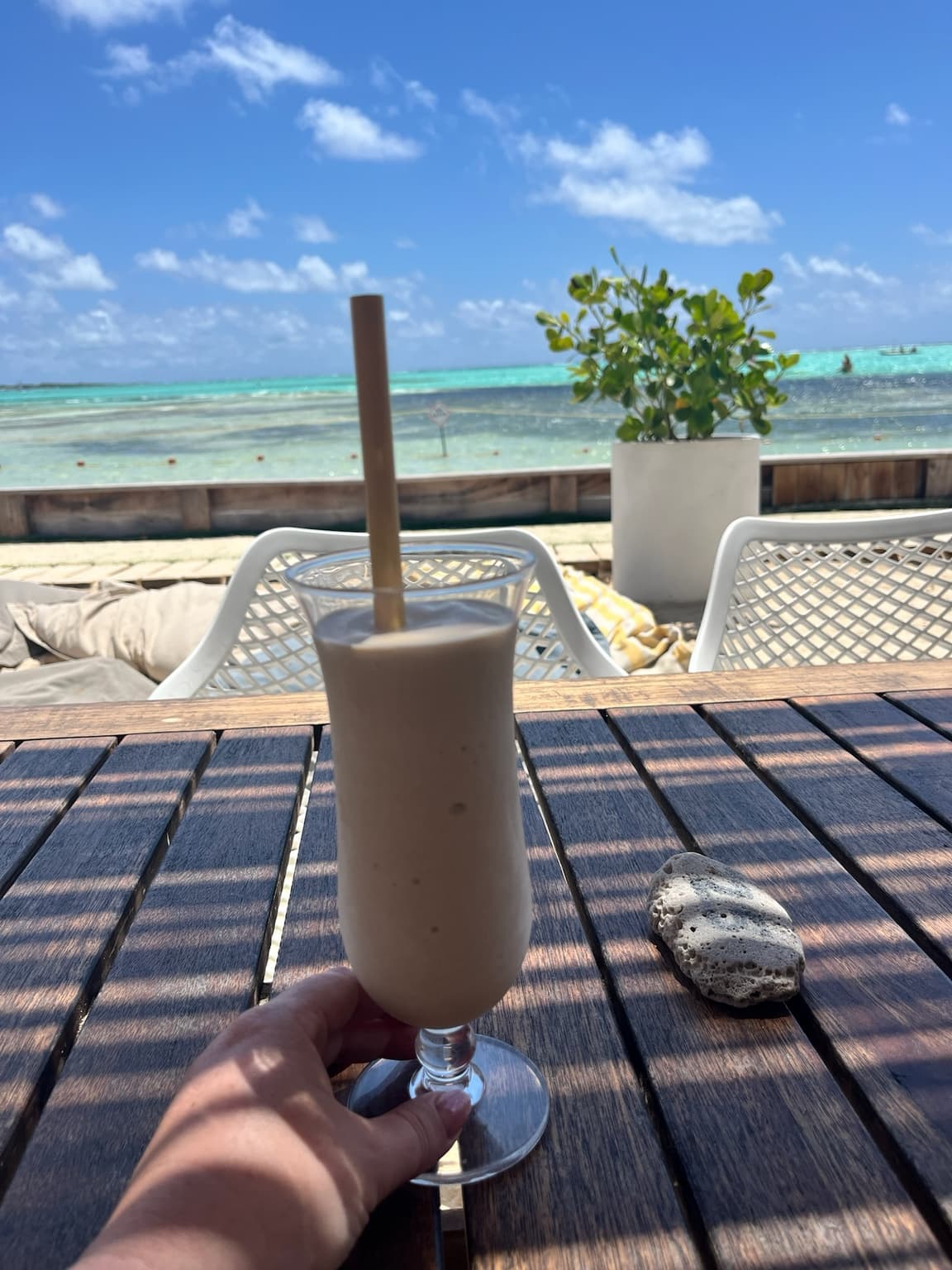
Shallow turquoise water, steady trade winds and windsurfers give Sorobon something close to Ibiza vibes. Better for atmosphere and a long lunch than serious snorkelling.
04
1000 Steps
The view, conditions allowing
A limestone staircase (closer to 67 steps than 1000) down to a cove popular for snorkelling, diving and turtle sightings - when the sea cooperates. Declining rough water is a perfectly respectable travel decision.
05
Klein Bonaire
Our best snorkelling
A small, uninhabited island reached by boat, with the clearest water and richest marine life of our whole trip. Bring sun protection - shade and facilities are limited.
06
The Beach at Grand Windsock
Check the current first
A beach-club setting with direct sea access that looks entirely inviting. Ask about the current before entering, and keep checking your position against the shore.
The Island Drives Worth Taking
Bonaire is wonderfully easy to explore independently. The main roads are generally straightforward, distances are manageable and the scenery changes quickly enough that even a short drive can become half a day of stops. There are two routes worth prioritising: the southern loop for salt, flamingos and history, and Washington Slagbaai National Park for the island at its wildest. Do not try to squeeze both into one day - the south deserves an unhurried half day, and Washington Slagbaai deserves a day of its own.
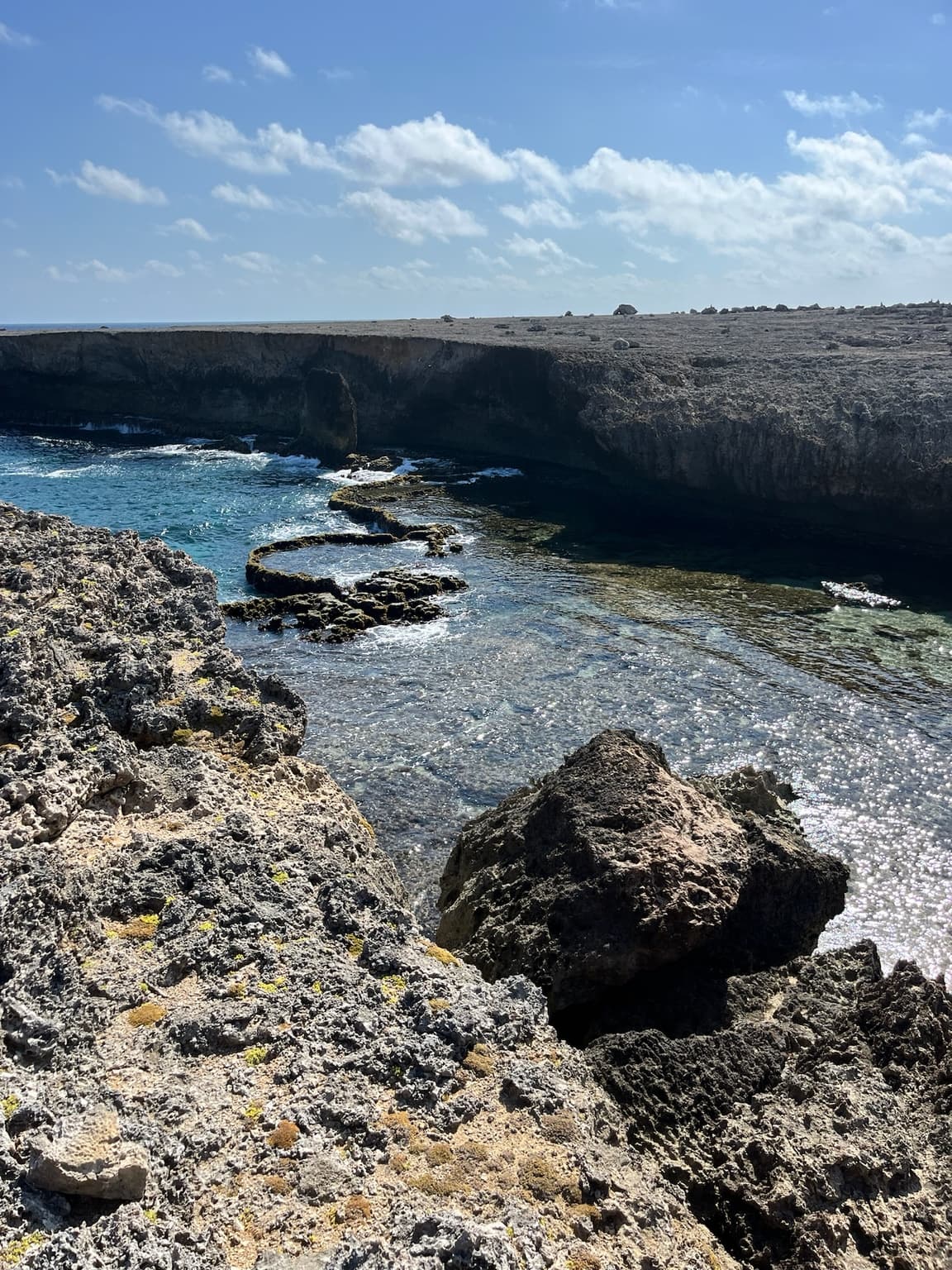
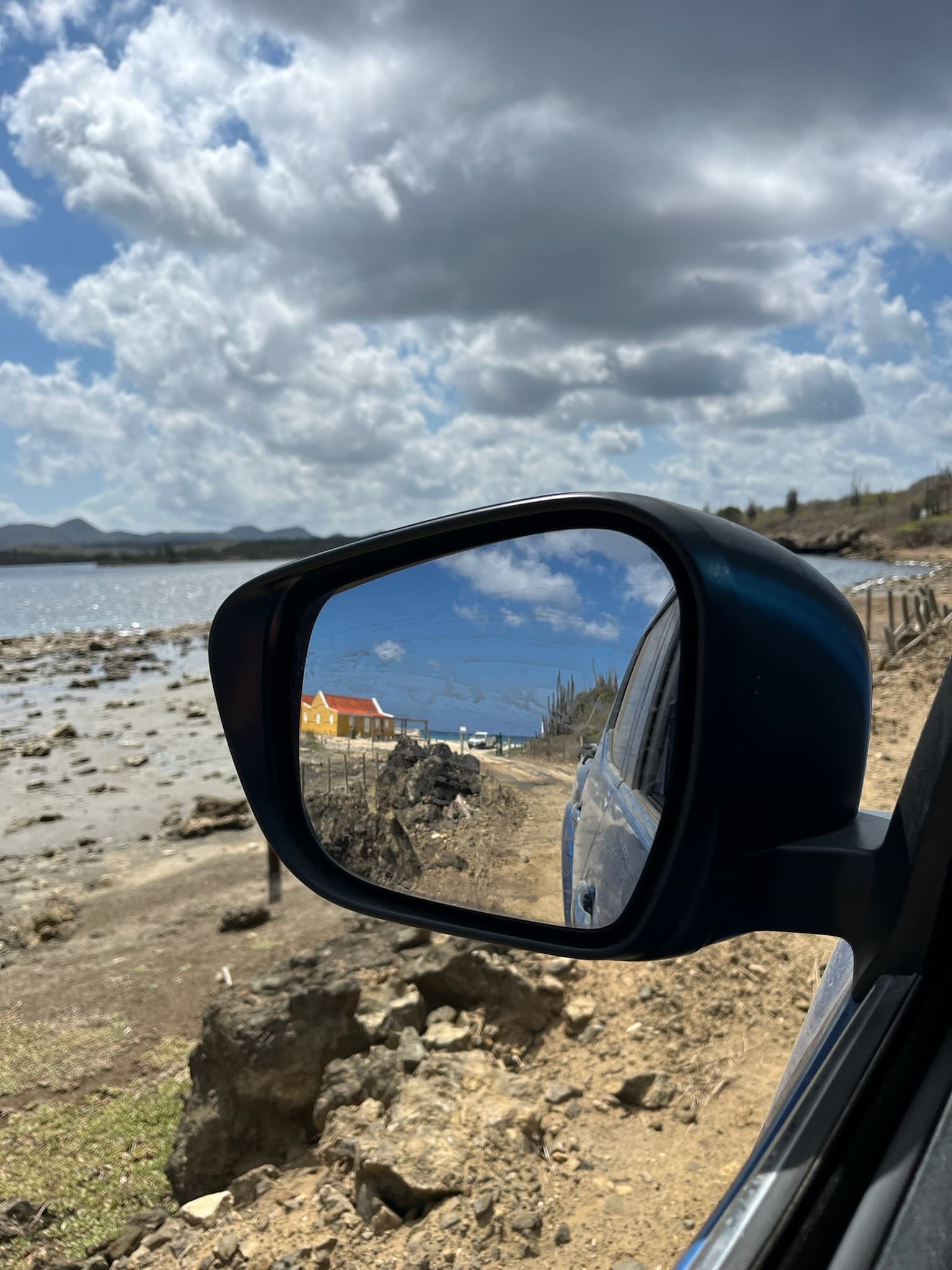
The southern loop follows the coast until the familiar blue Caribbean gradually gives way to white salt mountains, pink-blue pans and an almost completely exposed horizon. It is an essential Bonaire drive: easy, varied and unlike anywhere else on the island. Leave enough time to stop spontaneously - this route is far better when it is not run like a checklist.
Washington Slagbaai shows a wilder side of Bonaire: cactus landscapes, remote coastline, salt pans and 34 kilometres of unpaved, one-way roads that make the hire car feel considerably more adventurous than it did in the Ocean Breeze car park. Parts of our drive were steep enough to make me question every decision that had led us there, while Bas continued driving with the deeply unhelpful calm of a man who believed the car was perfectly capable. He was right. I did not enjoy him being right at the time.
STINAPA recommends a four-wheeled vehicle with at least 30 centimetres of ground clearance for the park, and the rangers make the final call at the entrance - confirm separately that your rental agreement allows the vehicle inside. As checked on 18 August 2026, the park is open Tuesday to Sunday, 08.00 to 17.00, with entry permitted until 14.30; heavy rainfall can cause closures, so check the status on the day itself. It is absolutely worth doing once. I would go again - but Bas can drive.
SHARED MAP
The Map We Made Before We Went
Bas and I always build a shared Google Maps list before we travel - part practical tool, part holiday anticipation, and usually far more detailed than either of us intended. For this guide, we turned our private Bonaire list into a curated Essy’s Essentials | Bonaire map: the beaches, restaurants, snorkelling spots and other places we saved while planning the trip.
Open our Bonaire mapMap key: ✅ personally visited · ⭐ Essy’s Essential · 🤿 snorkelling · 🍸 cocktails · 🍴 restaurants · 📌 saved for next time. The map is designed for planning, not for blindly following pins - always check current opening hours, and road and water conditions, before setting out.
Things Actually Worth Doing
Bonaire does not need an itinerary packed from breakfast until sunset. Its appeal lies in having enough freedom to stop when the water looks inviting or lunch appears to have potential. That said, a few experiences are worth planning deliberately.
Donkey Sanctuary Bonaire was the surprise hit of our trip - partly because it is a genuinely worthwhile rescue project, caring for sick, injured and orphaned donkeys since 1993, and partly because the donkeys have absolutely no respect for personal space or freshly cleaned hire cars. You drive slowly through the sanctuary while the donkeys roam freely around you, and they know exactly why cars arrive. In 2024, we brought a loaf of bread following the feeding guidance we were given at the time, and the donkeys responded as though we had driven in carrying the last available loaf on earth - pushing their heads towards the windows, attempting to join us in the car and thoroughly detailing it in donkey saliva. It was chaotic, ridiculous and completely joyful. Do not copy our bread habit: check the sanctuary’s current visitor information before bringing any food.
Cadushy Distillery in Rincón produces spirits inspired by the Dutch Caribbean, including a green cactus liqueur made from Bonaire’s own cadushy cactus. Our tasting appointment was at ten in the morning; by roughly a quarter past, I had learned two things - the green one is excellent, and local liqueurs do not become less alcoholic simply because it is technically still breakfast time. Appoint a driver before the tasting, not during it.
If you book only one organised excursion, make it a snorkelling boat trip. Ours included several entry points with Klein Bonaire as the highlight, and having a crew who knew the conditions made the day both easier and more adventurous. I was also badly stung by a jellyfish on one of these trips - painful, unglamorous, and not the souvenir I had planned to bring home, but not enough to ruin the day. Tell the crew immediately if it happens to you, rather than quietly attempting to remain elegant.
Kralendijk itself rewards an evening without an overengineered route: park once, walk the waterfront and let the evening develop around coffee, cocktails, dinner or a locally brewed beer. We happened to be there for Dia di Boneiru, Bonaire Day, on 6 September, and stumbled into outdoor music and celebration we had not planned around - worth checking the island calendar if you are travelling in early September.
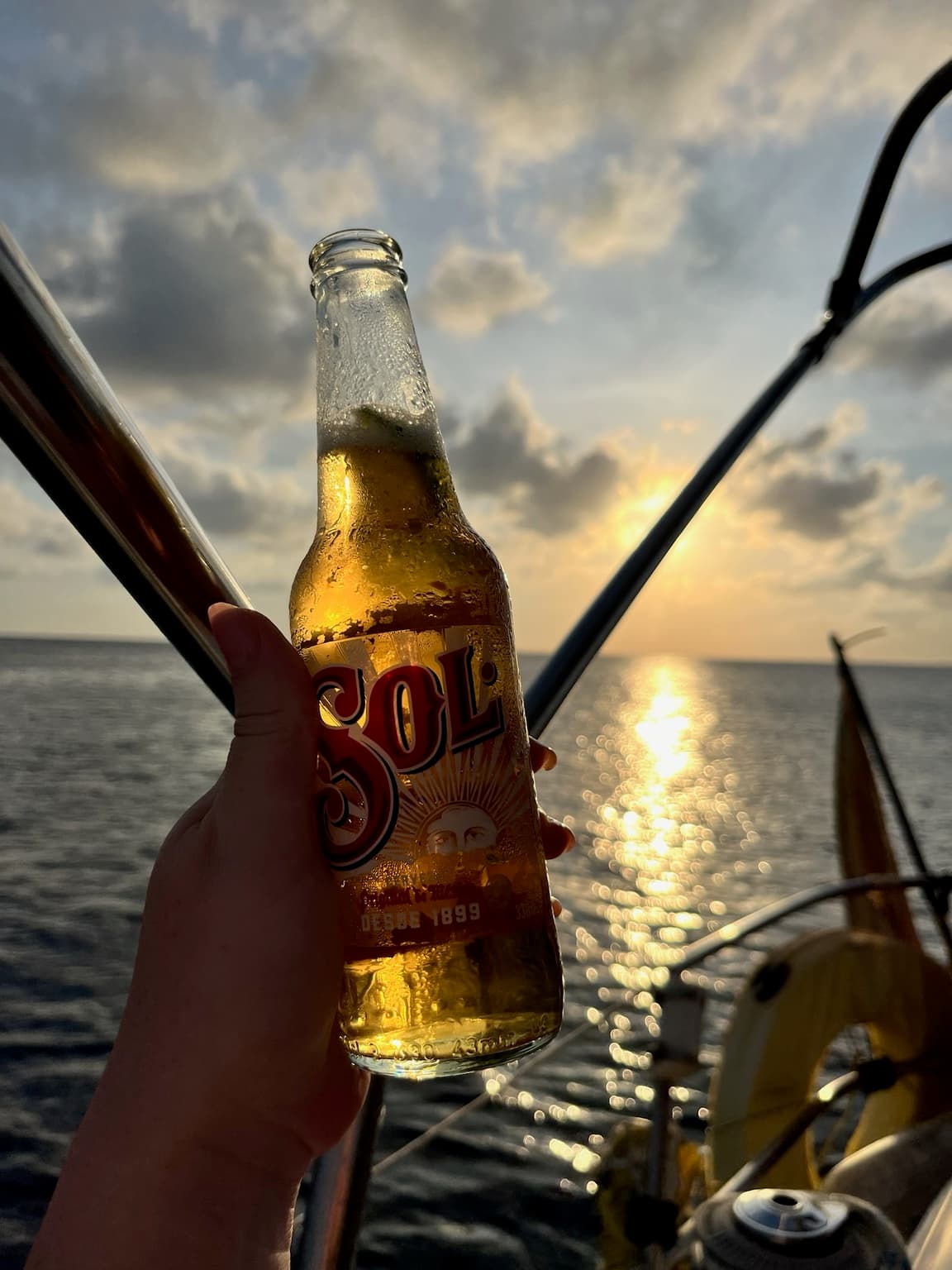
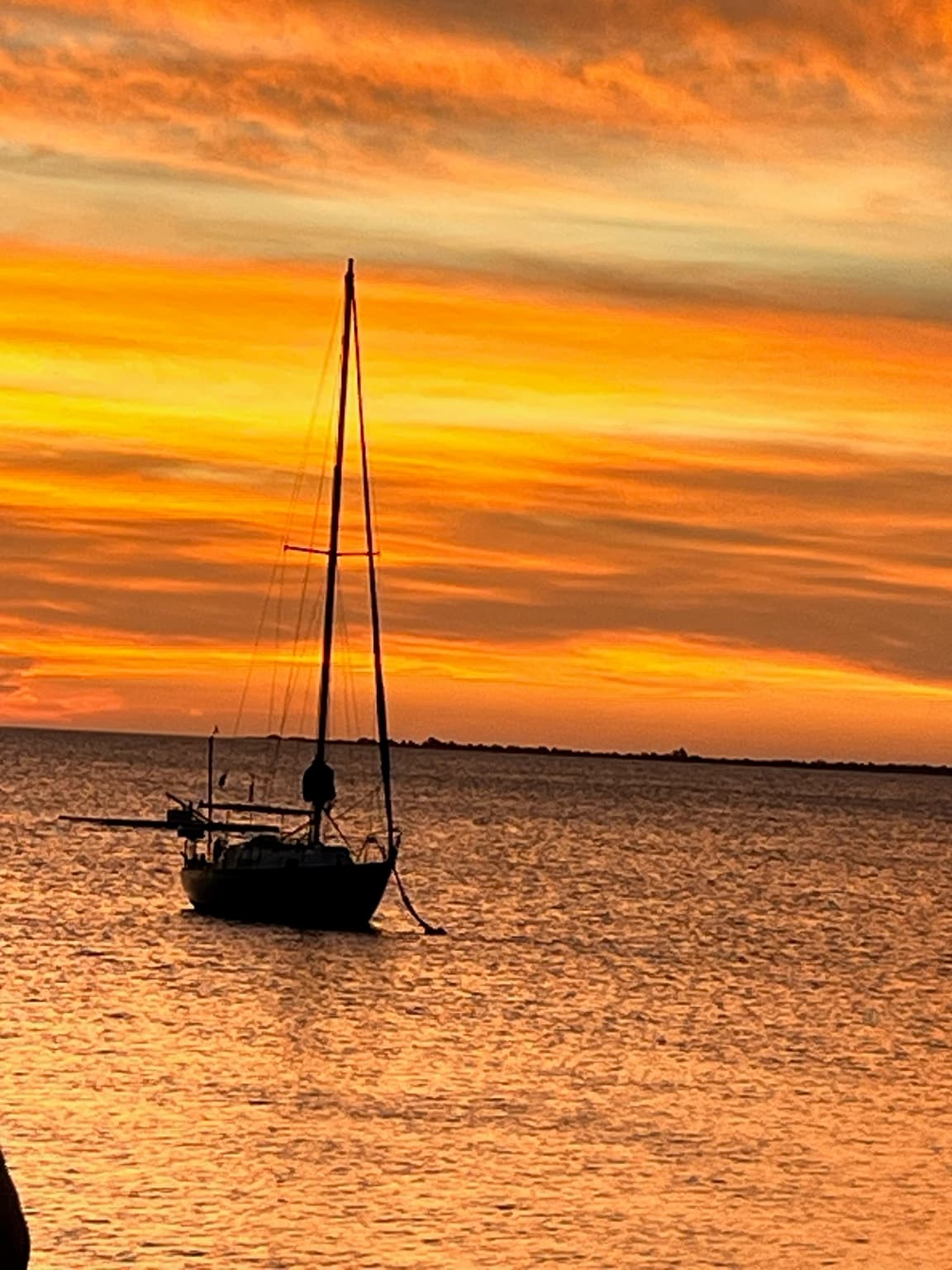
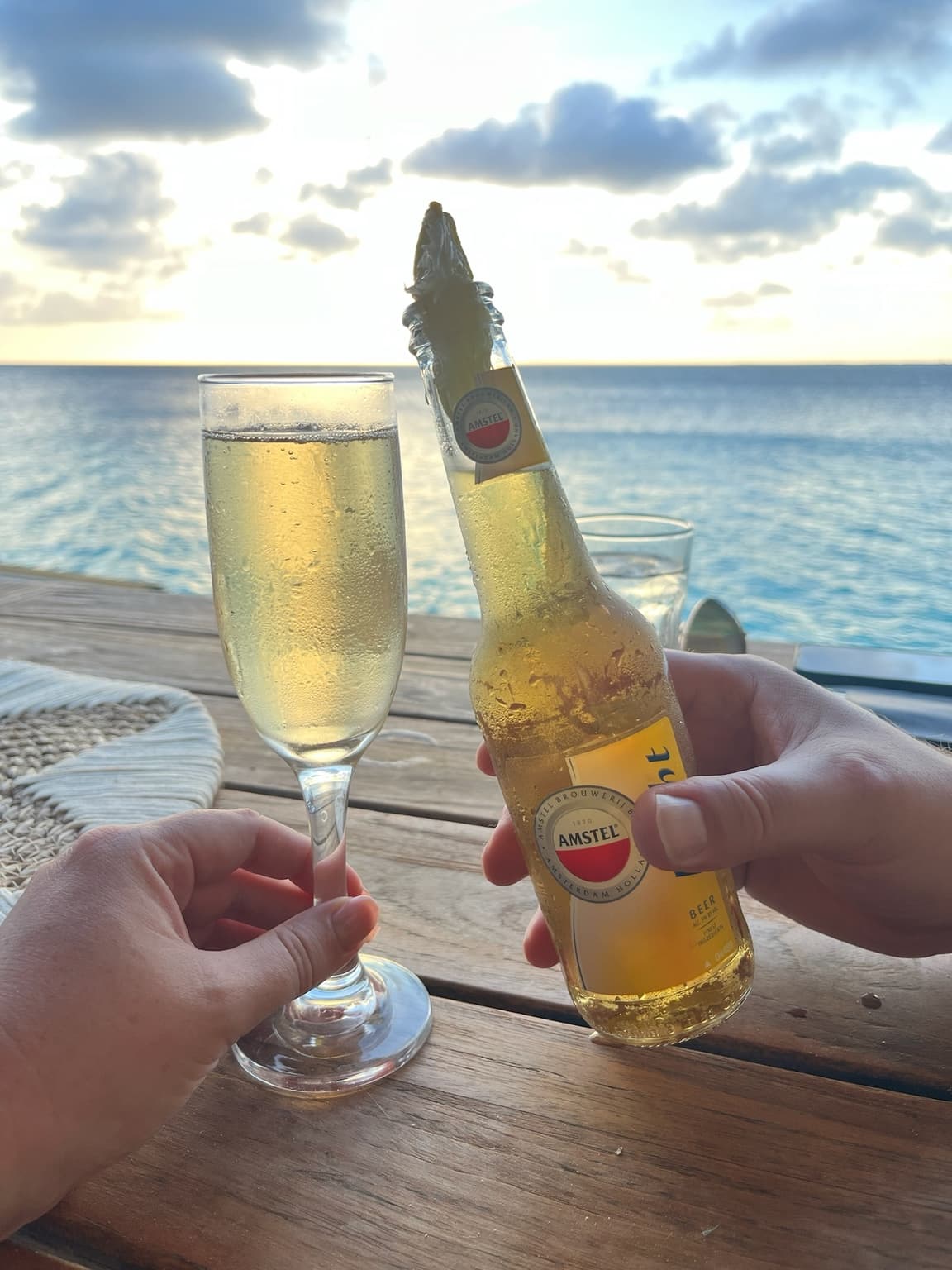
Save at least one evening for an actual sunset, rather than noticing it accidentally while looking for the car keys. We watched the sky turn orange behind anchored sailing boats, raised cold drinks beside the water and spent one evening on a boat with the sunlight running across the sea. Arrive before the sun begins to drop - racing across the island at 18.20 rather spoils the atmosphere.
Even on an independent road-trip holiday, there is value in one day where nobody has to navigate, find parking or climb down a limestone staircase carrying snorkel fins. Our beach-pass day at Chogogo Dive & Beach Resort gave us exactly that: pools, beach, a lazy river and a wonderfully indulgent dinner at Biña as the sun went down. More on that below.
Where to Eat, Drink & Spend a Very Good Afternoon
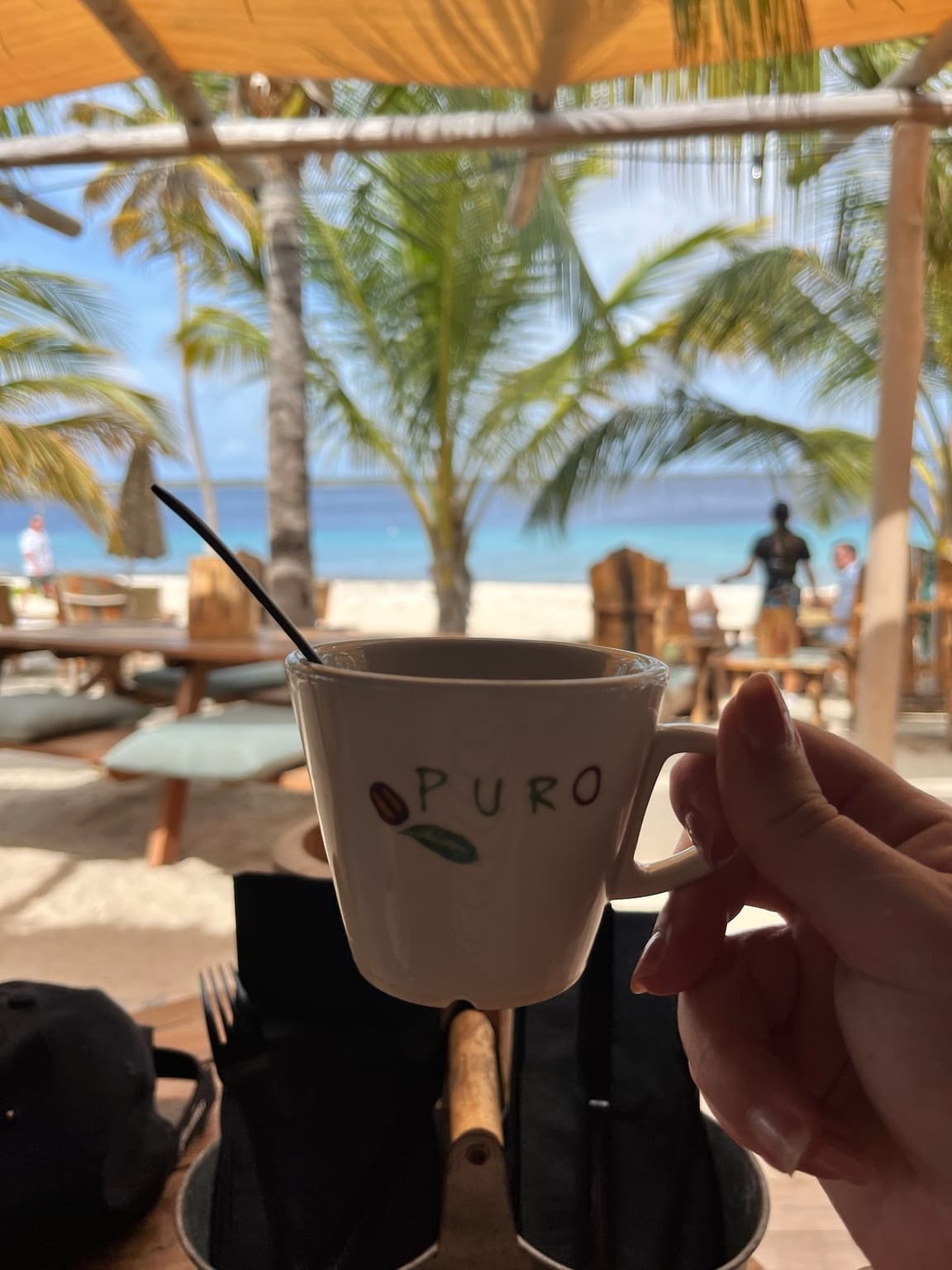
We did not travel to Bonaire to eat every meal inside the hotel. Breakfast was the exception - we added it to our Ocean Breeze booking and then chose lunch or dinner according to whichever part of the island we happened to be exploring that day. It worked perfectly: one reliable meal and good coffee to start the day, without sacrificing the freedom to try somewhere different later.
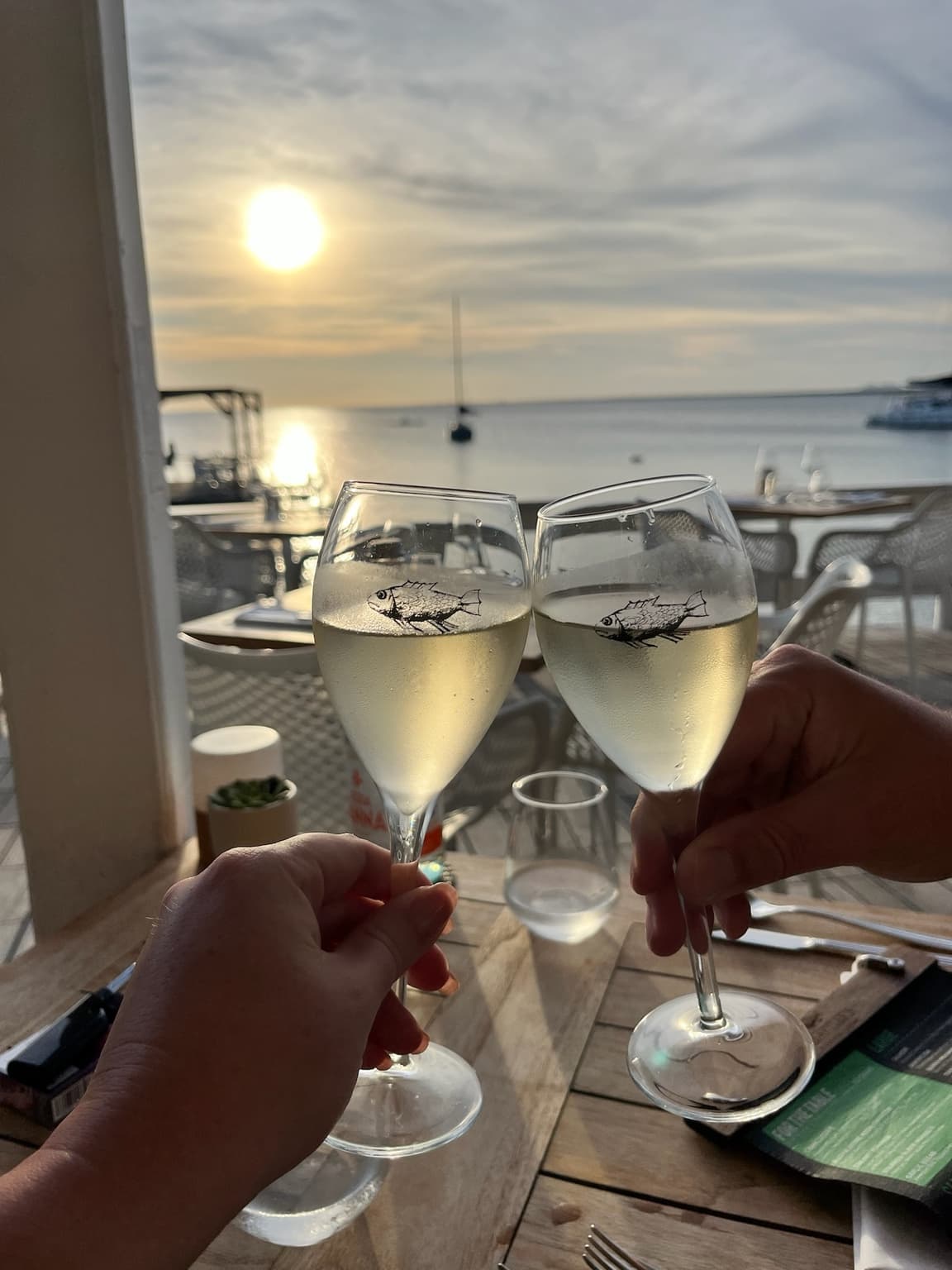
Sebastian’s Restaurant is the dinner reservation I would make when the setting matters just as much as the food. It sits directly beside the sea on the western side of Kralendijk, combining Mediterranean influences with local flavours, and the lasting memory is the light changing across the water as the sun went down. Book early, ask for a waterfront or pier table if sunset is the reason you’re booking, and arrive before the sun begins to drop.
Karel’s Beach Bar sits on a pier in the heart of Kralendijk, and the cocktails were excellent - the sea beneath you does most of the persuading. Our food was a different story: I ordered pasta and received something with such strong bami energy that I remain unconvinced it had ever met Italy. I would happily return for a drink; based on our own visit, I would make the dinner reservation elsewhere. That is one experience from September 2024, not a claim about every dish served since.
For something more casual, Bonaire Blond Brewery - also known as The Brewery at La Cantina, on Kaya Grandi - is an easy stop while walking through Kralendijk. It’s made to a local recipe using aloe-vera flowers, and even though larger batches are currently brewed in the Netherlands, it still makes a nice change from the same international lager available everywhere else. Our own local-beer stop, and an easy one to add without turning it into a major reservation.
Chogogo Dive & Beach Resort is where we spent a full day on a beach pass: white-sand beach, swimming pools and a lazy river that sounds faintly childish until you’re floating around it with nowhere else to be. As checked on 18 August 2026, the beach pass is USD 35 for guests aged twelve and up, including a USD 10 food-and-drink voucher, with beach access from 08.00-19.00 and the lazy river and waterslide from 10.00-17.00. Passes have limited availability and cannot be reserved in advance. We ended the day with a beautifully indulgent dinner at Biña - reserved separately, since a beach-pass wristband does not guarantee a table.
For a nine-day stay, I would add breakfast to the hotel booking, reserve Sebastian’s before travelling and request a sunset-facing table, keep several lunches spontaneous for beach clubs and food trucks, spend one afternoon on a resort day pass, and plan at least one Kralendijk evening with no strict ending. This is not a destination for eating three times a day according to a spreadsheet - the best meal plan is just organised enough to secure the special tables and loose enough to let Bonaire interfere with the rest.
The Quick Food & Drink Edit
When you want a shortcut instead of a spreadsheet.
01
Breakfast at Ocean Breeze
A slow, reliable start
Good coffee first, food second, adventure only once both have been dealt with properly. Worth adding to the booking.
02
Sebastian’s Restaurant
Our strongest dinner recommendation
Waterfront tables, Mediterranean-meets-local flavours and one of the best sunsets of the trip. Book early and ask for a pier table.
03
Karel’s Beach Bar
Cocktails, not dinner
Excellent drinks on a pier above the sea. Based on our visit, the food didn’t match the setting - go for cocktails, eat elsewhere.
04
Bonaire Blond Brewery
A local beer stop
An easy, informal stop on Kaya Grandi for a locally flavoured beer between a Kralendijk wander and dinner.
05
A Chogogo Beach Pass + Biña
A full resort-day reset
Pools, beach and a lazy river by day, a genuinely indulgent sunset dinner at Biña to close it out. Reserve Biña separately.
What to Know Before You Go
Bonaire is an easy island once you’re there, but it rewards a little preparation. The Visitor Entry Tax and STINAPA Nature Fee are two separate payments, not one: as checked on 18 August 2026, the Visitor Entry Tax is USD 75 per visitor aged thirteen or older (USD 10 for children twelve and under), payable online from seven days before departure via the official Bonaire government tax portal, with the QR code kept on your phone and somewhere accessible offline. The STINAPA Nature Fee is currently USD 40, valid for a calendar year, and covers the marine park plus Washington Slagbaai - treat it as an essential cost for the kind of trip in this guide, not an optional diving extra.
A hire car gives you the freedom that makes Bonaire so enjoyable. We arranged ours through Ocean Breeze; the main roads are generally straightforward, but unpaved routes and the national park need more care. Before accepting the car, ask whether it may enter Washington Slagbaai, whether unpaved-road use is covered by the rental agreement, and what to do in the event of a puncture.
Bonaire produces its drinking water from purified seawater, meeting World Health Organization quality standards - bring a reusable bottle rather than buying a new one every day, particularly useful for the southern loop and Washington Slagbaai, where heat and a lack of shade make it easy to underestimate how much you need.
Take currents seriously. Bonaire’s clear water can create a false sense of ease, and conditions vary by site and by day. Ask local staff or boat crews about currents and the safest entry and exit, and keep checking your position against a fixed point on shore. My unplanned drift at Grand Windsock is the reason this warning appears more than once in this guide.
Protect yourself from the sun - the breeze makes it easy to underestimate, especially around the salt pans, on boats and on Klein Bonaire. Reapply sun protection, wear a hat, and consider a long-sleeved rash vest, which is often more reliable than repeatedly reaching for sunscreen on a moving boat.
Be prepared for a power cut. Island-wide outages happen; keep devices charged, have water available, and remember that air-conditioning, Wi-Fi and card payments may stop. Ours lasted long enough for the apartment to become very warm, but Ocean Breeze handled it exceptionally well.
Bonaire uses the US dollar; cards are widely useful, but a small amount of cash is sensible. We booked our package through TUI Netherlands and flew with TUI fly from Amsterdam, with a stop in Curaçao - a straightforward experience, with a TUI representative visiting the hotel to help arrange excursions. We booked the transport and accommodation as a package but did not travel around the island as part of an organised programme: the package gave us reassurance at both ends, and the hire car gave us freedom in between.
Is Bonaire Right for You?
Bonaire is particularly good for travellers who enjoy making their own days. It offers enough excellent food and comfortable hotels to feel indulgent, without requiring you to stay inside a resort bubble. If you would rather hire a car than join a daily coach excursion, if clear water matters more to you than a vast sandy beach, and if good food and sunset drinks are enough evening entertainment, it is likely to be an excellent fit. If you want everything inside one all-inclusive resort, dislike rocky water entries, or want nightlife and constant activity, it may not be your ideal Caribbean island - and none of those preferences is wrong, they simply point towards a different kind of holiday.
We are snorkellers rather than serious divers, and never felt we were receiving a reduced version of the island - there are accessible shore entries, organised boat trips and extraordinary water around Klein Bonaire. The real question is not whether you dive; it’s whether you enjoy spending time in and around the sea.
Our nine-day stay felt extremely well judged: enough time for several unhurried beach and snorkelling days, the southern loop, Washington Slagbaai, Donkey Sanctuary and Rincón, a boat excursion to Klein Bonaire, a full Chogogo resort day, and Kralendijk evenings that weren’t squeezed between activities. For a first visit, I would aim for seven to nine days - a shorter stay can work if you choose priorities, but fitting the national park, Klein Bonaire, the southern route and multiple beaches into four days would turn a naturally relaxed island into an efficiency exercise.
We stayed at Ocean Breeze and only tested Chogogo as day guests, so our strongest accommodation recommendation remains Ocean Breeze - choose it if you want a quiet, small-scale base and expect to explore most days. Consider Chogogo or another full-service resort if you want pools, beach and restaurants within the property, or plan to spend several full days on-site.
For us, the balance was almost perfect: snorkelling in the morning, salt landscapes in the afternoon, something cold at sunset, and a quiet marina-view room to return to at night. Nothing meaningful disappointed us about the island itself - even the jellyfish sting, the alarming current and my near-meltdown on a steep park road became stories rather than reasons not to return. I would go back without hesitation: stay at Ocean Breeze again, add breakfast, hire a car, book another boat trip, reserve Sebastian’s for sunset and give myself another day in the Chogogo lazy river.
The Two Drives, Stop by Stop
The Southern Loop: Salt, Flamingos & History
- Begin with an easy swim at Te Amo or Bachelor’s Beach while the day is still cool.
- The salt pans and Salt Pier: brilliant white salt mountains and intensely coloured water - only enter the water if the site is open and conditions are suitable.
- Pekelmeer Flamingo Sanctuary: flamingos are visible from the public road; the sanctuary itself is off-limits, so bring binoculars or a zoom lens.
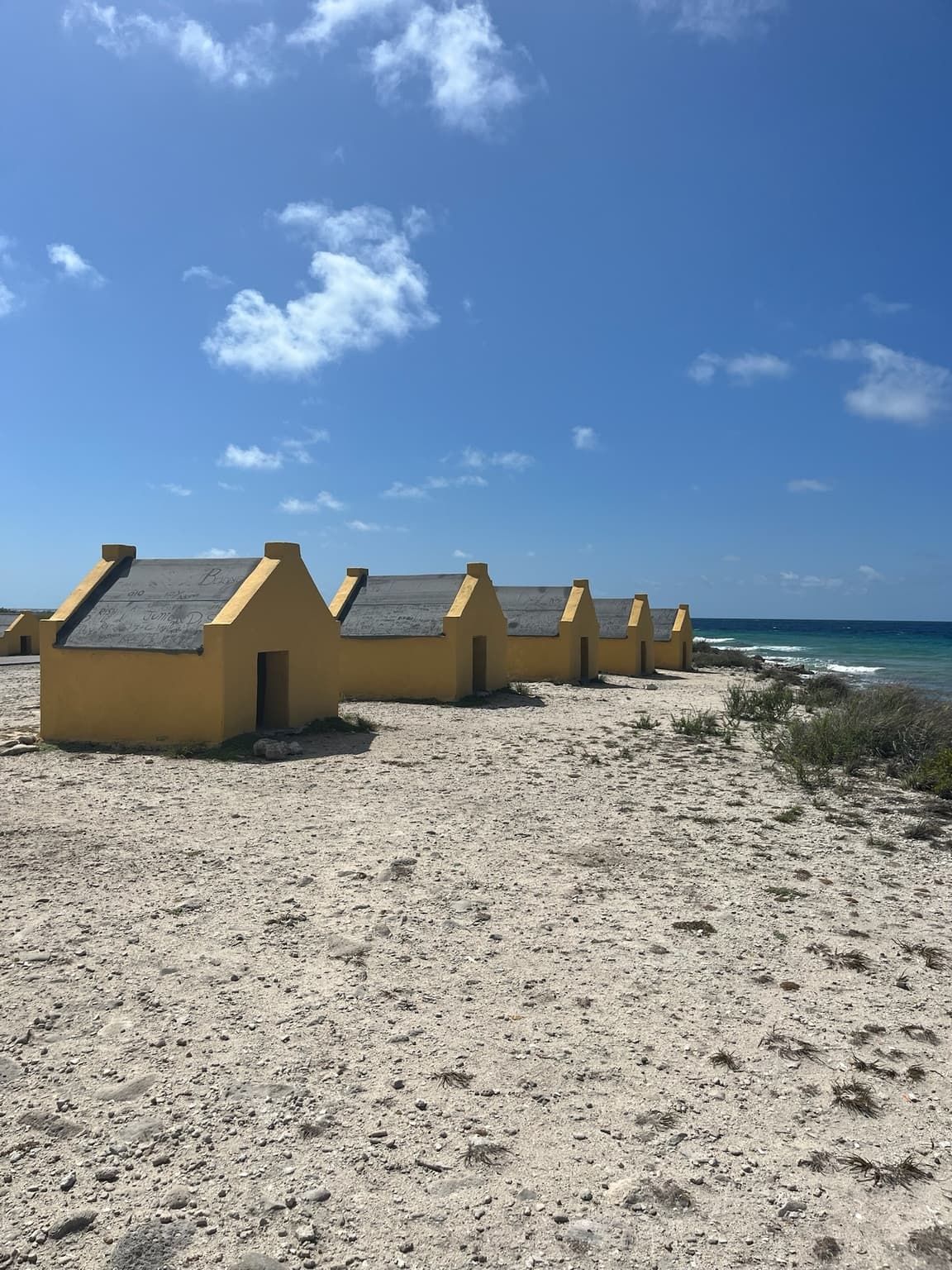
- The white and red slave huts, built in 1850 as sleeping quarters for enslaved people forced to work the salt pans - stop, read the information available, and let the small scale of the huts communicate what a caption never could.
- The coloured obelisks and Willemstoren lighthouse, marking the exposed southern tip.
- End at Sorobon and Lac Bay, where the windsurfers and pale lagoon feel like a well-timed change of scene after the heat of the salt pans.
Washington Slagbaai National Park
- 34 kilometres of unpaved, one-way roads; choose the shorter or longer route depending on how the day - and your nerves - are going.
- A valid STINAPA Nature Fee and proof of identity are required, alongside a permitted four-wheeled vehicle with high ground clearance.
- Bring a spare tyre, plenty of water, lunch and snacks - there is no restaurant inside the park.
- The park is cashless; pay the Nature Fee online in advance or by card at the entrance.
- Leave enough time to exit by 17.00, and check conditions on the day - heavy rainfall can close the park.
A Few Things Worth Avoiding
A handful of real lessons from our own nine days, offered so you don’t have to learn them the same way.
- Entering the water at a beach-club staircase without asking staff about the current first - it can be far stronger than it looks.
- Assuming every hire car is permitted inside Washington Slagbaai - confirm with the rental company before you set out.
- Bringing bread or other food for the donkeys unless the sanctuary has explicitly approved it at the time of your visit.
- Judging a beach entirely from its photographs - they rarely show occupancy, noise or the day’s actual conditions.
- Leaving valuables visible inside the hire car at quiet coastal stops.
- Scheduling every evening around a fixed dinner reservation - Bonaire works better with room to change your mind.
What to Pack for Bonaire’s Beaches
The short list that made every beach day easier.
- Water shoes for rocky entries and coral-stone shorelines
- Snorkel equipment, unless your tour or beach club provides it
- Drinking water and snacks
- A hat and more sun protection than you think you need
- A rash vest or other protective swimwear
- Proof of your valid STINAPA Nature Fee
- A towel from your hotel
- Nothing valuable left visible inside the hire car
Our Final Pre-Departure Check
Before leaving home, we would confirm:
- Both island fees are paid and saved
- The exact flight routing and baggage allowance
- Airport transfer or hire-car collection arrangements
- The hotel room category and whether breakfast is included
- The car is permitted inside Washington Slagbaai, if you intend to visit
- Sebastian’s and Biña reservations, if wanted
- Current opening days for Cadushy, Donkey Sanctuary and the restaurants on your map
- Snorkelling equipment, water shoes, rash vest and power bank are packed
Practical Questions About Visiting Bonaire
Do you need a car on Bonaire?
Yes. The best beaches, drives and restaurants are spread around the island, and a hire car is what makes independent exploring possible. We arranged ours through Ocean Breeze.
Is Ocean Breeze officially adults-only?
No. It has no formal age policy, but during our nine-day September stay we saw no children and there was no animation programme - it felt quiet and grown-up in practice, though this can vary by travel period.
How many days do you need on Bonaire?
We would aim for seven to nine days for a first visit. Our own nine days gave us time for the southern loop, Washington Slagbaai, a boat trip to Klein Bonaire, Donkey Sanctuary, a resort day pass and unhurried evenings in Kralendijk.
Is Bonaire worth it if you only snorkel and don’t dive?
Yes. We are snorkellers, not divers, and never felt we were seeing a reduced version of the island - Klein Bonaire alone was one of the best snorkelling experiences we’ve had.
What fees do you need to pay before visiting?
Two separate ones: the Visitor Entry Tax (USD 75 per adult, USD 10 per child twelve and under, paid online before arrival) and the STINAPA Nature Fee (currently USD 40, covering the marine park and Washington Slagbaai).
Was this trip sponsored?
No. We booked and paid for the entire trip ourselves through TUI Netherlands. It is not gifted, sponsored or commissioned by any hotel, restaurant or tour operator mentioned in this guide.
An Independently Booked, Honest Trip
This guide is based on our own trip to Bonaire in September 2024, booked and paid for independently through TUI Netherlands. It is not sponsored, gifted or commissioned by Ocean Breeze, TUI, Chogogo, Biña, Sebastian’s, Karel’s, Bonaire Blond Brewery or Tourism Corporation Bonaire.
Practical details - fees, opening hours and booking information - were last reviewed on 18 August 2026 and should be checked again before you travel, since prices, schedules and policies can change. The Where to Stay link to Ocean Breeze below is a Stay22 affiliate link - if you book through it, this site may earn a small commission at no extra cost to you. That doesn’t change the honest review above.
Book & Know
- Ocean Breeze Boutique Hotel & Marina — Official hotel website
- TUI Netherlands — Ocean Breeze booking page
- Government of Bonaire — Official Visitor Entry Tax portal
- STINAPA Bonaire — Nature Fee and marine park information
- STINAPA Bonaire — Washington Slagbaai National Park
- Donkey Sanctuary Bonaire — Current visitor information
- Chogogo Dive & Beach Resort — Current beach-pass details
Related Editorial
There are holidays you enjoy while you are there, and holidays you continue recommending long after you return.
Bonaire is firmly in the second category.

Written by Esther
Esther is the founder, photographer and editor behind Essy’s Essentials. She writes about seasonal living, quiet luxury and thoughtful travel shaped around atmosphere, beauty and the pleasure of moving at your own pace.
More about Esther →