Travel
The Grown-Up Guide to Aruba
Flamingos, private-island luxury and the honest truth about ten days in the Caribbean.
“Super deluxe, beautifully located and somewhere we would happily choose again.”
Aruba is the sort of island that makes holiday planning look remarkably easy. The weather is warm, the roads are manageable, the beaches are almost offensively blue and English is spoken everywhere. You can spend the morning beside a rooftop pool, board a boat inside your hotel, have lunch among flamingos and still be back in Oranjestad for dinner.
We travelled to Aruba for ten days at the end of August and beginning of September 2022, and booked and paid for the entire trip ourselves through TUI Netherlands - the adults-only Renaissance Marina Hotel, with breakfast included. This guide was not sponsored, and neither TUI nor Renaissance Wind Creek Aruba Resort reviewed or approved our opinions before publication. We rented a car and planned to explore as much of the island as possible.
Then I became properly ill for roughly half the holiday. Not ideal for a travel guide, admittedly.
And yet Aruba left us with an extraordinary number of good memories: the private water taxi departing from our hotel, Flamingo Beach, Bas being abruptly woken by an iguana, frozen fruit pops beside the fishing boats, a Formula 1 afternoon with room service and a sunset cruise that turned the entire sky coral.
This is not a minute-by-minute account of everything we did. It is the useful version: where we stayed, what was genuinely worth our time, why we rented a car, which places we would revisit and what we would do differently next time - for travellers who like their Caribbean holidays grown-up, comfortable and beautiful, but still want to leave the resort occasionally.
Our Aruba Trip at a Glance
- When we travelled
- Late August and early September 2022.
- Length of stay
- Ten days.
- Booked through
- TUI Netherlands.
- Where we stayed
- Renaissance Marina Hotel - the adults-only section of Renaissance Wind Creek Aruba Resort.
- Board basis
- Breakfast included.
- Transport
- Rental car.
- Best for
- Couples who want luxury, beaches, restaurants and independent island exploring.
- Our standout experience
- Renaissance Island and Flamingo Beach.
- Would we return?
- Yes - Aruba deserves ten healthy days.
Aruba
The Pin Ratio
IN ONE SENTENCE
Ten days at an adults-only Oranjestad hotel with a private-island secret downstairs: flamingos, a Formula 1 sick day, honest illness and a sunset cruise that turned the whole sky coral.
Where We Stayed: Renaissance Wind Creek Aruba Resort
For our ten-day stay, we booked the Renaissance Wind Creek Aruba Resort through TUI with breakfast included - more specifically, the adults-only Renaissance Marina Hotel in the centre of Oranjestad. The resort has two rather different sides. The Marina Hotel is the adults-only section, with a grown-up, city-resort atmosphere; Renaissance Ocean Suites offers larger accommodation and welcomes families. That distinction matters when booking - the resort name is the same, but the experience is not. We stayed in the Marina Hotel, and for us it was the right choice.
The Renaissance Marina Hotel is not a classic resort sitting directly on an endless stretch of beach. It sits in central Oranjestad, surrounded by the marina, restaurants, shops and the Renaissance Mall, so you can walk straight into the colourful centre of the city. Then a small boat arrives inside the hotel to collect you for its private island, and the whole arrangement suddenly makes perfect sense: a specially designed dock lets hotel guests board the complimentary water taxi from within the Marina Hotel itself. According to current resort information, water taxis run roughly every fifteen minutes between 7 a.m. and 7 p.m. for hotel guests - always check the latest timetable during your stay.
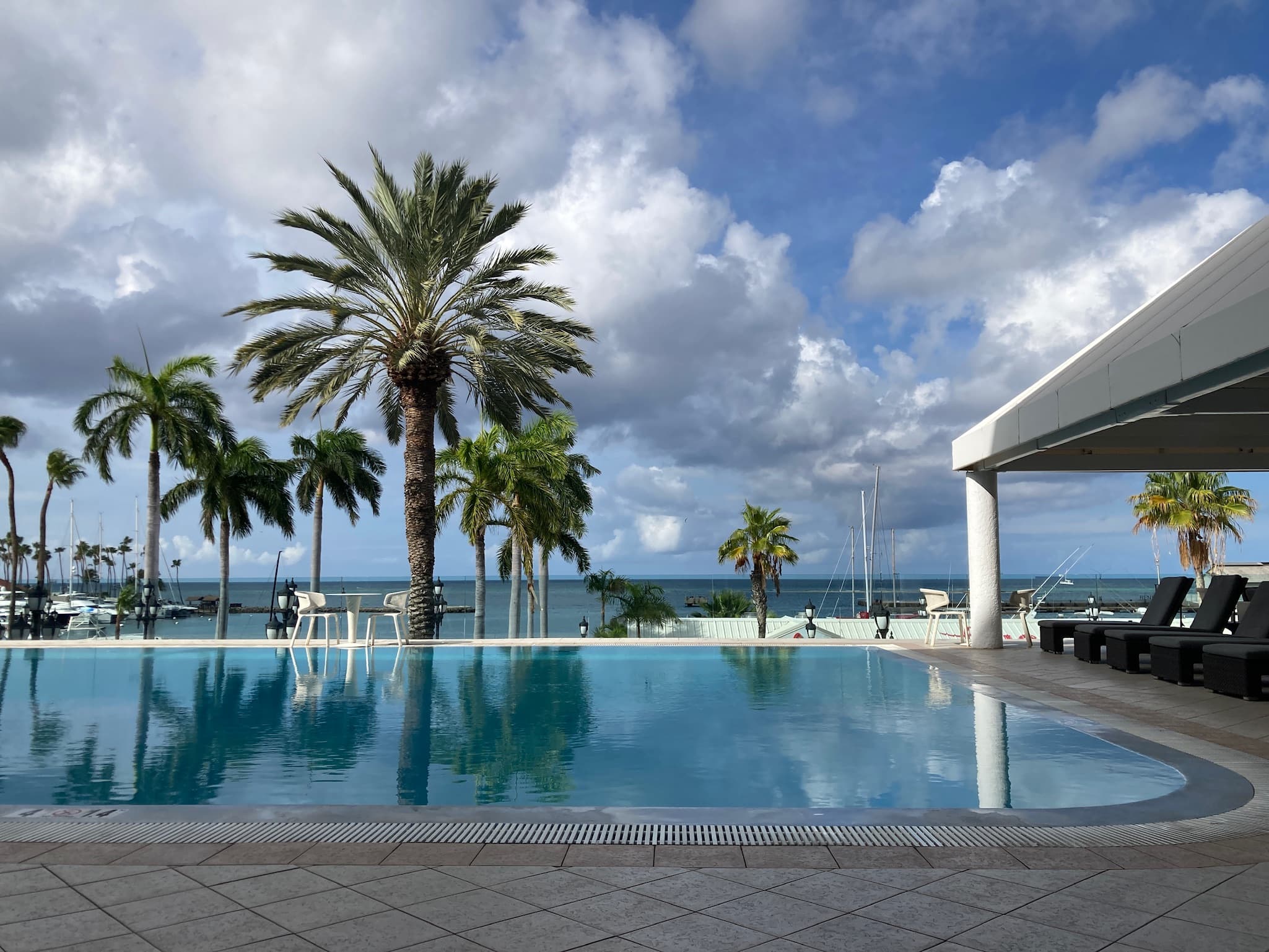
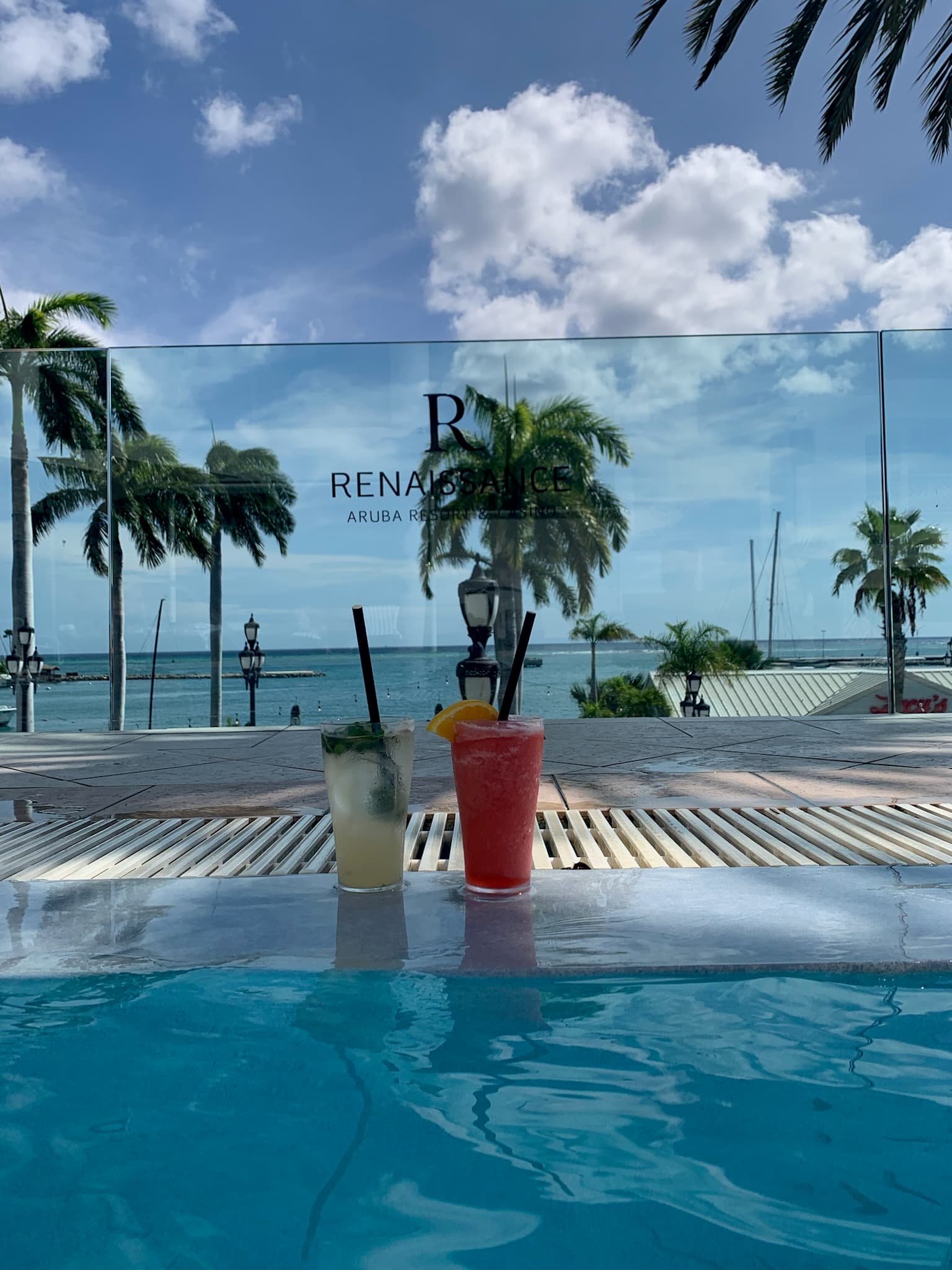
The hotel felt properly luxurious - not decorative-lobby-and-hope-for-the-best luxurious, but the kind where spending part of the day at the hotel actually feels like a holiday activity. The rooftop pool overlooking the marina became one of our regular places: we could swim, order drinks and look out over Oranjestad and the water, with a sociable atmosphere that never turned into a children’s splash zone - one of the benefits of the adults-only Marina section. There is also an on-site Starbucks, which may not be the most authentically Aruban detail in this guide, but reliably available coffee downstairs is a genuine luxury, especially when breakfast and coffee are the official starting signal for every holiday day we take.
One thing worth knowing: the resort is strongly geared towards the American market. You notice it in the scale, the shops, the restaurant offering and the overall atmosphere. That is not necessarily negative - everything is convenient, polished and easy - but travellers hoping for a tiny, secluded Caribbean boutique hotel should know this is a different kind of stay.
Choose the Renaissance Marina Hotel if you want an adults-only base, a central Oranjestad location, easy access to restaurants, shops and nightlife, a luxurious pool and marina atmosphere, direct water-taxi access to Renaissance Island, and Flamingo Beach included as part of your hotel experience. Consider another hotel if you mainly want a small, intimate boutique property, complete seclusion, a quiet resort far from shops and city life, a traditional beachfront room with the sea immediately outside, or a distinctly local rather than American-influenced atmosphere. Before booking, double-check whether your package includes the Marina Hotel or Ocean Suites - the two sections offer different accommodation and atmospheres entirely.
Room Service, Formula 1 & the Day We Gave Up
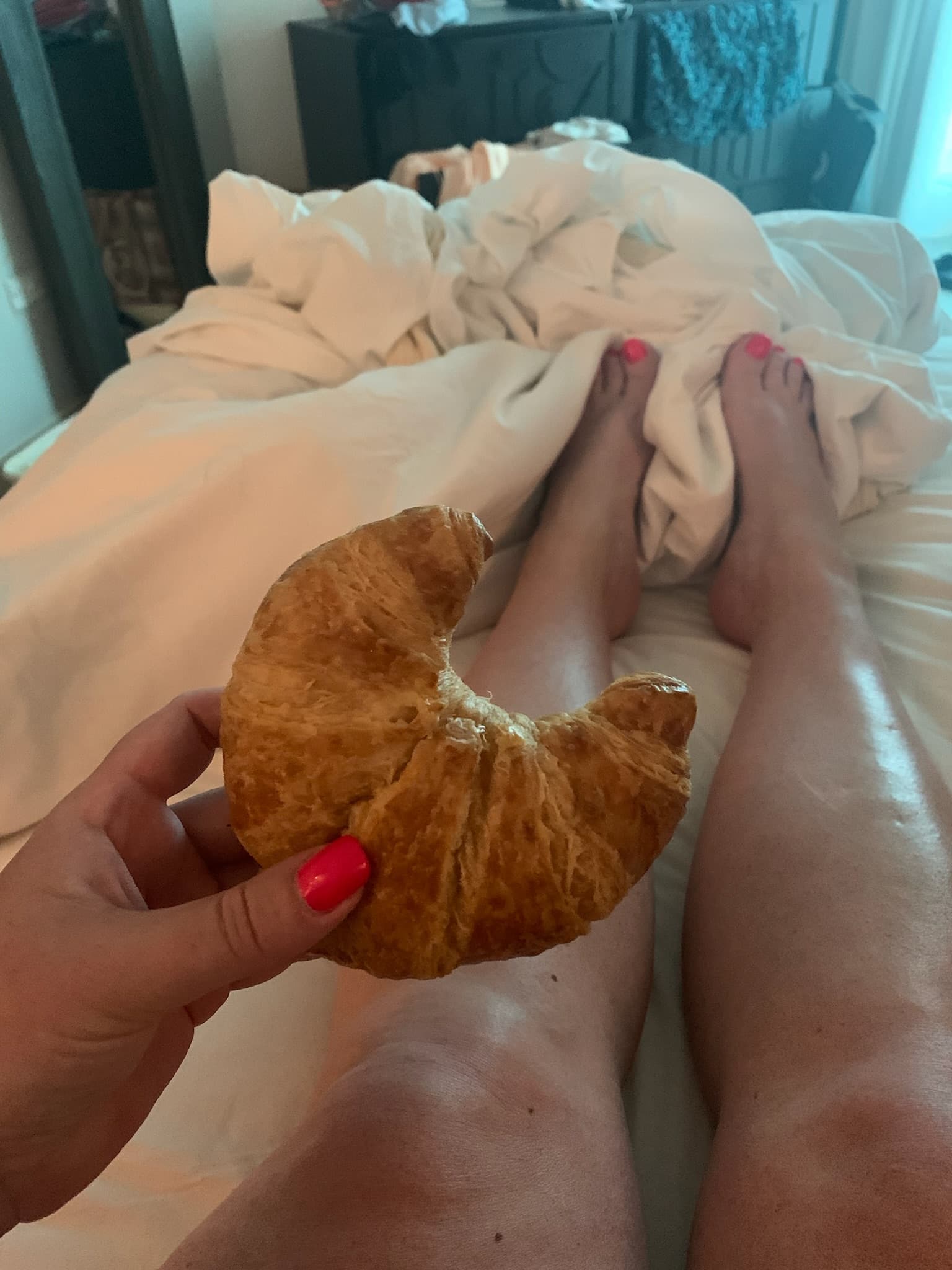
Aruba did not get an entirely fair chance with me. Of our ten days on the island, I spent around five properly ill - not delicately tired or in need of an afternoon nap, but genuinely, miserably ill. That inevitably changed our plans. Some island adventures disappeared from the schedule, and there were mornings when a croissant in bed was considerably more realistic than getting into the rental car.
One day, we gave up on attempting anything remotely productive and stayed in our hotel room from morning until night. We ordered room service, pulled the curtains, put Formula 1 on and watched Max Verstappen together - we are both devoted fans, and 2022 was far too important a season to miss simply because we happened to be on a Caribbean island.
Strangely, it became one of the loveliest days of the trip. I was still ill, obviously, but we had good food delivered to the room, nowhere we needed to be, and an entire Formula 1 afternoon to enjoy together. It was not the sort of day we had imagined when booking Aruba, but it was comfortable, cosy and genuinely fun. Sometimes a luxury hotel proves its worth not during the glamorous moments, but when you need it to become a very pleasant place to hide from the world.
Renaissance Island and Flamingo Beach
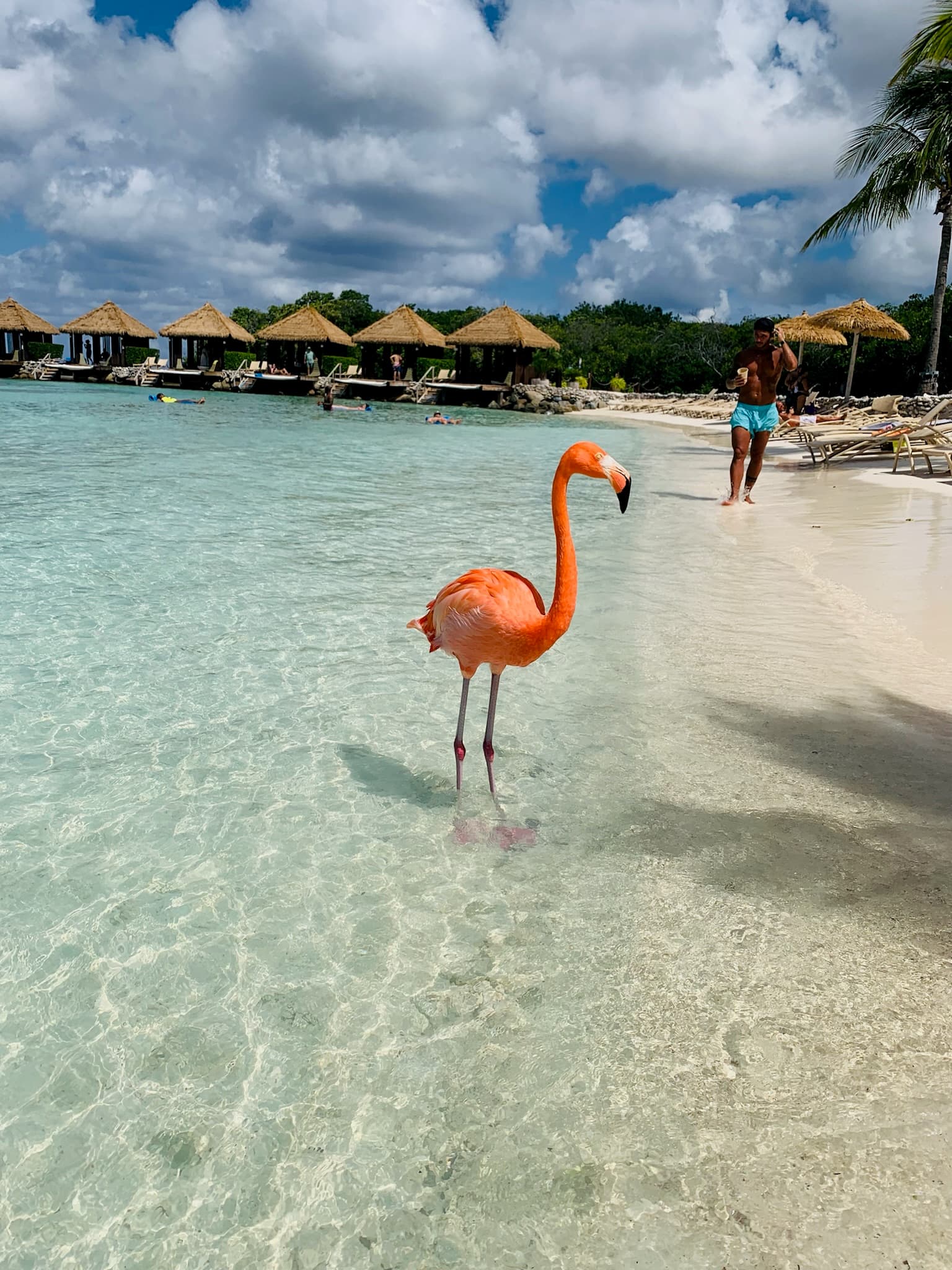
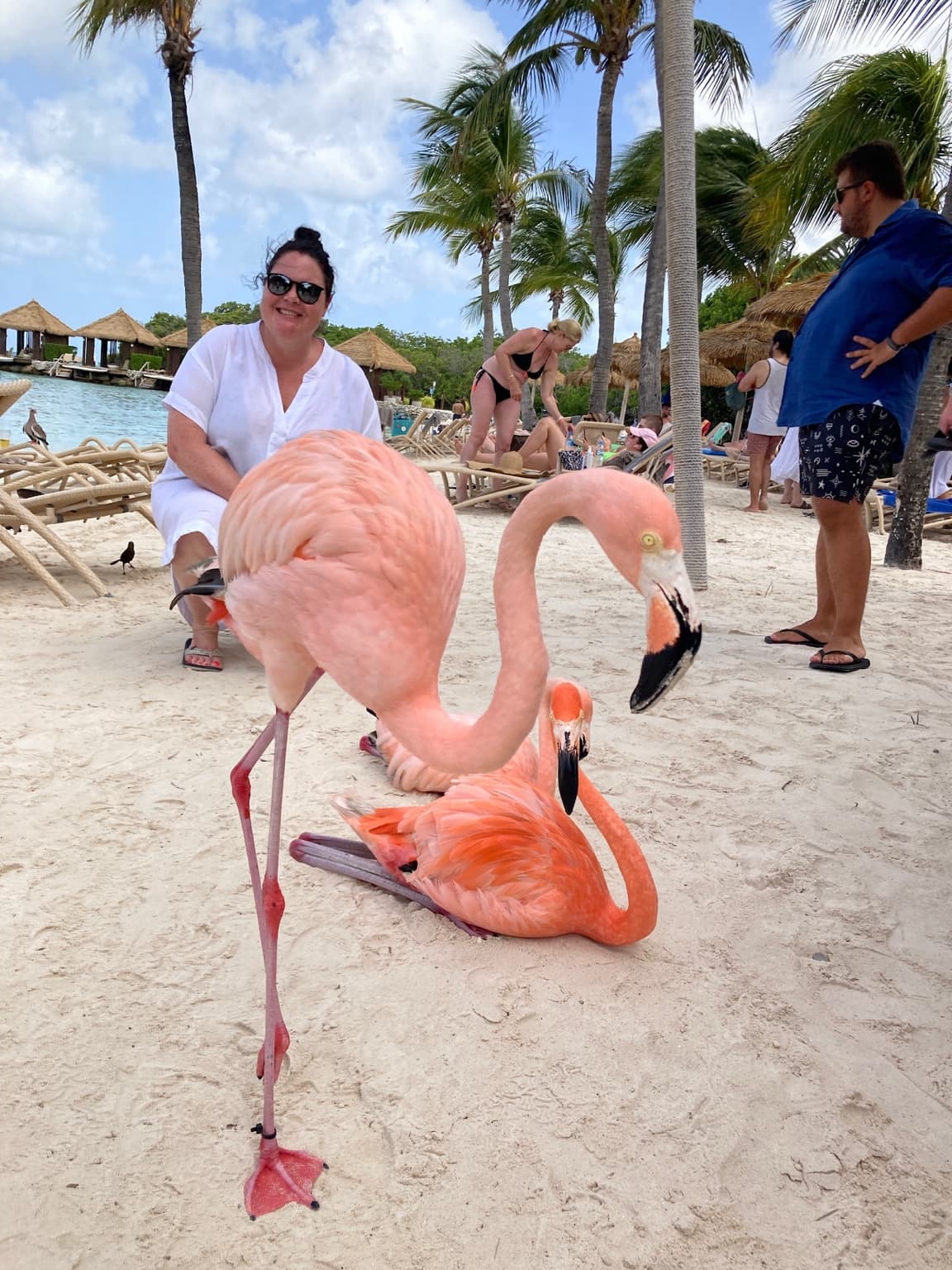
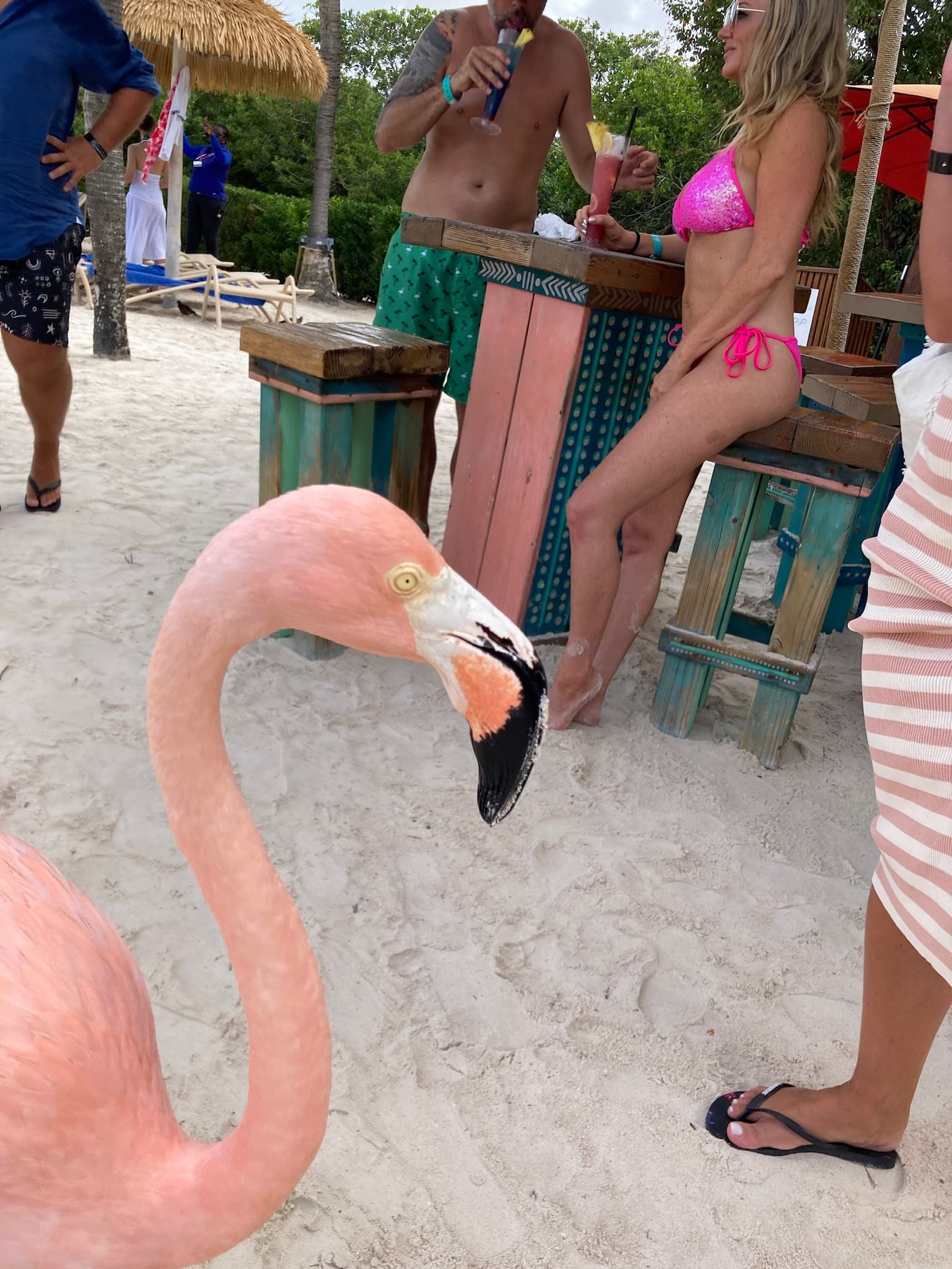
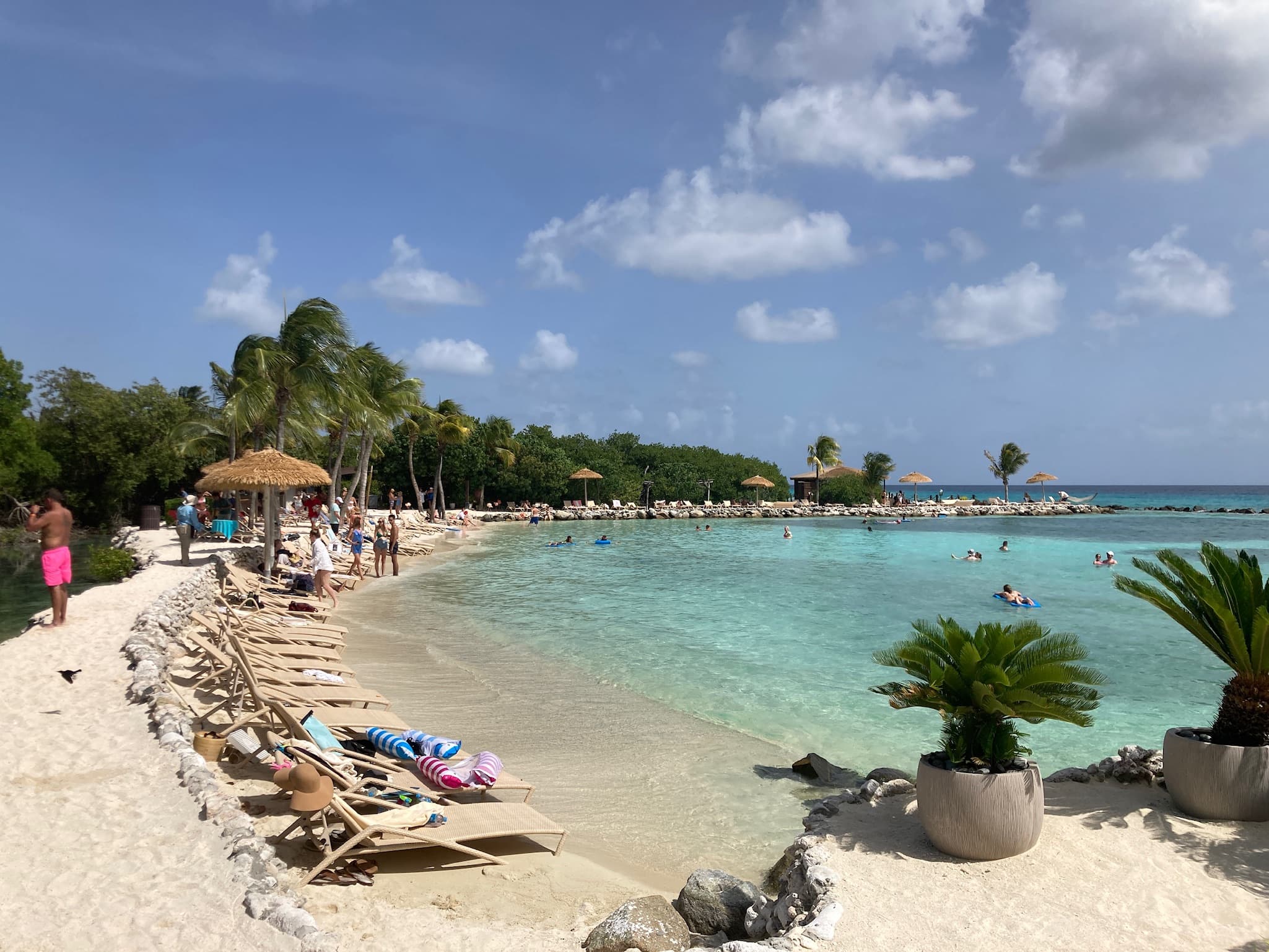
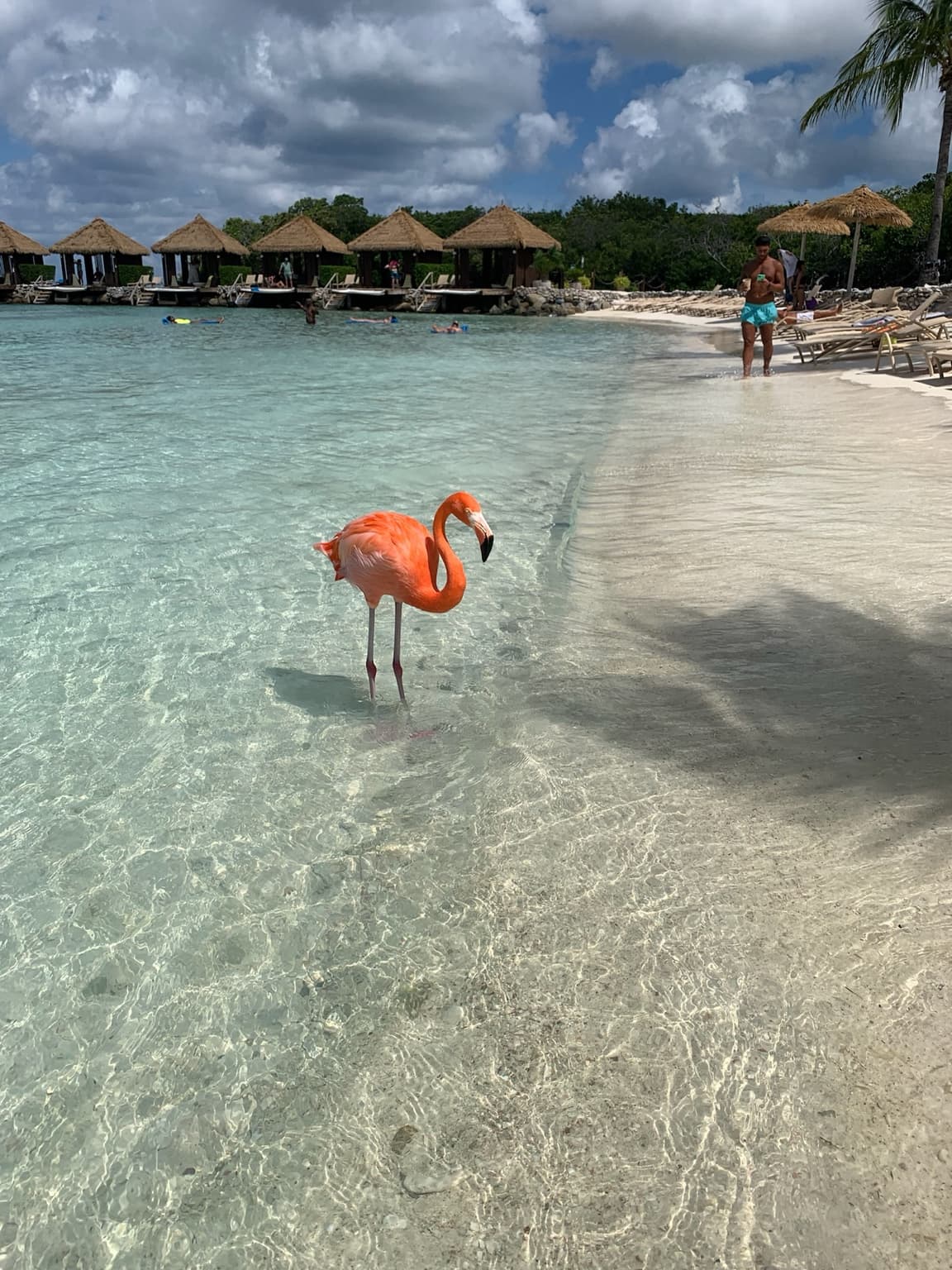
The real showpiece is Renaissance Island: the resort’s private 40-acre island, primarily accessible to resort guests under the regular admission arrangements. The island has two main beach areas - Flamingo Beach, the adults-only side where the now-famous pink flamingos wander through the shallows and occasionally inspect whether visitors have brought anything interesting, and Iguana Beach, the more family-friendly section. And yes, Flamingo Beach really is as photogenic as it looks: clear, calm water, pale sand, and flamingos strolling between the sea, the loungers and the beach bar with the confidence of animals who know perfectly well that everybody came to see them.
Our advice is to take an early boat across - you have a better chance of experiencing the island before the day settles into full holiday mode, the light is softer for photography, and you can choose a good place to spend the day. Renaissance Island is more than a quick flamingo photo stop: there are loungers, beach bars, food, shaded areas, cabanas and quiet stretches of water where you can spend hours doing very little. Plan at least one complete island day - we returned more than once, one of the greatest advantages of staying at the resort.
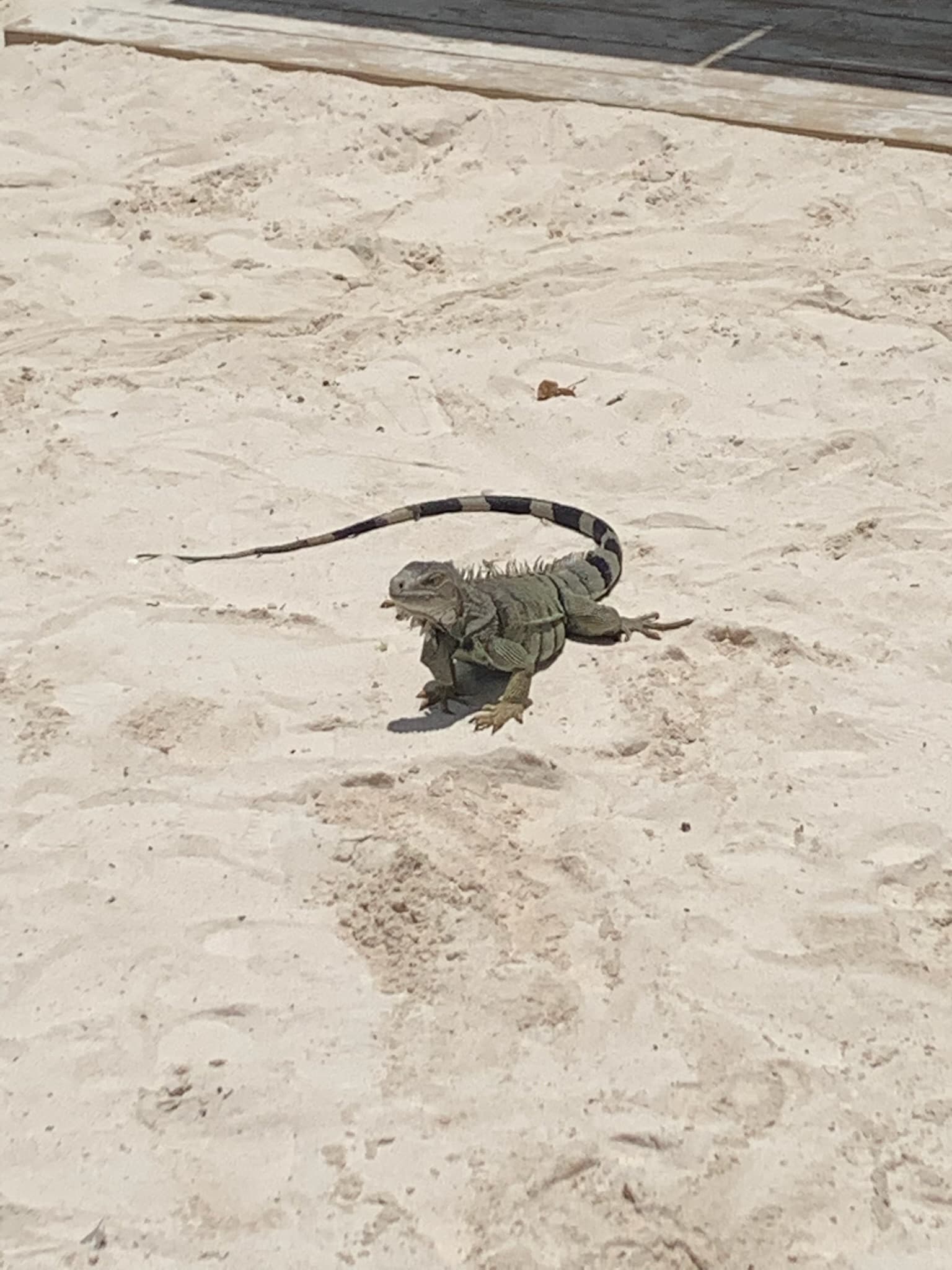
The flamingos may receive most of the attention, but they are not the only residents with absolutely no respect for personal space. At one point, Bas was having a perfectly peaceful nap on his sun lounger when an iguana suddenly jumped straight onto the bed beside him. He woke up with the kind of shock normally reserved for fire alarms and unexpected bank statements. The iguana, meanwhile, appeared entirely unbothered. Iguanas wander freely between the vegetation, beaches and loungers on Renaissance Island, and clearly consider the resort furniture communal property - keep food tucked away, give the animals space and perhaps sleep with one eye open.
Why We’d Rent a Car Again
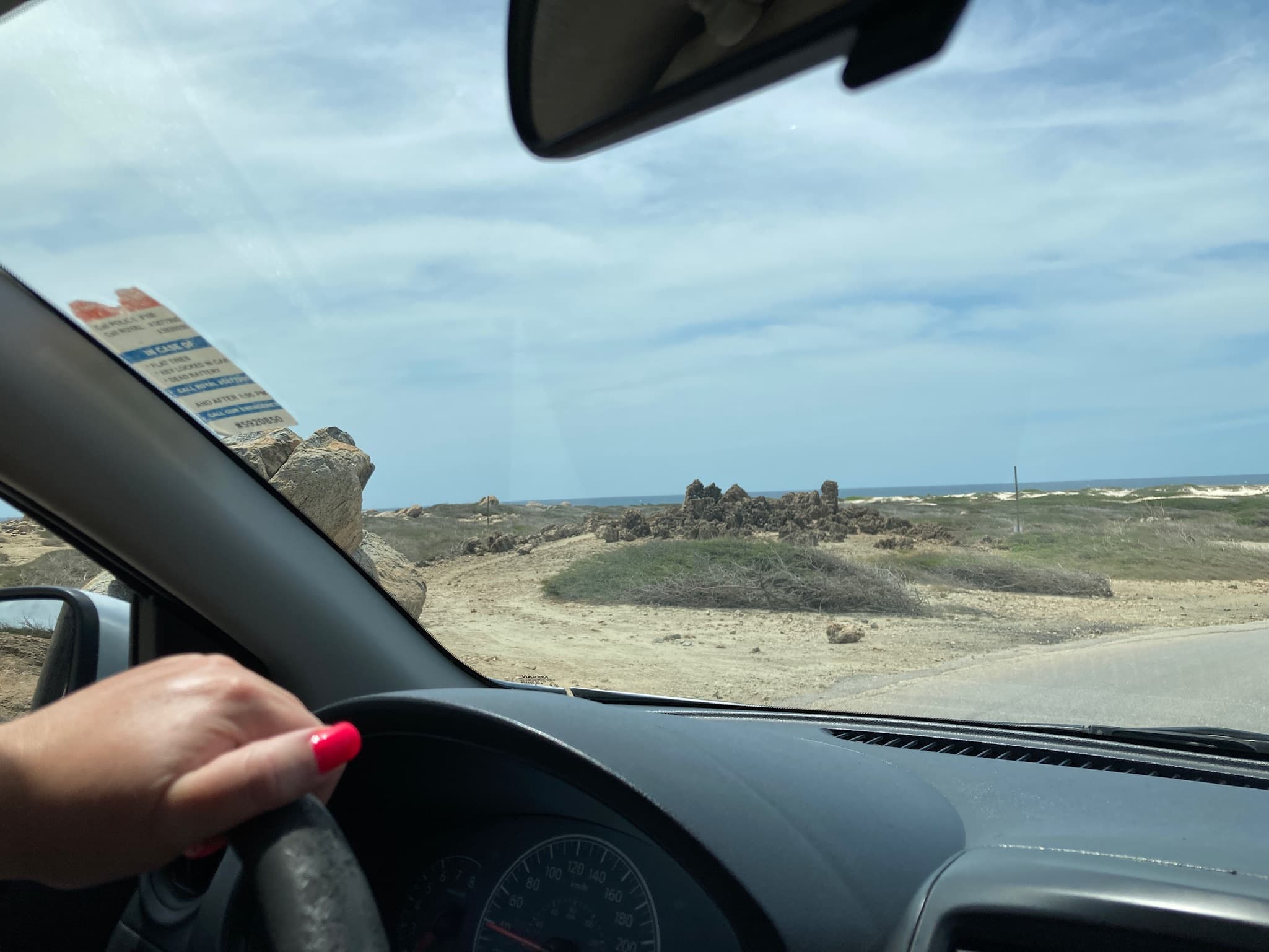
We arranged a rental car for our stay, and although Aruba is not a large island, we were very glad we did. Staying in central Oranjestad means you can reach shops, restaurants and the marina on foot, but many of Aruba’s most interesting beaches, landscapes and places to eat are spread across the island. A car gives you the freedom to leave the polished hotel area behind and discover how quickly Aruba changes once you drive away from the main resort strip - one moment surrounded by designer shops and American-style restaurants, not much later driving through dry, cactus-filled landscapes towards a coastline that looks almost aggressively wild.
For the places most visitors want to reach, driving is generally straightforward: main roads are paved, distances are short, and we felt comfortable exploring independently. The rougher northern and eastern sides are a different story - roads can become dusty, uneven and much less forgiving. A standard rental car suits Oranjestad, the main beaches, San Nicolas and Baby Beach, but it is not designed for every track through Arikok National Park or along the rugged coast. Do not let Google Maps persuade you that every visible line is a sensible road - if you want to visit the Natural Pool or explore the more challenging off-road sections, book a suitable 4×4 or join an organised tour, and check your rental agreement before confidently pointing a hire car towards what appears to be a collection of rocks.
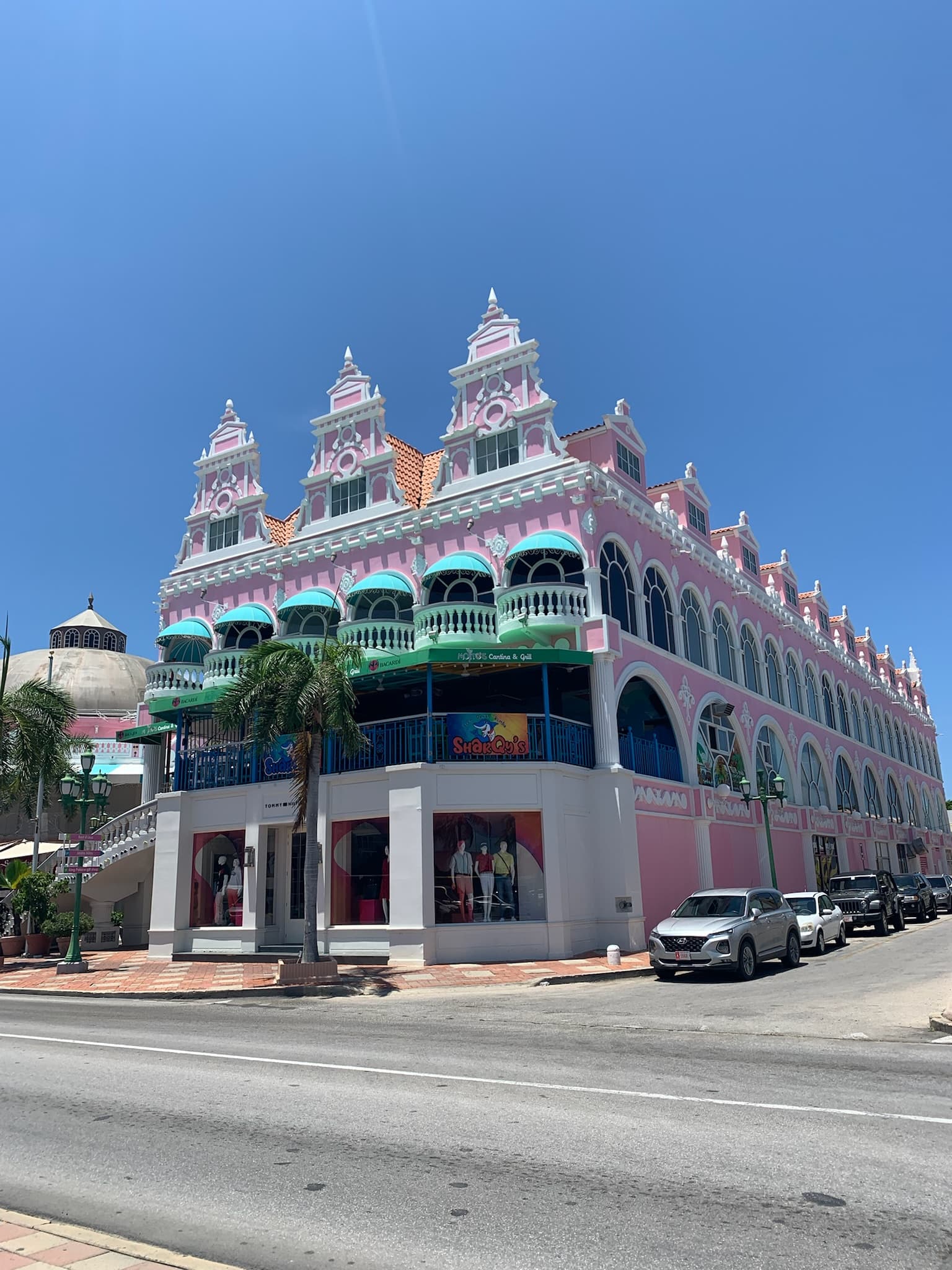
The Renaissance Marina Hotel places you right in Oranjestad, which makes the city easy to explore in smaller doses. It is colourful, sunny and slightly theatrical - pastel façades, ornate Dutch-Caribbean architecture, palm trees, cruise ships and glossy shopping centres all compete for attention, and the unmistakably pink Royal Plaza building is almost impossible to walk past without a photograph. The city is heavily shaped by tourism and cruise visitors, so do not expect a sleepy historic centre - but look between the familiar international names and there are still local cafés, waterfront views and small details that make an aimless walk worthwhile.
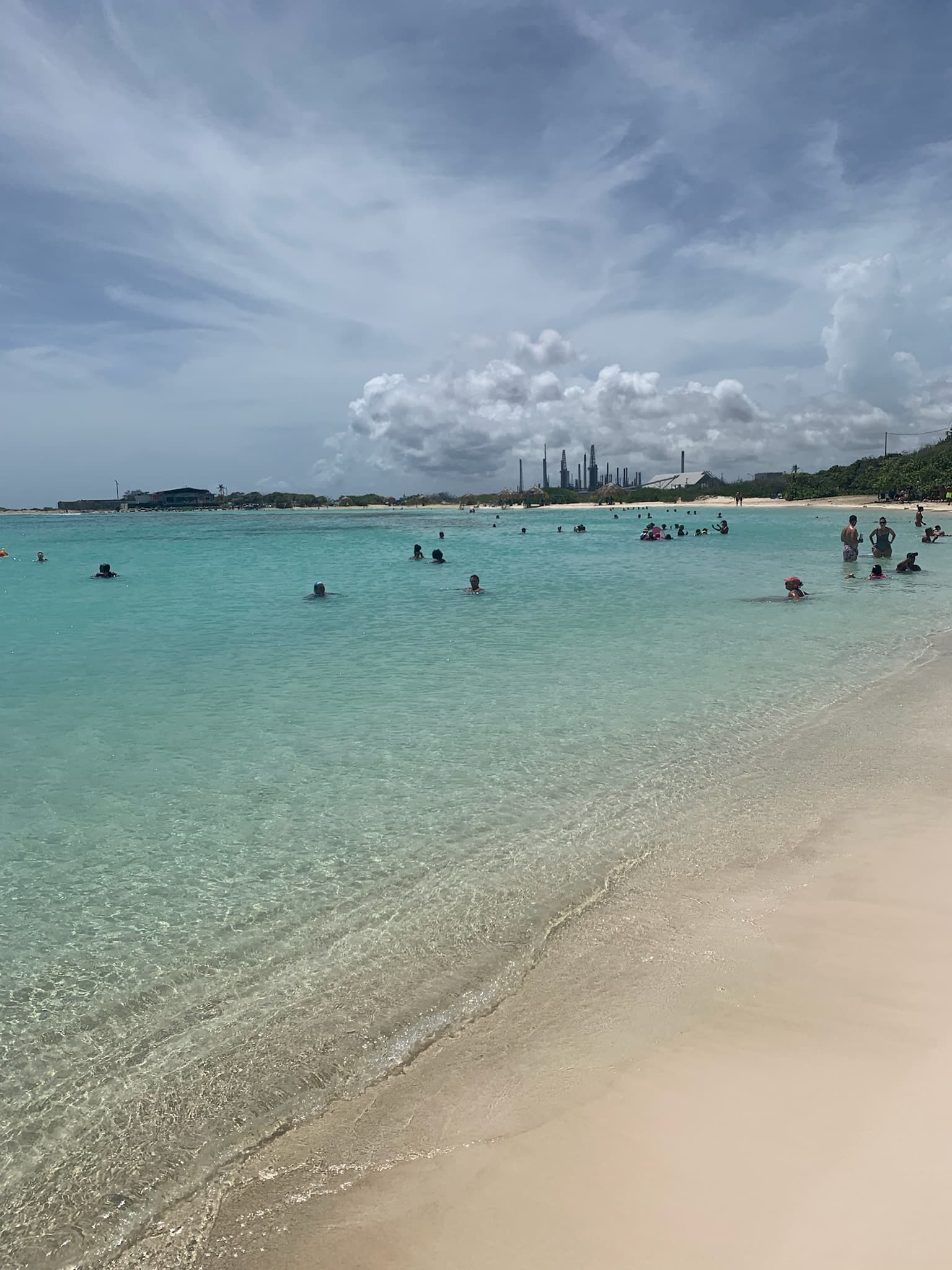
Baby Beach sits on the southern tip of Aruba, close to San Nicolas. Its wide, crescent-shaped lagoon has shallow, remarkably clear water moving between pale mint, turquoise and bright Caribbean blue, and is one of the easiest places on the island for a relaxed swim. It is popular, so arrive earlier for a quieter atmosphere or a shaded spot, bring plenty of sunscreen, and stay within the sheltered part of the lagoon when swimming - the outer edge and channel can have considerably stronger currents than the calm shallows suggest.
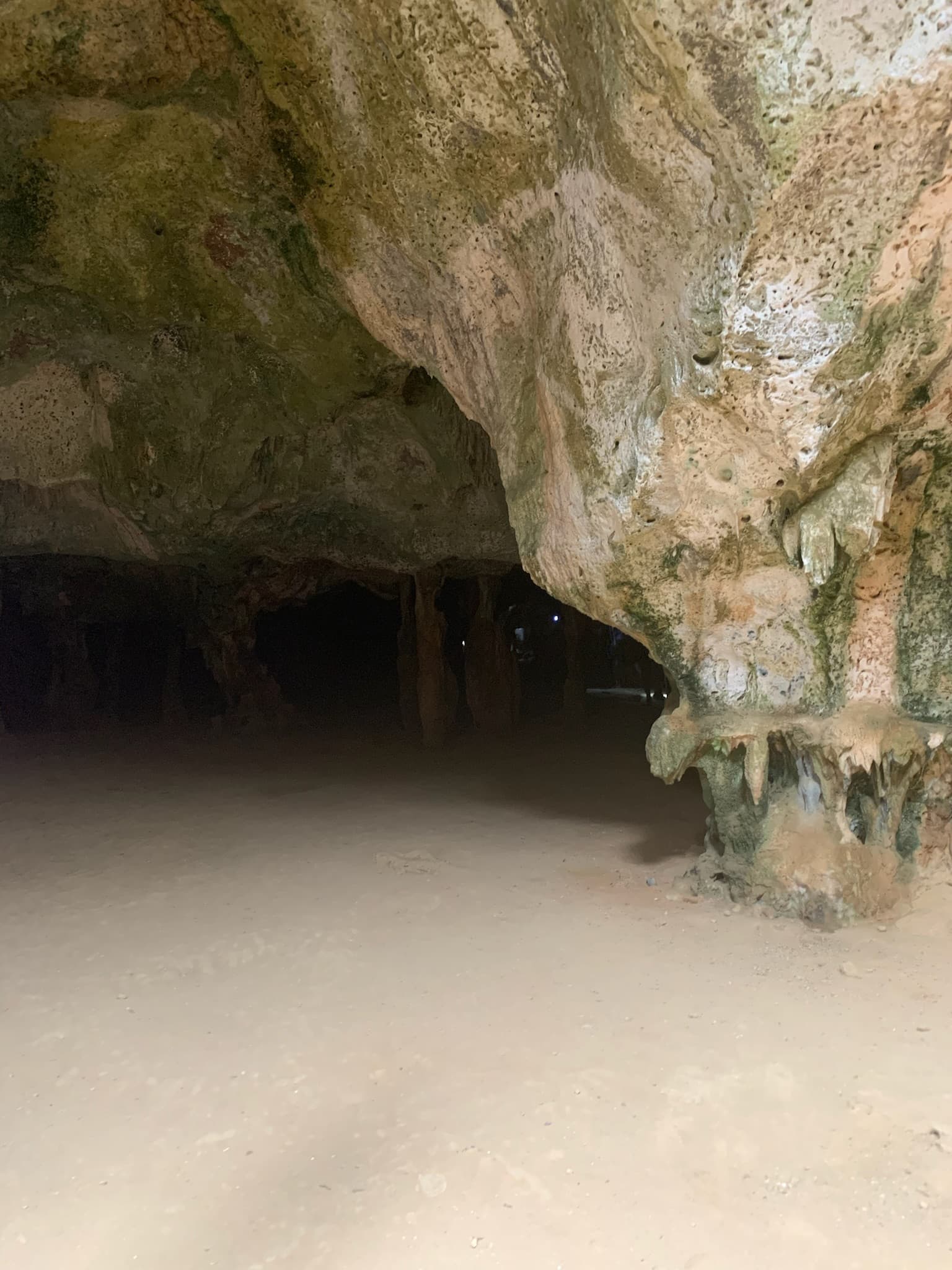
Arikok National Park shows a completely different Aruba: cacti, limestone, caves, dry hills and long views across a wild coastline in place of beach-resort polish. We visited one of the caves and drove through part of the park - inside, the temperature, shadows and huge limestone surfaces made the bright world outside feel very far away. The park includes Fontein Cave and Quadirikiri Cave, plus hiking routes, historic sites and access towards the Natural Pool; because we cannot reliably identify which cave we visited from the photographs alone, we would rather say honestly that we visited one of the caves and it was impressive than invent a name to sound more authoritative. At the time of writing, the Aruba Conservation Foundation lists the main visitor centre as open daily from 8:00 until 15:30, with a conservation day pass required - opening hours, routes and accessibility can change due to weather and conservation work, so check the official visitor information shortly before visiting. Take water, proper shoes and more sun protection than you think you need.
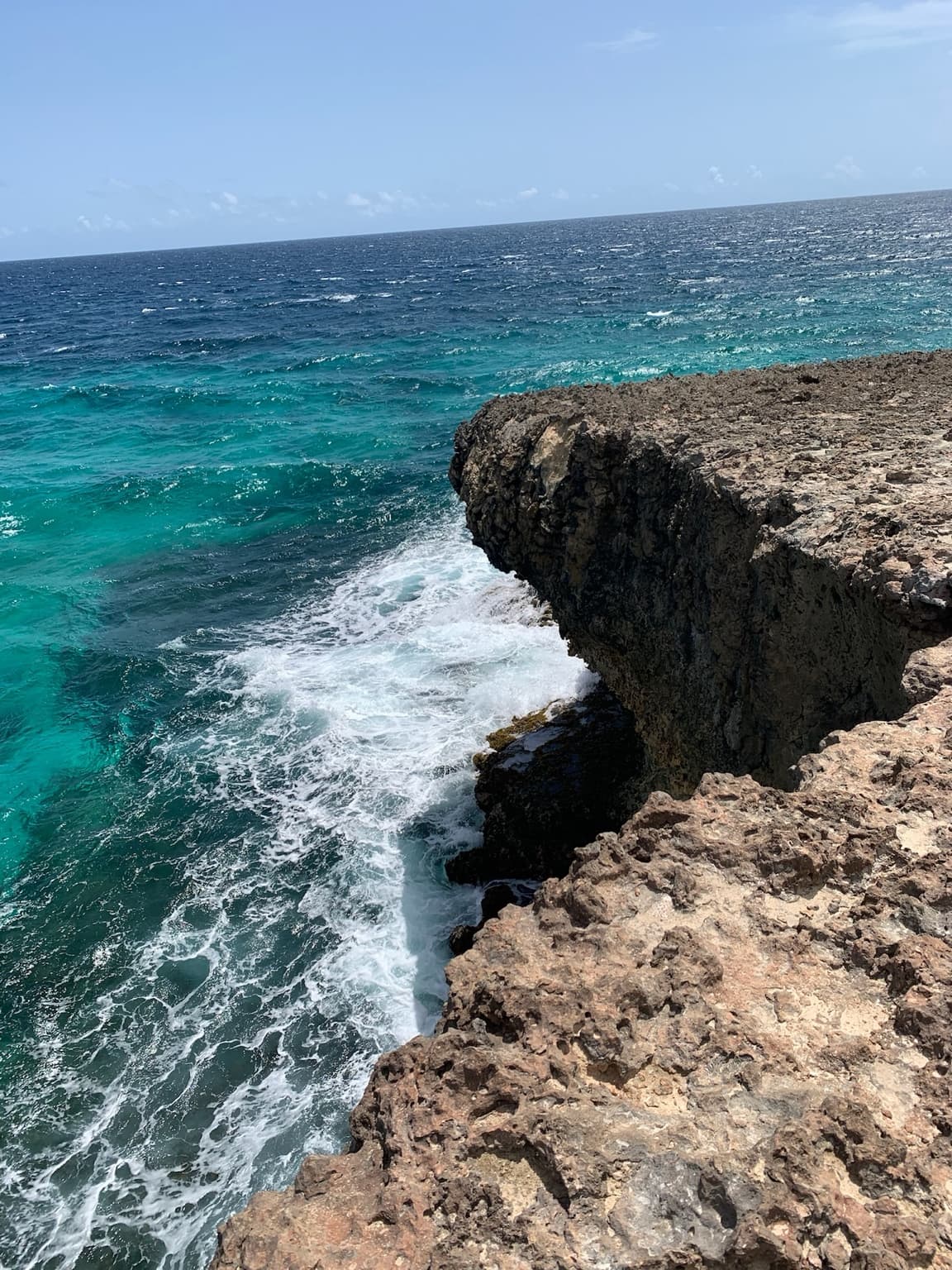
The northern coast feels almost like another island: the calm turquoise lagoons disappear and the Atlantic hits dark limestone cliffs with considerably less patience. Natural arches, coves, spray and rough rock formations make this side of Aruba dramatic rather than traditionally pretty - wonderful for photography and scenic driving, but not the coast for casually deciding to swim because the water looks inviting. Waves and currents can be extremely powerful, access can be rough and some cliffs have no barriers. Stand back, enjoy the view, and resist the urge to convert every beautiful piece of coastline into a swimming location.
Seven Aruba Experiences We’d Actually Prioritise
Aruba offers far more activities than anyone needs to fit into one holiday. Choose a handful of genuinely different experiences, keep room for unplanned stops, and accept that a day beside the pool is not a failure of cultural ambition.
01
A full day on Renaissance Island
Take the early boat
Do not treat it as a quick flamingo photo stop - swim, have lunch, find shade and let the novelty of wandering flamingos become almost normal. Keep food covered and stay alert during naps.
02
A sunset cruise
Book it early in the trip
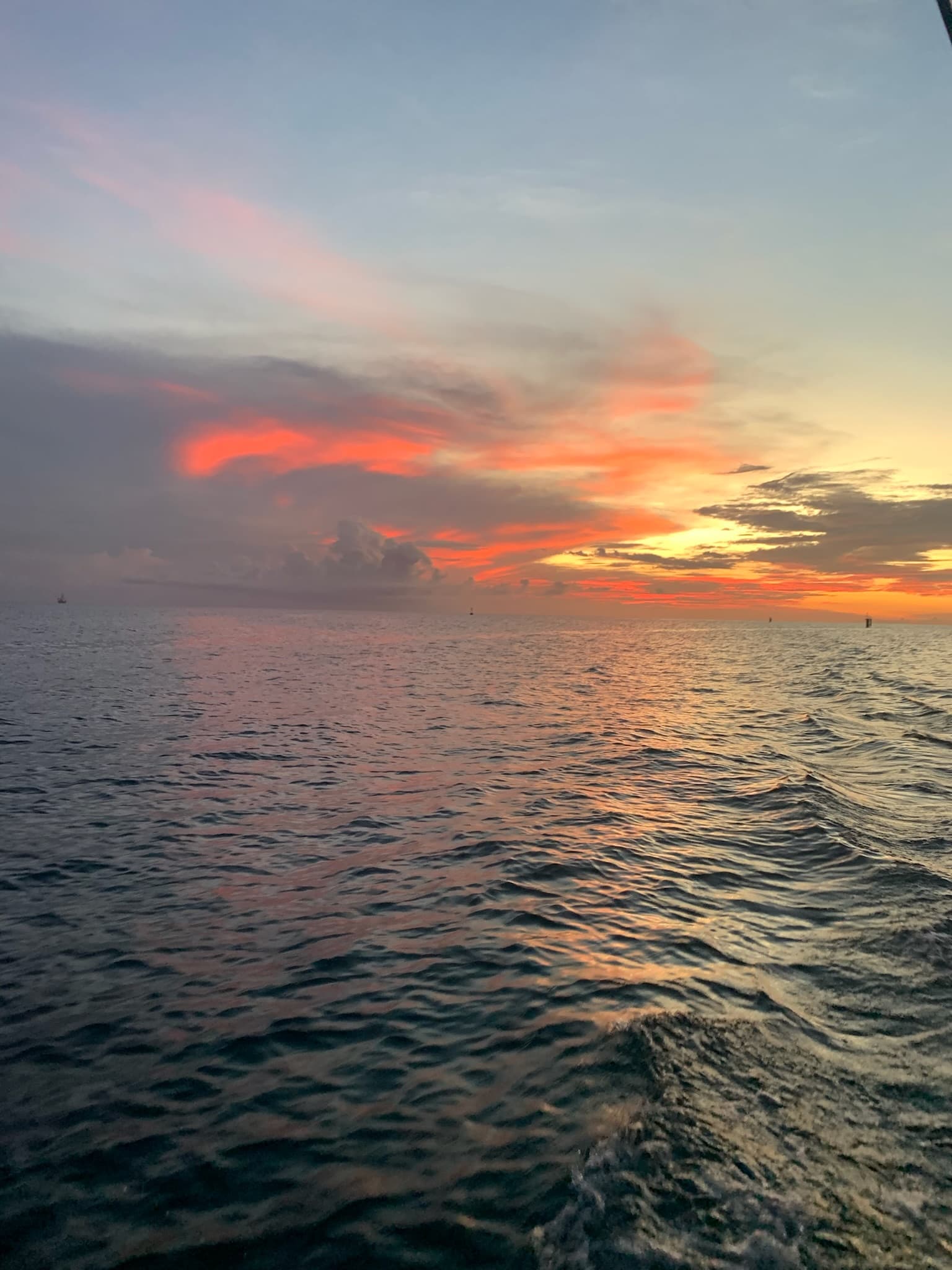
The light at sunset is something else entirely - pale gold, pink, orange and deep coral, romantic without requiring you to manufacture the moment.
03
Drive south to Baby Beach
Combine with San Nicolas
A sheltered, brilliantly turquoise lagoon, easy to pair with lunch at Big Mama Grill or a stop in Savaneta on the way back.
04
Aruba’s wild side in Arikok
Start early, bring water
Visit at least one accessible cave and one coastal viewpoint. Check which roads suit your rental car before you go.
05
Oranjestad, without a shopping agenda
Walk, don’t schedule
Pastel façades, the marina and the gloriously unsubtle pink Royal Plaza. Stop for a cold drink and skip the rigid sightseeing route.
06
Eat beside the water in Savaneta
Zeerovers, obviously
Fresh seafood, simple sides, wooden tables and fishing boats arriving beside you - connected to the sea, not just decorated with pictures of it.
07
One deliberately unambitious hotel day
No evidence of productivity required
Rooftop pool, lunch, a book, no attempt to leave the room. Some of our warmest memories came from a day we never planned to have.
SHARED MAP
Save Our Aruba Map
Before almost every trip, we make a shared Google Maps list - part practical planning tool, part holiday anticipation. We save the beaches we want to see, restaurants that look promising, scenic stops, coffee possibilities and all the places we may otherwise forget as soon as we arrive. Our Aruba map brings the locations from this guide together, so you can save the list and build your own itinerary without repeatedly searching for every beach, restaurant and landmark.
Open our Aruba mapMap key: ✅ personally visited · ⭐ Essy’s Essential · 🤿 snorkelling · 🍸 cocktails · 🍴 restaurants · 📌 saved for next time. Use it as a starting point rather than a strict schedule - check current opening hours, road conditions and access information before setting out.
Where We Ate and Drank in Aruba
Aruba’s food scene reflects the island itself: Caribbean ingredients, Dutch influences, fresh seafood and an enormous amount of American-style convenience all exist within a very small area. You can eat beside a fishing boat in Savaneta, order pizza in a brightly coloured shopping square, have lunch barefoot beside a lagoon and end the day with room service in a luxury hotel. We managed a little of everything - although being ill for half the trip meant our culinary research was not quite as extensive as originally intended.
Breakfast was included in our TUI booking, which we would choose again - for us, breakfast is the beginning of the holiday day: coffee first, something proper to eat, and only then a discussion about beaches, boats or rental cars. Check your reservation, since breakfast is not automatically included with every room rate.
Zeerovers in Savaneta is one of Aruba’s best-known casual seafood stops, but it still feels more like a working fishermen’s wharf than a polished resort restaurant: fresh fish and shrimp arrive from local fishermen, are cleaned and cooked, and are served with simple sides at wooden tables beside the water while fishing boats come and go behind you. This is not the place for white tablecloths - come for fresh seafood, cold drinks and the setting. We also stopped for frozen fruit pops by the waterfront, exactly the sort of thing that tastes disproportionately good when the air is hot, the sea is behind you and nobody is pretending lunch needs to be sophisticated.
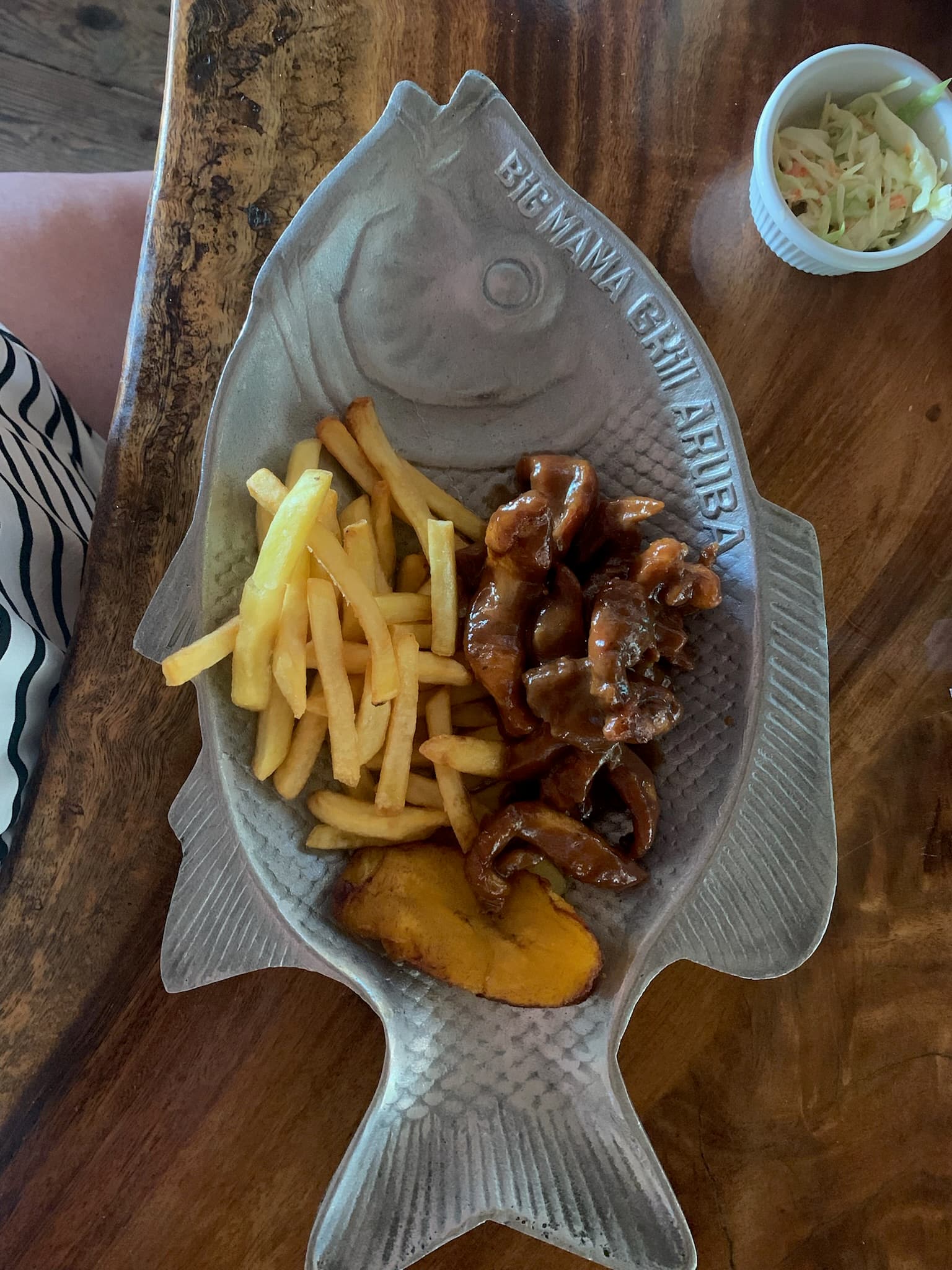
Big Mama Grill sits directly beside Baby Beach and works particularly well as part of a southern-island driving day - casual, colourful and unpolished in the best possible way, with swimsuits normal, portions generous and food arriving without unnecessary ceremony. Our meal was served in an enormous fish-shaped dish with fries, fried plantain and meat, the sort of presentation that makes perfect sense beside a tropical lagoon and almost nowhere else. Casa Tua, at Renaissance Marketplace near the hotel, serves Italian and Mediterranean-style food including thin-crust pizza and pasta - we stopped there for a cold bottle of Aruba’s Chill beer, complete with the obligatory wedge of lime. It is not where we would send someone for a deeply local Aruban food experience, but exactly where we would send someone who wants an easy evening, a terrace and a pizza after a full day out.
Lucy’s Retired Surfers Bar sits by the marina with boats, picnic tables and a relaxed waterfront atmosphere - casual, lively and distinctly less polished than the Renaissance pool bars, useful when you want to step outside the hotel environment without driving across the island. And spending a full day on Renaissance Island does not mean packing a sad sandwich into your beach bag: food and drinks are available on the island, and we had wraps, a burger, fries and cold drinks delivered in baskets to our table, and on another occasion quesadillas with guacamole, salsa and sour cream looking directly over the water. It is not the cheapest lunch you will eat in Aruba, but leaving a private island halfway through the day to find a more economical sandwich is also not a sensible use of your holiday.
The Quick Food & Drink Edit
When you want a shortcut instead of a spreadsheet.
01
Zeerovers
Savaneta
Fresh fish, prawns, fries and plantain served without unnecessary ceremony, right beside the fishing boats.
02
Big Mama Grill
Baby Beach
A relaxed, fish-shaped-dish lunch stop that fits perfectly into a southern-island beach day.
03
Casa Tua
Renaissance Marketplace
Pizza, an ice-cold Chill and a wonderfully uncomplicated evening near the hotel.
04
Lucy’s Retired Surfers Bar
Marina, harbour side
Frozen drinks and a casual seat beside the boats - a good way to step outside the hotel bubble.
What to Know Before You Go
Aruba is easy once you are there, but it rewards a little preparation - the accordion below covers the practical questions we would want answered before booking. As with any travel guide, treat the details as a starting point: prices, schedules and conditions can change, so always confirm current information directly with the hotel, travel provider or local authority before you go.
Practical Aruba Guide
The questions we would want answered before booking.
How do you book with TUI, and what’s included?
We booked our ten-day package through TUI Netherlands, including the flight, Renaissance Marina Hotel and breakfast. What is included depends on the exact package - breakfast, airport transfers, baggage and the flight route are not automatically identical for every departure, so check the booking details. Flights from Amsterdam to the ABC islands take roughly ten hours, though the total journey can be longer depending on the route and any stop.
What is the Aruba ED Card, and do you need one?
Every traveller entering Aruba must complete the official online Embarkation and Disembarkation Card (the Aruba ED Card) within seven days before arrival. A sustainability fee of USD 20 per eligible air passenger is collected through the official application, paid online by credit card. Dutch citizens do not ordinarily need a tourist visa for a standard holiday, but a valid passport and all entry conditions still apply. Use only the official Aruba ED Card website - other sites may charge extra fees for a form you can easily submit yourself.
When is the best time to visit Aruba?
Aruba is warm year-round, with average temperatures around 29°C. We travelled in late August and early September - hot, bright and windy, though the trade wind makes it dangerously easy to underestimate the sun. Aruba lies south of the main Atlantic hurricane belt, so direct hurricane impacts are rare, though the wider Caribbean hurricane season (June through November) can still bring passing wind, cloud and rainfall. December through April is generally the busiest and driest period; late summer can offer better package prices, but it is warmer, and September has historically seen somewhat more rain than August.
What about money, tipping and drinking water?
The official currency is the Aruban florin, but US dollars are accepted almost everywhere and major credit cards are widely used. You may receive change in florins even when paying in dollars, so check which currency is being quoted. Tipping is customary but not compulsory - around 15-20% is common for good service, though some restaurants and hotels already include a service charge, so check the bill first. Aruba’s tap water is safe to drink; bring a refillable bottle and fill it at the hotel before going out.
What language is spoken, and how “Dutch” does Aruba feel?
Dutch and Papiamento are official languages, and English and Spanish are spoken widely. Travelling as a Dutch visitor is easy, but Aruba does not always feel particularly Dutch - the tourism industry is strongly oriented towards visitors from the United States, especially in the large resorts, restaurant areas and shopping centres. That international ease is part of Aruba’s appeal, but travellers seeking a quiet, untouched Caribbean island may find the main tourist areas highly developed.
Do you need travel insurance, and what about medication?
Yes - our own trip is a fairly good argument for proper travel insurance. Bring enough prescription medication for the complete trip, plus a little extra, pack essential medication in hand luggage, and save your insurer’s emergency details somewhere accessible offline. Aruba’s breeze is both wonderful and deceitful: use high-factor sunscreen, reapply after swimming, and bring a hat even if hats usually interfere with your preferred holiday aesthetic.
Is there a time difference with the Netherlands?
Aruba does not change its clocks for daylight-saving time. The time difference with the Netherlands is generally six hours during Dutch summer time and five hours during Dutch winter time, so the first mornings may begin rather early. Fortunately, Aruba provides coffee, sea views and flamingos for precisely this sort of inconvenience.
How long should you stay?
Seven nights is enough for the main highlights if you plan carefully. Nine or ten nights is better if you want to revisit Renaissance Island, explore independently and include proper pool and beach days. We had ten days and lost roughly half of them to illness - unsurprisingly, we would choose ten days again, preferably with the full allocation available for actual holiday use.
Aruba or Bonaire?
Aruba and Bonaire belong to the same Dutch Caribbean family, but they offer very different holidays. Choose Aruba if you prefer white sandy beaches and shallow lagoons, more restaurants, shops and nightlife, large and luxurious resorts, a livelier and more international atmosphere, a combination of city, beach and resort life, and the unique Renaissance Island experience. Choose Bonaire if you prefer a quieter, smaller-scale atmosphere, exceptional shore snorkelling and diving, fewer large resorts, a more relaxed and less commercial island experience, long days exploring at your own pace, and rugged nature and underwater life over shopping and nightlife.
Aruba feels more immediately luxurious. Bonaire feels more quietly personal. For us, Bonaire invited us to keep driving, snorkelling and finding another place for sunset; Aruba made it very easy to alternate between exploring and being looked after. Neither is objectively better - the better choice depends on whether your ideal Caribbean day begins with snorkelling gear in the rental car or a small private boat waiting inside your hotel. If you are considering another Dutch Caribbean island, our complete guide to Bonaire covers the quieter, snorkelling-led version of this same trip.
Is Aruba the Right Caribbean Island for You?
Aruba is easy to enjoy. The weather is dependable, the roads are manageable, English is spoken everywhere, and the island offers a comfortable mix of beaches, restaurants, shopping, nightlife and nature. That accessibility is also the main reason Aruba will not suit everybody: the principal resort areas are highly developed and strongly influenced by American tourism, so travellers dreaming of a tiny Caribbean island where modern tourism has barely arrived may find Aruba too polished and commercial. We enjoyed the contrast - private-island luxury one day, a rough coastal road or fishermen’s wharf the next.
Aruba is a strong choice if you want reliable Caribbean warmth, beautiful and accessible beaches, a comfortable long-haul holiday, good restaurants and plenty of choice, an island that is easy to explore by car, a combination of luxury and independent sightseeing, a grown-up hotel with nightlife and city access, and flamingos appearing in your holiday photographs with minimal effort. It may be less suitable if you want a genuinely remote island, very low prices, small-scale boutique hospitality everywhere, empty beaches during the busiest season, dramatic green tropical landscapes, or a holiday completely free from cruise ships, casinos and international brands.
Aruba did not receive us under ideal circumstances. I spent around half the holiday ill, which meant cancelled plans, more time in the hotel room, and fewer restaurants and beaches than we had intended to visit. It would be easy to let that become the complete story of the trip. It isn’t. I remember the absurd thrill of boarding a boat inside the hotel. I remember flamingos walking through perfectly clear water and an iguana launching itself onto Bas’s sun lounger. I remember the rooftop pool, a Formula 1 afternoon with room service, the wild coast, frozen fruit pops beside the fishing boats and a sunset turning the entire sky coral. Those memories survived the difficult days remarkably well.
Would we return? Yes - partly because Aruba deserves a healthier second attempt, but also because the island makes a grown-up Caribbean holiday extremely easy. We could return to the Renaissance Marina Hotel, revisit the private island, rent another car and still find places we missed in 2022. I would plan the next trip slightly differently: more time outside the most commercial areas, a few carefully chosen restaurants booked in advance and at least one completely empty day in the schedule. But I would happily step onto that little hotel boat again.
A Few Things Worth Avoiding
A handful of real lessons from our own ten days, offered so you don’t have to learn them the same way.
- Assuming “Renaissance Wind Creek Aruba Resort” means one single experience - confirm the Marina Hotel or Ocean Suites before booking, since the two sections differ considerably.
- Treating every line on Google Maps as a sensible road for a standard rental car - the wild coast and parts of Arikok need a proper 4×4 or an organised tour.
- Swimming off the wild north coast because the view looks inviting - currents and access can be genuinely dangerous there.
- Leaving the ED Card and sustainability fee until the last minute - it can only be completed within seven days of arrival.
- Underestimating the sun because of the constant trade wind - it is remarkably good at hiding how much you are burning.
- Packing prescription medication only in checked luggage, or travelling without proper insurance.
An Independently Booked, Honest Trip
This guide is based on our own trip to Aruba in late August and early September 2022, booked and paid for independently through TUI Netherlands. It is not sponsored, gifted or commissioned by TUI, Renaissance Wind Creek Aruba Resort, Zeerovers, Big Mama Grill, Casa Tua or Lucy’s Retired Surfers Bar.
Practical details - fees, opening hours and booking information - were last reviewed on 18 August 2026 and should be checked again before you travel, since prices, schedules and policies can change. Some links on this page may be affiliate links, including the Stay22 link to Renaissance Wind Creek Aruba Resort below; if you book through one, we may receive a small commission at no additional cost to you. Our recommendations and opinions remain our own.
Book & Know
- Renaissance Wind Creek Aruba Resort — Official resort website
- TUI Netherlands — Renaissance Wind Creek Aruba Resort booking page
- Government of Aruba — Official Aruba ED Card
- Aruba Tourism Authority — Latest official travel requirements
- Aruba National Park Foundation — Official Arikok visitor information
- Aruba Tourism Authority — Zeerovers
- Big Mama Grill — Official website
- Casa Tua Aruba — Official website
Related Editorial
Aruba did not receive us under ideal circumstances - and we still spent the return flight planning when we could go back.
That is either a very good hotel or a very good island. Quite possibly both.

Written by Esther
Esther is the founder, photographer and editor behind Essy’s Essentials. She writes about seasonal living, quiet luxury and thoughtful travel shaped around atmosphere, beauty and the pleasure of moving at your own pace.
More about Esther →