Travel
How to Choose an Adults-Only Hotel That Is Actually Quiet
Because adults-only does not always mean peaceful.
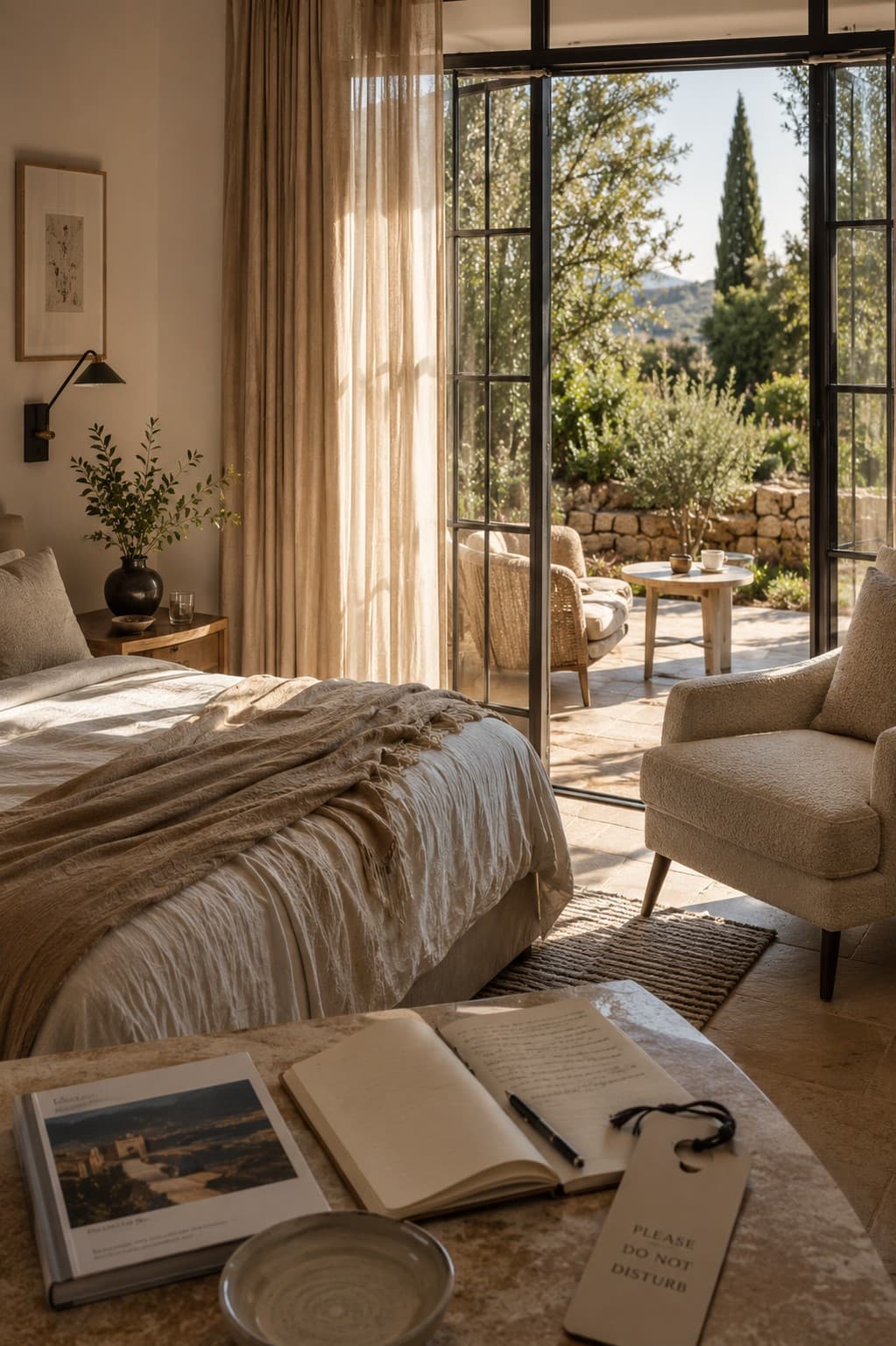
The words adults-only can create a very particular picture.
A small hotel. Soft morning light. A quiet pool. Breakfast served without hurry. Perhaps a terrace with two chairs, a view across the hills and the reassuring sense that nobody expects you to join an organised activity before lunch.
Sometimes that is exactly what you find.
At other times, an adults-only hotel turns out to mean loud music beside the pool, cocktails served in plastic glasses and an entertainment programme designed for guests who consider silence a problem that needs to be solved.
An age restriction can tell you who will be staying at a hotel.
It tells you surprisingly little about how that hotel will feel.
That distinction matters within The Grown-Up Escape. Because the kind of adults-only travel we are interested in is not defined solely by the absence of children. It is shaped by atmosphere, privacy, thoughtful hospitality and the freedom to enjoy a place without constantly being surrounded by noise, queues or organised fun.
A genuinely quiet hotel does not have to feel formal, remote or lifeless.
It simply needs to understand that many adults are no longer looking for more stimulation.
They are looking for space.
Here is how to recognise that kind of hotel before you book.
THE QUIET HOTEL CHECK, AT A GLANCE
Look beyond the adults-only label. Check the hotel’s scale, guest reviews, pool atmosphere, room position, event calendar, food concept and surroundings to understand how peaceful the stay is likely to feel.
Begin With the Kind of Adults-Only Hotel It Is
Not all adults-only hotels serve the same traveller.
Some are designed around nightlife, socialising and poolside entertainment. Others focus on wellness, romance, food, design or complete seclusion. All can correctly describe themselves as adults-only, even though the guest experience is entirely different.
Before looking at the rooms or saving the prettiest photograph, try to identify the hotel’s actual purpose.
Ask yourself: Is this a boutique retreat or a large resort? Is the focus on relaxation, nightlife, wellness or entertainment? Does the hotel market itself to couples, groups or party travellers? Are the public spaces designed for lingering or socialising? Does the website describe quietness, privacy and rest, or energy, music and atmosphere?
The words used by the hotel are often revealing.
Terms such as vibrant, lively, social, entertainment, resident DJ and pool party are not necessarily negative. They simply point towards a different kind of holiday.
For The Grown-Up Escape, I am more drawn to language such as: intimate; secluded; peaceful; slow; understated; private; boutique; restorative; locally rooted; designed for rest.
The language alone is not proof, but it is a useful first filter.
Look Beyond the Adults-Only Label
An adults-only policy is a starting point, not a quality mark.
A hotel can exclude children and still feel busy, noisy and impersonal. Equally, a small hotel that does not formally describe itself as adults-only may offer the kind of calm, thoughtful experience you are looking for.
The real question is not: Are children allowed? It is: What kind of atmosphere has this hotel intentionally created?
A true Grown-Up Escape usually has several qualities working together: a limited number of rooms; generous outdoor space; calm communal areas; thoughtful food and drink; rooms that are pleasant to spend time in; service that feels attentive rather than performative; a clear sense of place; enough privacy to disappear for a while.
The age policy may support that experience, but it does not create it on its own.
Check the Number of Rooms
The size of a hotel can tell you a great deal about its likely rhythm.
A property with twelve rooms and a small courtyard will usually feel different from a resort with three hundred rooms, several pools and an all-day entertainment schedule.
That does not mean smaller is automatically better. Small hotels can have thin walls, crowded terraces or a single noisy bar positioned beneath every bedroom. Large hotels can sometimes offer exceptional privacy because they have more space and separate quiet zones.
Still, room count is one of the most useful clues.
When reviewing a hotel, look for: the total number of rooms or suites; the number of guests sharing the pool; whether there are several separate buildings; whether the restaurant also serves outside visitors; whether the property hosts weddings or events; whether day guests can use the pool or spa.
A hotel may look intimate in photographs because each image captures one carefully framed corner. The room count helps reveal the scale that sits beyond the frame.
For a truly quiet stay, I generally prefer hotels that feel intentionally small or that have been designed in a way that prevents all guests from gathering in the same place at once.
Study the Pool Area Carefully
The pool is often where the difference between adults-only and actually quiet becomes most obvious.
Hotel photography tends to show the pool at its calmest: early in the morning, perfectly still and occupied by no more than one aesthetically placed sunhat.
Look beyond that image.
Check: how many loungers surround the pool; how close they are to one another; whether there is a pool bar; whether speakers are visible; whether the pool is described as a social hub; whether there are scheduled DJ sessions or events; whether the hotel has one pool or several zones; whether rooms are positioned directly around the pool.
A pool bar is not automatically a warning sign. Neither is music. But if the hotel’s social life is concentrated around one small swimming pool, your quiet afternoon may depend heavily on the mood of the other guests.
The most promising hotels often have places to retreat beyond the main pool: a garden, a shaded terrace, private patios, a library, a rooftop or several smaller seating areas.
A quiet hotel gives guests more than one way to spend the day.
Read Reviews for Sound, Not Just Service
Guest reviews are particularly useful when you read them with one specific question in mind.
Do not only look at the overall rating. Search within the reviews for words connected to sound and atmosphere: quiet; peaceful; music; noise; bar; road; wedding; party; walls; sleep; morning; construction; restaurant; pool.
One review mentioning noise does not necessarily mean the hotel is noisy. The guest may have stayed during a festival, a wedding or a temporary building project.
Patterns matter more than isolated complaints.
Pay attention when several guests mention: music continuing into the evening; rooms above the restaurant or bar; poor soundproofing; doors slamming in corridors; road noise; early-morning deliveries; weddings or private events; limited quiet seating; a pool atmosphere that felt more social than relaxing.
Positive reviews are equally informative.
Phrases such as we felt as though we had the place to ourselves, breakfast was wonderfully unhurried or there were quiet corners everywhere often say more than a generic five-star rating.
The most useful reviews describe how the hotel felt at different moments of the day.
Find Out Whether the Hotel Hosts Weddings and Events
A beautifully restored country house or historic estate may look perfect for a quiet escape.
It may also be one of the most popular wedding venues in the region.
This does not mean you should avoid it. Many hotels manage events carefully and keep staying guests completely separate. But it is worth checking before booking.
Look at: the hotel’s wedding page; private-event information; social-media posts; event spaces shown on the property map; reviews mentioning music or closed facilities.
You can also contact the hotel directly and ask whether any weddings, private parties or large group bookings are scheduled during your stay.
This is not being difficult.
It is protecting the experience you are paying for.
A hotel may still be adults-only during a wedding weekend, but it may not be remotely quiet.
Check Where Your Room Is Located
Room category matters, but room position often matters more.
A beautifully designed room may be directly above the breakfast terrace, beside the lift or opposite the service entrance. A less dramatic room at the edge of the property may offer far more privacy and better sleep.
Before booking, study the property map when one is available.
Look for rooms: away from the bar and restaurant; not directly beside reception; away from lifts and main staircases; not underneath rooftop terraces; not immediately beside the pool; away from service roads and parking areas; with private rather than shared outdoor space.
Ground-floor rooms can offer easy access to gardens and terraces, but may have less privacy. Rooms in the main building may have more character, but also more passing guests. Detached suites may feel quieter, although they can be farther from the main facilities.
There is no universally best location.
The right room depends on what matters most to you: privacy, view, convenience, outdoor space or complete silence.
When in doubt, email the hotel.
A simple question such as Which room category would you recommend for the quietest and most private stay? can be remarkably effective.
Consider the Minimum Age
Adults-only does not always mean 18-plus.
Some hotels accept guests from 14, 16 or 17. Others set the minimum age at 21. A few create different age policies for particular buildings, pools or seasons.
The minimum age will not necessarily determine the atmosphere, but it can help you understand what the hotel means by adults-only.
A minimum age of sixteen may still offer exactly the calm experience you want. An 18-plus resort may be built entirely around nightlife.
Again, the policy is one clue rather than the final answer.
Check the exact age requirement rather than relying on the adults-only label in a booking-platform filter.
Look Closely at the Food Concept
Food is one of the clearest indicators of a hotel’s intended pace.
A hotel with several large buffet restaurants, poolside snacks, themed evenings and all-inclusive drinks may be designed around convenience and high guest volume.
A smaller hotel may offer a limited menu, local ingredients, long breakfasts and dinner served at a handful of tables.
Neither model is inherently better. But they create very different experiences.
For The Grown-Up Escape, I tend to look for: breakfast that appears thoughtful rather than purely functional; a pleasant space to eat; enough time to linger; local products; good coffee; table service or a small, well-presented buffet; the option to dine outside; restaurants within reach when the hotel does not serve dinner.
Also check whether breakfast has a strict end time.
A hotel can describe itself as relaxed while clearing the breakfast room with military efficiency at nine thirty.
The long breakfast is not a decorative extra.
It is part of the hotel’s philosophy.
Notice Whether the Rooms Are Designed for Living
The old travel advice that the room does not matter because you will only sleep there has never made much sense to me.
A quiet hotel should allow you to enjoy the room itself.
Look for: a comfortable chair or small sofa; a private balcony or terrace; enough space around the bed; good natural light; somewhere to read; a table for coffee or room service; curtains that genuinely darken the room; thoughtful storage; a bathroom that does not feel improvised.
A room designed only for sleeping pushes you back into communal spaces, even when you might prefer privacy.
A good grown-up hotel understands that an afternoon spent reading, napping or drinking coffee in your room is not time wasted.
It is part of the stay.
Be Wary of Photographs That Are Too Empty
Hotel photography is designed to sell a possibility.
The pool is empty. The terrace is immaculate. The beach has no other visitors. Breakfast has been set for two at precisely the moment the light turns golden.
There is nothing wrong with beautiful photography. In fact, it can help you understand the aesthetic and intention of a hotel.
But it rarely shows capacity.
Use photographs to assess: the design; quality of materials; room layout; outdoor spaces; visual atmosphere; surrounding landscape.
Do not use photographs alone to judge: noise; occupancy; privacy; service; how crowded breakfast becomes; how close loungers are during the day; whether music is played.
For that, you need room counts, maps, reviews and direct questions.
A beautiful image can inspire the booking.
It should not complete the research.
Check the Surroundings
Sometimes the hotel is quiet, but its location is not.
A property may sit beside a busy coastal road, above a late-night restaurant or near a town square that remains lively until the early hours.
Equally, a hotel described as remote may require a long drive for every meal and leave you feeling more isolated than relaxed.
Use a map to check: nearby roads; bars and restaurants; event venues; airports and flight paths; neighbouring hotels; beaches and public access points; parking areas; churches and bell towers; walking distance to the nearest village.
Street-view imagery and satellite maps can reveal what carefully cropped hotel photographs do not.
A quiet setting does not always mean total seclusion.
The ideal may be a hotel that feels private while remaining close enough to a village, restaurant or scenic route to give you options.
Decide How Much Seclusion You Actually Want
Quiet and remote are not the same thing.
It is easy to be seduced by a hotel at the end of a mountain road, surrounded by olive groves and reachable only by car. That may be perfect for three days of reading and doing very little.
It may feel restrictive if you enjoy walking to dinner, having several restaurant choices or exploring spontaneously.
Before booking, consider your preferred rhythm.
Would you like to: stay mostly at the hotel; drive out each day; walk to restaurants; combine the stay with sightseeing; have dinner on site every evening; spend entire afternoons by the pool; explore villages and return before sunset?
The best hotel is not necessarily the quietest property you can find.
It is the one whose level of seclusion supports the holiday you actually want.
Pay Attention to the Language Around Entertainment
Hotels often reveal their atmosphere through their activity schedule.
A hotel may offer: live music; poolside DJs; cocktail evenings; group fitness; organised excursions; themed dinners; evening entertainment.
Some of these can be lovely. A small acoustic performance during dinner is very different from amplified music beside the pool all afternoon.
Look for frequency, location and timing.
If the website is unclear, ask: Is music played by the pool? Is there evening entertainment? How often are events held? What time do they usually finish? Are there quieter areas away from them?
The goal is not to find a hotel where nothing ever happens.
It is to find one where you can choose whether to participate.
Understand What Quiet Luxury Really Means
Quiet luxury in travel is not simply beige interiors and expensive linen.
It is restraint.
A sense that the hotel knows when to offer something and when to leave you alone.
It can be found in: excellent soundproofing; a beautifully made bed; coffee delivered without fuss; staff remembering where you prefer to sit; lighting that becomes softer in the evening; a breakfast table that does not need to be turned quickly; a room that feels private even when the hotel is full.
The most luxurious part of a stay may be the absence of friction.
No queues. No announcements. No pressure to join in. No need to compete for a sunbed or hurry through breakfast.
That kind of luxury does not always photograph dramatically.
But you feel it almost immediately.
Ask the Hotel Directly
There is no rule that says you must make a booking based solely on the information available online.
A thoughtful hotel will usually be happy to answer a few specific questions.
You might ask: Which room is the quietest? Is music played around the pool? Are weddings or events planned during my stay? Does the hotel welcome day guests? Is the restaurant open to non-residents? Are there rooms away from communal areas? Is breakfast served à la carte or buffet-style? Are there quiet seating areas beyond the pool? Is a car essential?
The way the hotel responds is useful information in itself.
A clear, warm and specific answer suggests care.
A vague answer such as all our rooms are equally peaceful may be technically reassuring, but it does not tell you very much.
The Grown-Up Escape Hotel Test
Before booking, I would look for evidence of the following:
Atmosphere — the hotel describes itself through calm, privacy, design, food or sense of place rather than entertainment alone.
Scale — the number of rooms and guests feels appropriate for the available space.
Quiet — reviews consistently mention peaceful surroundings, good sleep and a relaxed atmosphere.
Privacy — there are several places to sit, rooms have enough separation and the whole hotel does not depend on one crowded communal area.
Food — breakfast and dinner feel like part of the experience rather than an exercise in moving large numbers of people efficiently.
Rooms — the rooms are comfortable enough to spend time in, with good light and somewhere to sit.
Location — the hotel is quiet without being inconveniently isolated for the kind of trip you want.
Freedom — activities are available but not imposed. Music, events and socialising remain optional.
Character — the property feels connected to its surroundings rather than interchangeable with a hundred other resorts.
Feeling — you can imagine staying there without needing to fill every hour.
A hotel does not need to score perfectly in every category.
But the overall picture should feel coherent.
When Adults-Only Is Worth Paying More For
Adults-only hotels can sometimes be more expensive than nearby alternatives.
The premium may be worth it when you are genuinely paying for: more privacy; fewer rooms; better service; calmer communal spaces; thoughtful food; higher-quality rooms; beautiful surroundings; a more personal experience.
It is less convincing when the only difference is the age restriction.
I would never pay substantially more for the words adults-only alone.
I would pay more for a hotel that gives me something difficult to recreate elsewhere: quiet mornings, excellent sleep, a memorable setting, genuine hospitality and the feeling that the days belong entirely to us.
That is not paying for the absence of children.
It is paying for the presence of care.
The Grown-Up Escape Hotel Test
Before booking, look for evidence of these ten qualities. A hotel does not need to score perfectly in every category, but the overall experience should feel coherent.
- Atmosphere
- Scale
- Quiet
- Privacy
- Food
- Rooms
- Location
- Freedom
- Character
- Feeling
Questions to Ask Before Booking an Adults-Only Hotel
Does adults-only always mean quiet?
No. Adults-only only tells you that the hotel applies a minimum-age policy. It does not tell you whether there will be pool music, entertainment, weddings, large groups or a busy bar. Reviews, hotel size and the event schedule often reveal more about the atmosphere.
How can I find the quietest room in a hotel?
Look for rooms away from the pool, restaurant, bar, reception, lifts, service entrances and rooftop terraces. When the property map is unclear, contact the hotel and ask which room category offers the most privacy and the least passing noise.
Are small boutique hotels always quieter than large resorts?
Not necessarily. A small hotel can have thin walls or one noisy communal area, while a larger property may have separate quiet zones and generous grounds. Size is useful context, but layout and management matter just as much.
What should I search for in hotel reviews?
Search for terms such as quiet, noise, music, wedding, bar, pool, road, sleep, walls and construction. Look for repeated patterns rather than treating one isolated complaint as decisive.
Is an adults-only hotel worth paying more for?
It can be worth paying more when the premium provides genuine privacy, better rooms, thoughtful food, calmer communal spaces and attentive service. An age restriction alone is not enough reason to pay substantially more.
What is the difference between a quiet hotel and a remote hotel?
A quiet hotel protects guests from intrusive noise and constant activity. A remote hotel is simply far from other places. A hotel can be peaceful while remaining close to restaurants and villages, or remote while still feeling busy and social.
Related Editorial
The best adults-only hotels are not silent.
You may hear coffee cups at breakfast, birds in the garden, conversations drifting from the terrace or music playing softly during dinner.
Quietness is not the complete absence of life.
It is the absence of intrusion.
It is being able to read without competing with a speaker. To sleep without hearing the bar close. To have breakfast without feeling hurried. To spend time together without the hotel constantly trying to turn that time into entertainment.
A genuinely quiet hotel gives you something increasingly rare: the ability to decide what deserves your attention.
That is the standard behind The Grown-Up Escape.
Not simply a place where every guest is over a certain age, but somewhere designed for adults who know how they want a holiday to feel.
Beautiful. Unhurried. Comfortable enough to stay in. Interesting enough to remember. And peaceful enough to hear your own life again.

Written by Esther
Esther is the founder, photographer and editor behind Essy’s Essentials. She writes about seasonal living, quiet luxury and thoughtful travel shaped around atmosphere, beauty and the pleasure of moving at your own pace.
More about Esther →