The Seasonal Wardrobe Transition
A practical method for moving between seasons without replacing the wardrobe or changing everything at once.
At a Glance
- Begin with a weather review
- Create a transition rail or section
- Change texture before changing the entire outfit
- Introduce seasonal colour gradually
- Use transitional layers
- Review footwear early
- Keep a small overlap
- Care for what leaves the wardrobe
The weather rarely changes as neatly as the calendar suggests. Warm afternoons remain in early autumn, cold mornings appear during spring, summer dresses still work beneath a knit, and winter coats stay too heavy while lighter jackets are not quite enough.
The seasonal wardrobe transition is the period in between. It is not a complete wardrobe change - it is a controlled adjustment of fabric weight, layering, colour, footwear and outerwear. The aim is to make the wardrobe responsive without moving every item in and out of storage repeatedly.
Begin with a Weather Review
Consider typical morning temperature, afternoon temperature, rain, wind, indoor heating or air conditioning, and travel or commuting needs.
The wardrobe should respond to actual conditions rather than the aesthetic idea of a season.
Create a Transition Rail or Section
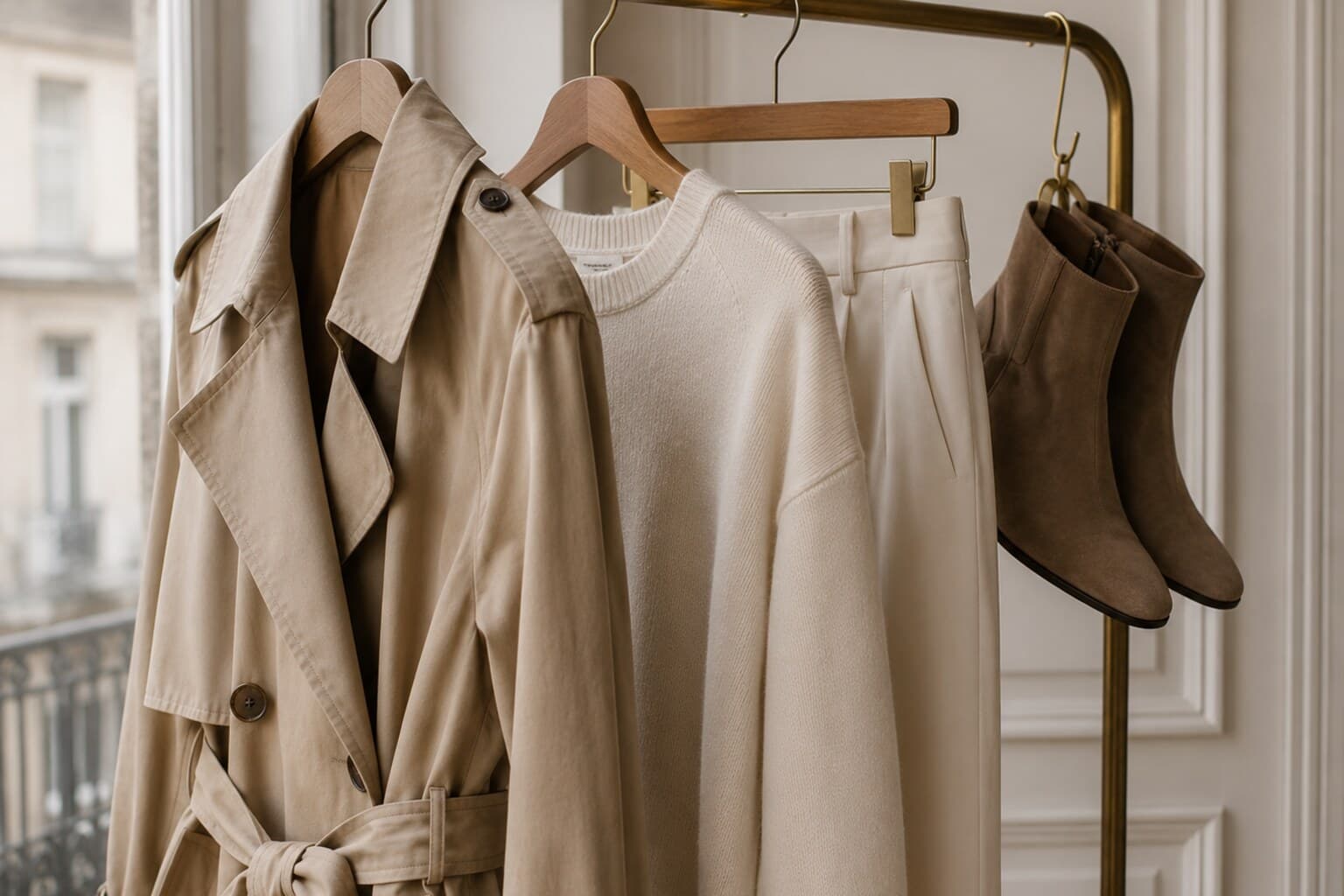
Select approximately ten to fifteen useful pieces - two pairs of trousers, one pair of jeans, two shirts or blouses, two lightweight knits, one cardigan, one blazer or jacket, one dress, one lighter coat, and two pairs of shoes.
This temporary edit makes the most relevant options visible.
Change Texture Before Changing the Entire Outfit
A seasonal shift can be created through one fabric - linen to cotton, cotton to merino, canvas to suede, light denim to corduroy, bare legs to fine tights, a woven bag to leather.
Texture often communicates the season more effectively than colour alone.
Use Transitional Layers
Useful transitional pieces include a trench coat, light wool coat, unlined blazer, cardigan, overshirt, fine merino knit, scarf, or lightweight waterproof coat.
The best transitional layers are easy to remove and carry.
Review Footwear Early
Seasonal dressing often becomes difficult first through footwear. Check soles, weather resistance, comfort, heel condition, leather care, and whether socks or tights fit comfortably.
Bring the next season’s shoes into use before the weather change becomes urgent.
Keep a Small Overlap
Do not store every item from the previous season immediately. Keep available one warm-weather outfit, one warmer layer, a rain option, closed shoes, and one lighter pair of shoes.
Weather is variable. A small overlap prevents the need to reopen storage.
Care for What Leaves the Wardrobe
Before storing items, wash or clean them, repair loose hems, empty pockets, remove stains, allow shoes to dry fully, and store according to fabric requirements.
Do not store clothing with unresolved marks or damage. The problem will still be there next season.
The Checklist
- Weather reviewed
- Transition section created
- Fabric weight adjusted
- Seasonal colour introduced gradually
- Outerwear checked
- Shoes prepared
- Weather overlap retained
- Stored pieces cleaned and repaired
Introduce Seasonal Colour Gradually
Spring
- Cream.
- Sage.
- Soft blue.
- Warm stone.
- Fresh green.
Autumn
- Chocolate.
- Olive.
- Rust.
- Oxblood.
- Camel.
Pair It With
A seasonal wardrobe transition does not require a new identity.
It is simply the familiar wardrobe responding to different light, temperature and texture.
Enjoyed this?
The Seasonal Letter brings more stories, recipes and rituals like this one - a few times a season, never more.

Written by Esther
Esther is a photographer and storyteller, and the founder of Essy's Essentials - a seasonal home for stories, rituals, recipes and everyday luxuries.
More about Esther →