The Entrance Drop Zone
A calm system for coats, shoes, bags, keys and post at the point where daily clutter first enters the home.
At a Glance
- Keys and small essentials
- Coats and outerwear
- Shoes
- Bags
- Incoming paper and parcels
- Create a leaving-the-house area
- Include a mirror where useful
- Add practical lighting
- Keep the styling restrained
The entrance is one of the hardest-working areas in the home. It receives everything carried in from outside - coats, shoes, bags, keys, post, umbrellas, deliveries, work equipment.
Without a clear system, these items travel into the living room, kitchen and dining area.
A useful entrance does not need a large hallway. It needs a small number of dependable places for the objects that arrive every day.
Before You Begin
- Observe what happens when people come home. Which item is put down first? Where are shoes removed? Where are keys usually searched for? Where does post collect? Which bags need to leave again the next morning?
- Design the entrance around the natural sequence rather than an idealised routine.
Zone 1: Keys and Small Essentials
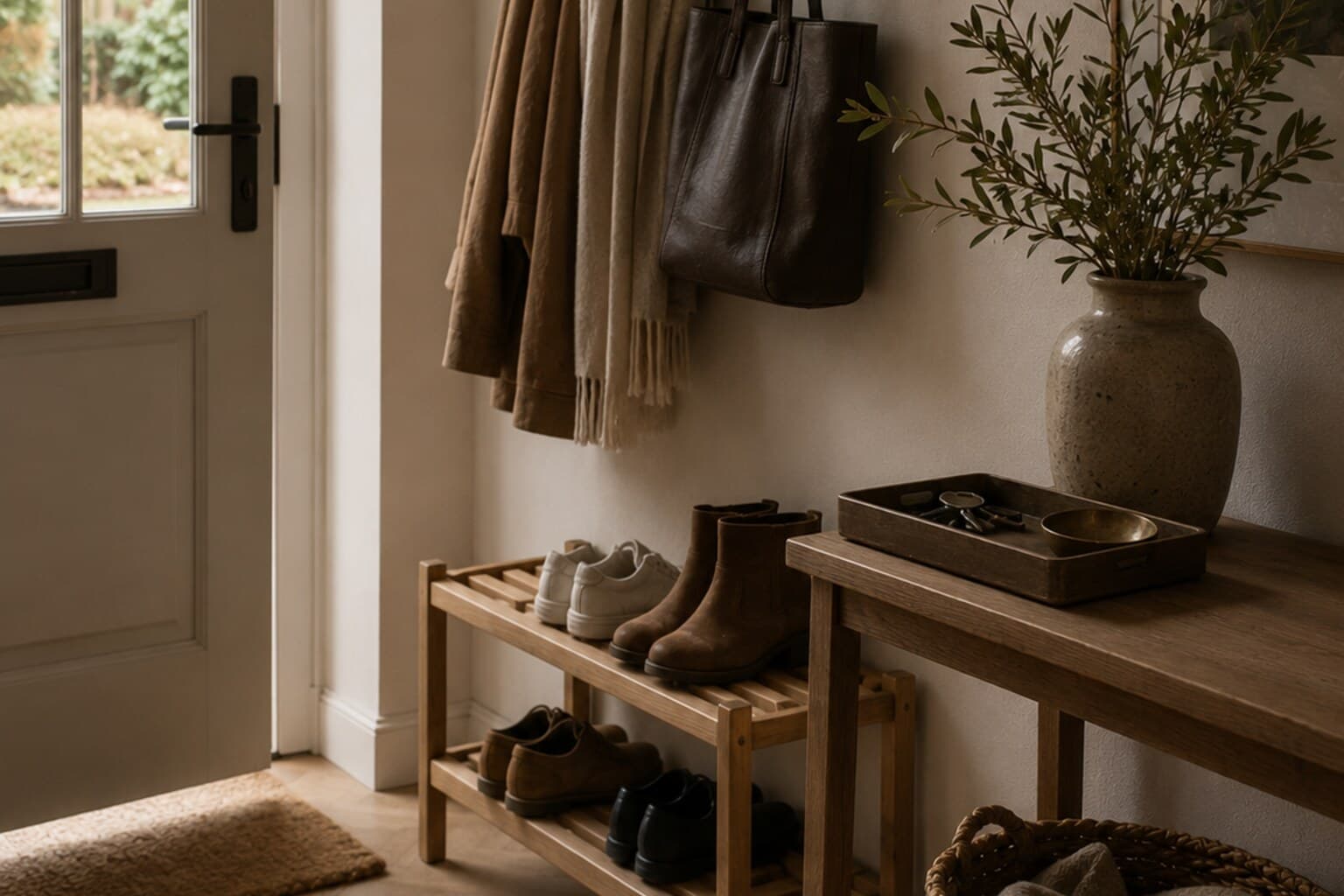
Use a tray, a shallow bowl, a small drawer or hooks. Keep only daily essentials here - keys, access cards, earphones, small change.
Avoid allowing the tray to become general storage for unrelated objects.
Zone 2: Coats and Outerwear
Use wall hooks, a rail, a cupboard or a small number of visible hangers. Keep only current-season outerwear in the most accessible area. Move rarely used coats into secondary storage.
Avoid overloading hooks until garments become difficult to remove.
Zone 3: Shoes
Choose one limit - one mat, one rack, one bench compartment, one basket for indoor shoes. Store everyday pairs at the entrance and move occasion, seasonal and specialist footwear elsewhere.
Clean or dry wet shoes before placing them into closed storage.
Zone 4: Bags
Create a dedicated hook, shelf or bench space for the work bag, handbag, school bag and reusable shopping bags.
Do not hang heavy bags from unsuitable furniture or delicate hooks. Review accumulated contents regularly.
Zone 5: Incoming Paper and Parcels
Use one clearly defined place - a wall pocket, a tray, a vertical file or a small basket. Process it at least weekly, separating action, file, recycle and deliver elsewhere.
The entrance should not become a permanent paper archive.
Create a Leaving-the-House Area
Store items that need to leave soon - returns, library books, parcels, items for another household, reusable bags, dry-cleaning.
Use one basket or designated shelf. Review it before leaving the house. Do not allow it to become long-term storage.
Include a Mirror Where Useful
A mirror can support a final check before leaving, reflect light, make a narrow area feel more open, and add a strong visual focal point.
Check what the mirror reflects before placing it - avoid reflecting the most cluttered part of the entrance.
Add Practical Lighting
The entrance needs enough light for finding keys, putting on shoes, reading labels and arriving safely.
Combine general light with a softer lamp where space allows - the entrance should still feel welcoming in the evening.
Keep the Styling Restrained
Possible decorative elements include one mirror or artwork, a small lamp, a tray, one vase or branch, a basket, a durable rug.
Prioritise movement and function. A narrow entrance should not be crowded with decorative furniture.
The Checklist
- Keys have one place
- Current coats fit comfortably
- Everyday shoes have a limit
- Bags are stored off seating and floors
- Post has one inbox
- Outgoing items have one area
- Mirror and lighting are practical
- Main route remains clear
Pair It With
A calm entrance reduces clutter throughout the rest of the home.
It gives the day a clear place to begin and a dependable place to end.
Enjoyed this?
The Seasonal Letter brings more stories, recipes and rituals like this one - a few times a season, never more.

Written by Esther
Esther is a photographer and storyteller, and the founder of Essy's Essentials - a seasonal home for stories, rituals, recipes and everyday luxuries.
More about Esther →