Home & Living
Is a Quooker Worth It? Our Honest Review of a Brass Boiling-Water Tap
We spent extra on a brass Quooker and chose a matching sink while planning our new-build kitchen. Here is what I love, what to weigh up first and the honest downsides.
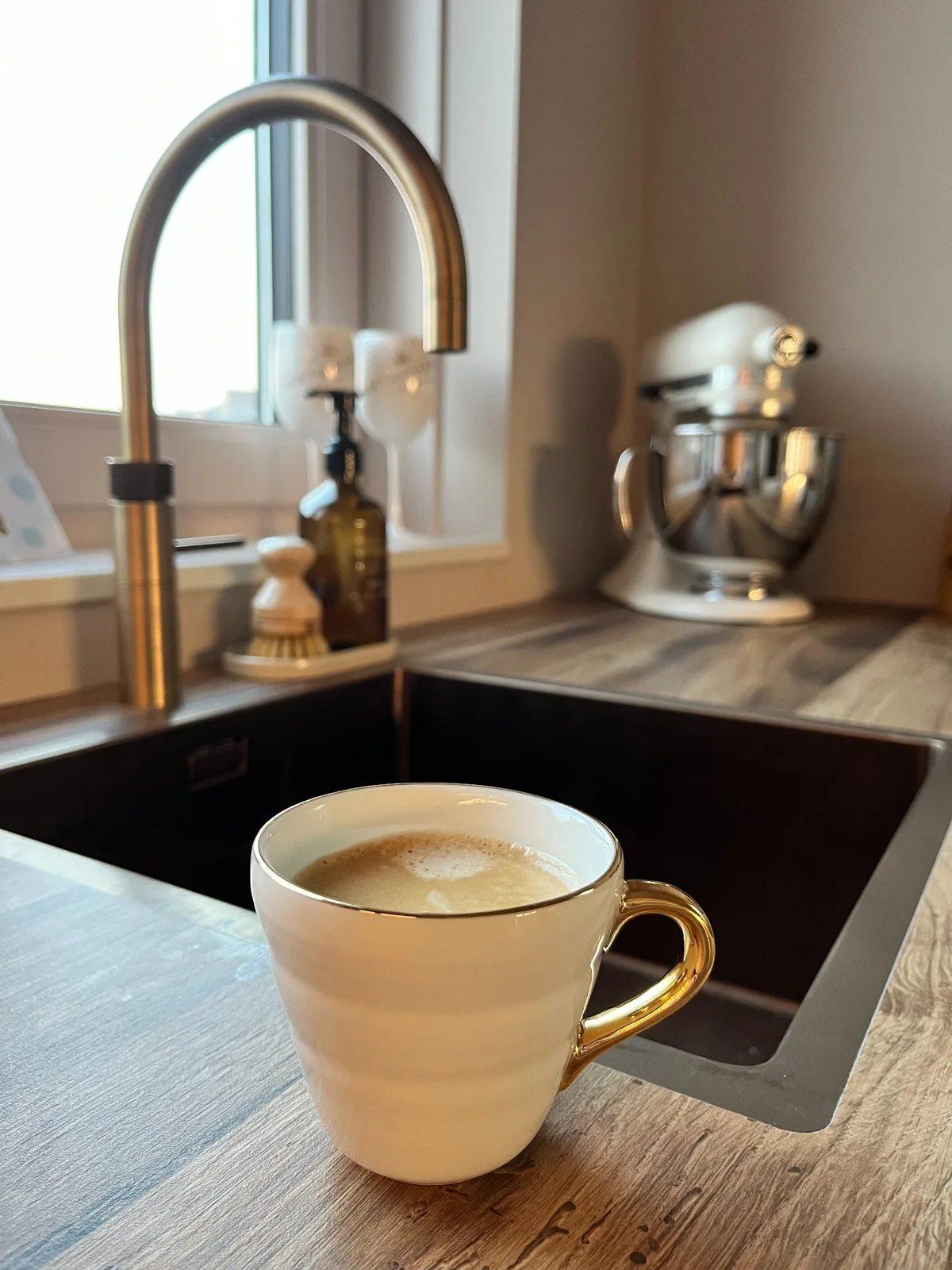
An ordinary morning in our kitchen: the tap is part of the routine, not just a design detail.
The short answer
For us, yes: our Quooker has earned its place through everyday convenience, not through being a showpiece. Instant boiling water is handy for tea, cooking preparation and, in my case, noodles. It will not be worth the same amount to everyone, so price, reservoir, installation and standby energy use all deserve thought before you buy.
There are some expensive kitchen decisions you admire when the builders leave, and then barely think about again.
And then there are the ones you use so frequently that they start to feel completely normal. You stop noticing the luxury because it has slipped into everyday life.
Our Quooker belongs firmly in that second category.
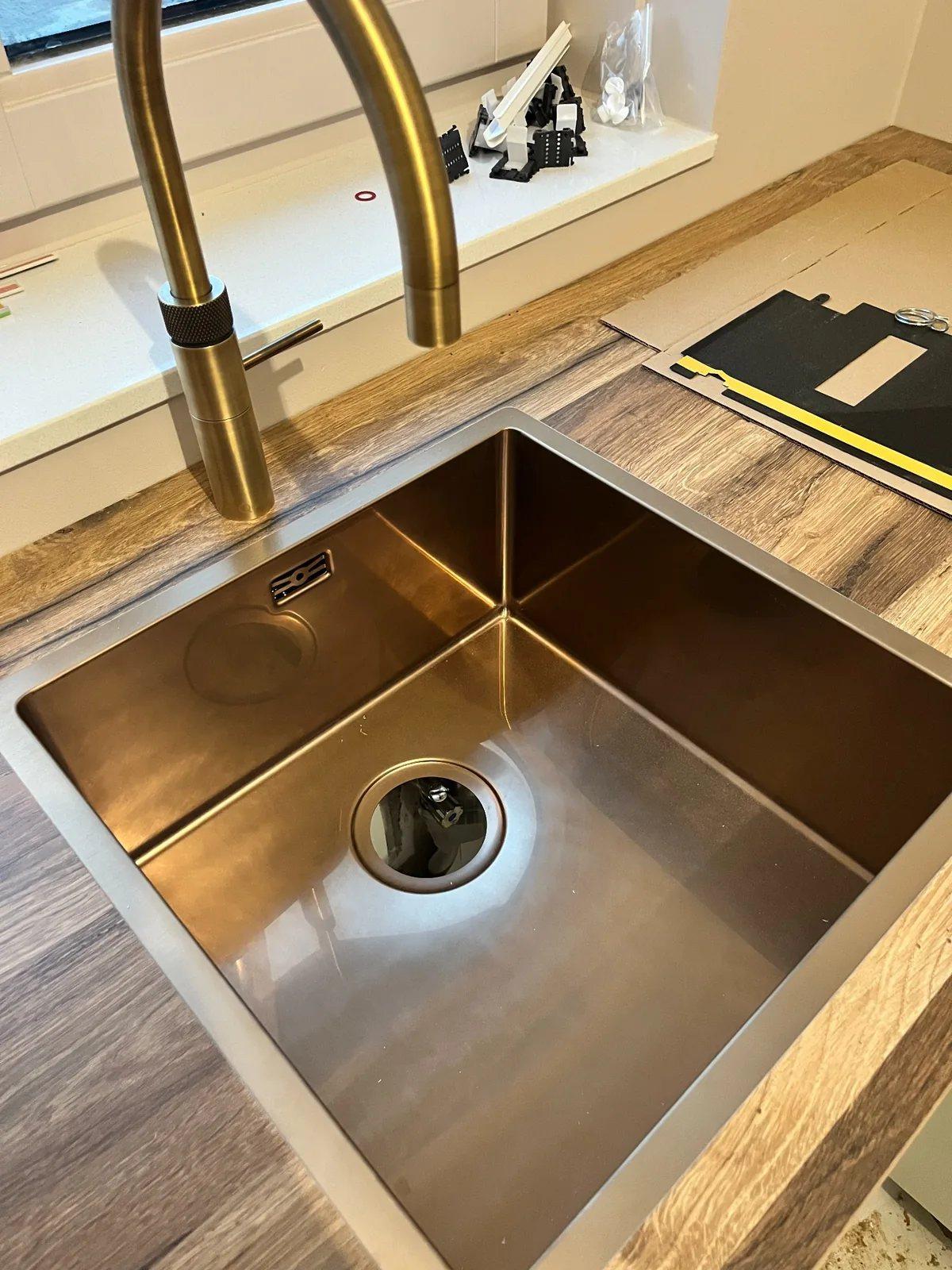
When Bas and I planned the kitchen in our new-build house, I knew that I wanted a warm metallic tap rather than the standard chrome option. We eventually chose a beautiful brass Quooker, one of the more expensive finishes we considered, and I went a little further by choosing a sink that worked with it visually.
That combination is still one of my favourite details in the kitchen.
But it isn’t the finish alone that makes me glad we spent the money. It’s the fact that I actually use the tap. A lot. And, given my fondness for noodles, perhaps more than some people might expect.
Our Quooker at a glance
The quick version first, so you can see where I land before the detail. This is one household’s experience, not a test of every Quooker model.
| Our experience | |
|---|---|
| Would I choose it again? | Yes |
| Why did we choose it? | Convenience and a warm brass finish for the new kitchen |
| Favourite everyday use | Noodles, hot drinks and cooking preparation |
| Favourite design detail | The matching metallic-toned sink |
| Biggest practical advantage | Not having to fetch, fill and wait for a kettle |
| Biggest drawback | The upfront expense; this is a premium kitchen choice |
| Exact model and reservoir | Not listed here: check your own quotation and the manual before comparing specifications |
| Paid collaboration? | No. Our own purchase for our own kitchen |
Why we chose the brass finish
I love warm, layered interiors. That carried all the way into the kitchen, where we chose a wood-look worktop, simple cabinetry, thoughtful lighting and metal details that feel warmer than shiny chrome.
A stainless-steel tap would have been perfectly functional. It just would not have been my first choice for this space.
Our brass Quooker makes a subtle statement rather than turning the sink into a decorative feature for its own sake. In the light, it looks warm and almost sculptural, especially against the natural-looking worktop.
I also chose the sink to complement the tap.
This is not a decision everyone needs to make. If you are keeping an existing sink, a different combination might be just as attractive. But when you are choosing every element of a kitchen from scratch, it is worth looking at the tap and sink together rather than treating them as two unrelated shopping decisions.
One note about finishes: Quooker offers different metallic finishes and models, and their care instructions can vary. I would check the exact finish on your order before following cleaning advice found online. A brass-looking tap is not necessarily the same product as every tap marketed as patinated brass or gold.
What we actually use our Quooker for
A review is only useful if it goes beyond how the product looks in a showroom. This is the part that matters to me.
Noodles, obviously
I eat a surprising number of noodles.
And while that might not sound like the strongest possible argument for an expensive boiling-water tap, it is one of the reasons I appreciate having it.
Instead of putting the kettle on every time I want hot water, I can go straight to the tap. It makes a quick meal feel even quicker and removes one small job from the process.
I still follow the preparation instructions on the packet: not every product that needs boiling water is safe to leave uncooked or to prepare without the specified cooking time. The Quooker provides the hot water; it does not replace the cooking instructions.
Hot drinks and the morning routine
Our kitchen was designed around the things we really do every day, including a proper coffee corner. The Quooker fits that same philosophy.
If you make tea regularly, or need boiling water while preparing drinks and food, not waiting for a kettle feels surprisingly convenient.
You could argue that a kettle only takes a few minutes. You would be right.
But once you are used to making something without that extra step, you notice the difference.
Cooking preparation
Instant boiling water is useful whenever a recipe needs hot water or you want to get started on a task quickly. The precise benefit depends on what you cook and how often.
For me, it is about convenience rather than making a dramatic promise that it saves hours every week.
Those tiny improvements add up when you cook and use your kitchen every day.
What the Quooker does, and what it doesn’t
A Quooker is a boiling-water tap system connected to a reservoir beneath the worktop. Depending on the chosen model and configuration, it can provide boiling water as well as ordinary hot and cold water. Chilled and sparkling water are not standard on every Quooker: those require the relevant CUBE configuration.
The range also includes different tap shapes, finishes and reservoir options. That is why you should compare the whole system, not only the beautiful tap in the photograph.
If you are comparing quotations, ask for the specification of:
- The tap model and finish.
- The type of reservoir and what it supplies.
- Whether a CUBE is included (if you want chilled or sparkling water).
- The required cupboard space, electrical supply and plumbing connections.
- The total price including fitting and any additional work.
- The cleaning and maintenance guidance for your finish and model.
I haven’t listed our own model code or reservoir here, so I am deliberately not assigning precise technical specifications to the tap pictured. Check your own quotation and manual for those.
The advantages I would pay for again
It clears a little mental clutter. There is no kettle to fill and no separate appliance competing for space on the worktop. I like having fewer things out, particularly in a kitchen where we spent so much time planning the storage and visual balance.
It genuinely gets used. This is the most important point of the review. I can justify an expensive feature more easily when it becomes useful almost every day. An appliance that looks impressive but never gets touched is a much worse investment for us.
It feels integrated into the kitchen. Because we chose the finish alongside the sink and worktop, the whole area looks like one deliberate design choice. That is a small luxury, but it is a lovely one.
The downsides, because there are some
The upfront cost is significant. The brass finish we chose was among the more expensive options. Once you factor in the reservoir, installation and possibly changes to plumbing or electrics, a Quooker is clearly not a budget tap. I wouldn’t try to convince someone it pays for itself purely in minutes saved. If you’re buying one, you should genuinely value the convenience and the way it fits your kitchen.
It uses energy even when you are not drawing boiling water. The reservoir keeps water ready for use, which requires standby electricity. Actual consumption depends on the system and your household’s use. Any comparison with a kettle needs the same assumptions about water quantity, frequency of use and energy tariff. I haven’t measured our specific electricity consumption, so I won’t claim a personal saving or a universal cost advantage.
You need space and an appropriate installation. The tap is the visible part. The reservoir lives below the worktop and takes space inside a cabinet. Have the system installed in accordance with the manufacturer’s guidance and the requirements of your own kitchen. If you are still at the design stage, ask your kitchen installer to plan the electrical and plumbing connections and check where everything will fit.
Boiling water deserves respect. This is water hot enough to cause burns. Quooker taps have designed safety controls, but no mechanism removes the need to handle boiling water carefully, especially around children, pets or anyone who might operate the tap unintentionally. Follow the specific user manual and never rely on a general online description as a substitute for understanding your own system.
The finish needs the right care. Beautiful metallic finishes may require different cleaning routines. If your tap is a patinated brass version, Quooker’s published guidance advises gentle cleaning and avoiding harsh cleaners; check the exact manual for your model and finish first. A luxury finish is not necessarily a low-maintenance finish.
Quooker versus a kettle: which makes more sense?
For someone who uses hot water once or twice a day, a standard kettle may be a more sensible financial choice.
For us, where the kitchen was a major part of the new-build project and the tap gets used frequently, I would make the same decision again.
Here is how I would weigh it, depending on what matters most to you:
| My view | |
|---|---|
| Lowest upfront spending | A kettle is the obvious winner |
| Instant access to boiling water | The Quooker is lovely |
| A clear, uncluttered worktop | Integrated tap wins for our kitchen |
| Avoiding an under-sink reservoir | A kettle needs no cabinet installation |
| Matching a beautiful metallic sink | The Quooker gives you more design options, at a price |
| Energy costs | Compare your actual use and reservoir model; don’t assume either is universally cheaper |
What I’d check before choosing a Quooker
If you are planning a kitchen, save yourself some guesswork and take these questions to the showroom:
- Which exact tap and finish am I ordering?
- Can I see that finish in natural and warm artificial light?
- What reservoir is included, and how much cabinet space will it occupy?
- Does this combination supply only boiling water, or other water options too?
- What additional electrical and plumbing work is required?
- What is the fitted price, and what ongoing maintenance is expected?
- Do the sink and tap work together visually and practically?
- How do I operate the boiling-water safety control correctly?
If I were designing another kitchen tomorrow, those are the questions I’d ask again, and I would still be looking at the beautiful brass finishes.
From our home
For a wider look at the decisions that made our new-build kitchen work, read How Our New Build Became Home. The kitchen also has an integrated cooking extractor, which has its own review: Is a BORA Downdraft Extractor Worth It?
Editorial transparency
This is my first-hand account of a Quooker bought for our own home. It is not a laboratory comparison or a claim about every Quooker model, and it carries no sponsorship, gifted product or affiliate link. Product variants, maintenance, warranty terms and prices can change, so check details against your own quotation and the manufacturer’s current information. The official sources I used for the factual points are linked below.
The Essy’s verdict
If I had to choose between a kitchen feature that impresses guests for five minutes and one that makes ordinary days nicer, I would always choose the second.
Our Quooker manages to do both.
I adore the warm finish and the way it works with the sink we chose. But the real value is in the very unglamorous moments when I want noodles, a hot drink or boiling water without thinking about it.
Is it expensive? Yes. Would I choose it again? Absolutely. And in our kitchen, that is the strongest review I can give.
More From Our New-Build Kitchen
Frequently asked questions
Is a Quooker worth the money?
It depends on how often you use boiling water and how much you value convenience and an integrated kitchen. We use ours frequently and would buy it again, but the initial expense means it is not an automatic recommendation for everyone.
Does a Quooker replace a kettle?
It can replace the kettle’s main job of providing boiling water. Whether you still want a kettle is a matter of personal preference and how you use your kitchen.
Is a Quooker cheaper to run than a kettle?
Not necessarily. A Quooker reservoir has standby energy consumption; a kettle heats water when needed. A fair comparison requires the exact system, how often each is used, the water quantities heated and your electricity price.
Can a Quooker provide sparkling water?
Some configurations can, when combined with the appropriate Quooker CUBE system. It is not a feature you should assume is included in every tap purchase.
What colour Quooker did we choose?
We chose a warm brass finish and coordinated the sink with it. Finish names vary between Quooker’s collections, so check the exact finish name on your own order before following care advice.
Is a brass Quooker hard to clean?
Care depends on the exact finish. Check the manufacturer’s finish-specific instructions and avoid harsh products unless explicitly permitted. Patinated brass finishes may change in appearance over time.
Is the boiling water really instant?
The system is designed to deliver boiling water immediately from its reservoir. That convenience is precisely why we like ours so much.
Would I buy another Quooker?
Yes. This is one of the premium kitchen decisions that I enjoy using, not just looking at. For us, it was worth prioritising.

Written by Esther
Esther is a photographer and storyteller, and the founder of Essy's Essentials - a seasonal home for stories, rituals, recipes and everyday luxuries.
More about Esther →