Home & Living
Is a BORA Downdraft Extractor Worth It? Our Honest Kitchen Review
We chose a BORA cooktop with integrated extraction for our new-build kitchen. What we love, what we planned during installation and what I would check before spending the money.
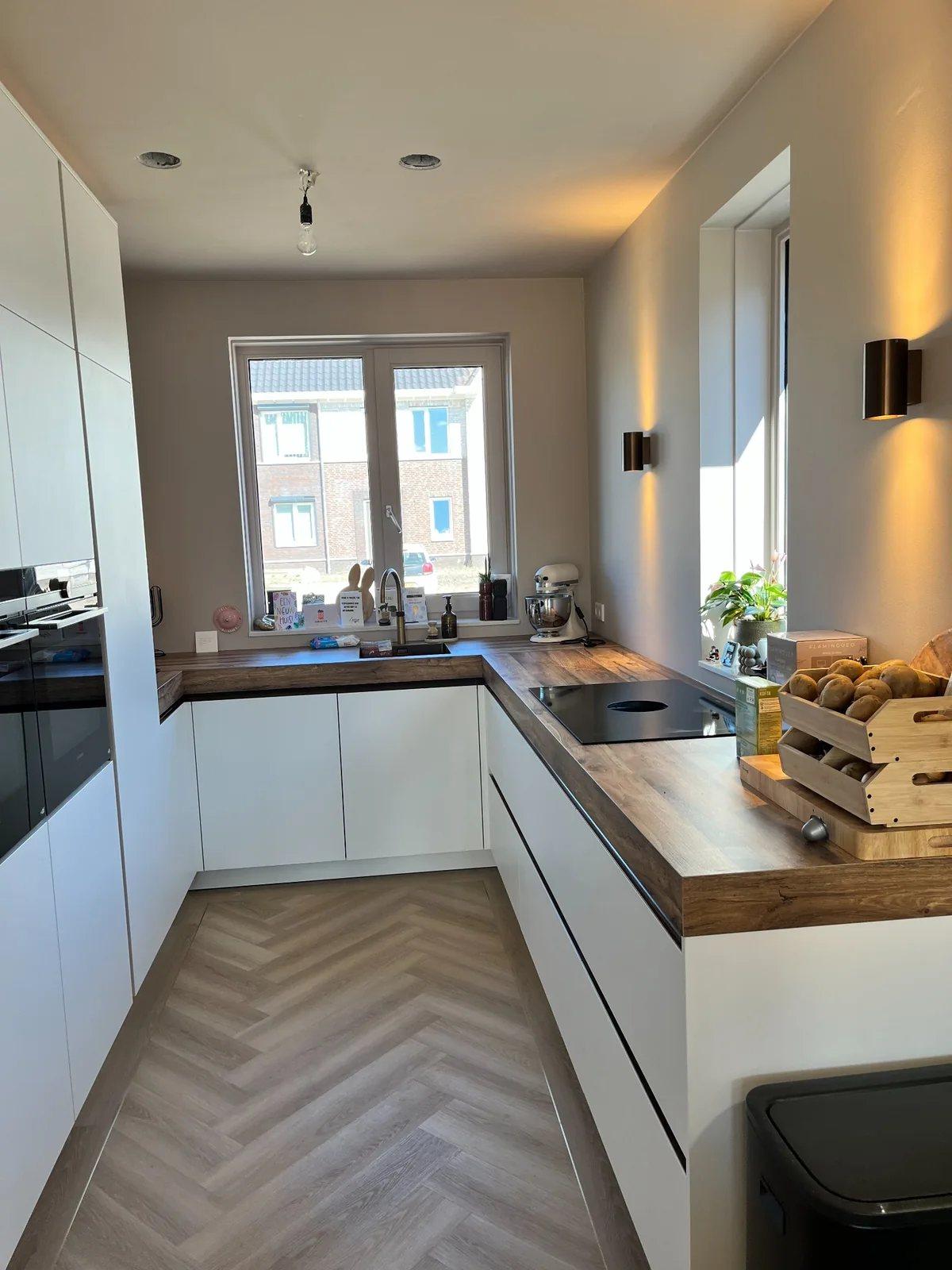
Our kitchen during the final finishing stage, with the BORA cooking area on the worktop. This is contextual photography, not a close-up test of the fan in action.
The short answer
For our kitchen, yes. We love the uncluttered design, the built-in extraction and the strong setting we use when we want extra power. The trade-offs are the higher purchase and installation costs, planning the electrics and ventilation properly, and the cleaning or filter upkeep that comes with any extraction system. I would not buy one without confirming the exact model and how it will be installed.
When we planned our kitchen, I had a very clear idea of what I wanted it to feel like.
Not necessarily a kitchen full of impressive appliances. More a room where every element had earned its place, the worktops weren’t permanently cluttered and we could actually enjoy cooking.
We invested in the layout, the storage, the warm worktop, the lighting and a handful of products we really wanted to use.
One of those was our BORA hob with integrated extraction.
I liked the idea of not having a conventional extractor hood dominating the room. But it was only once we started using the BORA that I understood why this kind of appliance is so appealing.
There is something almost hypnotic about watching cooking vapour move towards the extraction opening rather than rising into a large hood above the cooker.
And the powerful setting? I absolutely love it.
Our BORA at a glance
The quick version first. This is one household’s experience of one kitchen, not a technical test.
| Our experience | |
|---|---|
| Why did we choose it? | The clean, integrated design and extractor performance |
| Favourite feature | Seeing the vapour pulled towards the hob |
| Favourite setting | The strong boost/turbo-style function |
| Would I buy it again? | Yes, based on our experience so far |
| Installation detail | We arranged a separate electrical circuit/group for our installation |
| Exact BORA model | Not listed here: check the model and its manual before comparing specifications |
| Extractor configuration | Ducted (exhaust air) and recirculation set-ups both exist, so check the plan for your own kitchen |
| Noise in decibels | Not measured |
| Collaboration | None: no sponsorship or gift |
Why the design matters so much to me
Our new-build kitchen was planned around real routines. We wanted generous storage and clear worktops rather than an appliance showroom where everything looked lovely but didn’t work for our days.
A BORA suited that approach.
Instead of a large conventional extractor hood overhead, the extraction is built into the hob area. The visual result is cleaner and more open.
That matters to me more than it might to someone who sees a cooker hood as an architectural feature in its own right.
It isn’t that traditional hoods are ugly or ineffective. Some are beautiful and perform brilliantly. I simply preferred the idea of an integrated extractor for this kitchen.
Looking at the finished room now, I am still pleased with that decision.
Does the BORA downdraft extraction actually work?
In our own cooking, the visual effect is impressive.
The moment when vapour is drawn towards the extraction opening rather than rising freely is genuinely one of my favourite things about the hob.
I know that sounds like a peculiar thing to get excited about. Yet there is something strangely satisfying about seeing how it works.
Of course, being able to see vapour moving is not the same as measuring odour removal, airflow or the concentration of particles in a room. We have not tested those in a controlled way, and different BORA systems can perform differently depending on installation, cooking style and ventilation.
So I can give you an honest homeowner’s observation rather than a technical lab verdict: I like using ours, and it has not made me wish we had installed a traditional overhead hood.
My favourite: the powerful boost setting
Our BORA has a strong setting that I tend to describe as its turbo setting.
It’s fantastic when I want a little more extraction power.
BORA uses terms such as power setting across several product ranges, but exact controls and behaviour are model-specific. I wouldn’t copy another model’s user manual and assume those instructions apply to ours.
What matters for this review is our real experience: when we want a stronger extraction setting, we’re very happy to have it.
Does the boost setting make noise?
Any extractor moves air, and the more powerful settings may involve greater fan noise. We have not measured ours with a sound meter or compared it against an equivalent conventional hood in the same room.
The honest way to assess this before buying is to ask for a working showroom demonstration: listen at your normal cooking setting, then at the strongest setting.
You should also pay attention to the sounds in the kitchen itself. A fan that looks great in a showroom may feel different in a small, hard-surfaced space.
The installation detail I would never overlook
We had a separate electrical circuit/group installed for the BORA as part of our kitchen build.
That was one of our actual installation decisions. I’m pleased we planned it while the electrical work was being arranged, rather than trying to retrofit it later.
But I want to make an important distinction: our choice is not proof that every BORA model needs the exact same connection. Electrical requirements vary by appliance model, country, supply configuration and installation method.
A qualified electrician and kitchen installer should follow the manufacturer’s installation instructions for the exact unit you are buying. Ask about the supply, protective devices, connection capacity and any restrictions before the kitchen is finalised.
In a new-build, I would rather resolve this on the drawings than discover halfway through a finished kitchen installation that the provision is not right. I wrote about the same kind of planning in Plan the Life in the Room Before You Plan the Electrics.
Also plan the extraction route
Not every BORA installation moves air outside in the same way. Some configurations use exhaust air ducting; others use recirculation with filters. This affects what has to happen beneath and around the worktop, how air is routed and how often parts or filters need attention.
I haven’t described our own extraction route in this review, because the right set-up depends on the exact model and each home’s plan. Ask for yours to be specified in writing.
Before ordering, ask:
- Is this unit configured for extraction outdoors or recirculation?
- Where will the air go, and where does the ducting or return airflow fit?
- How much room will the installation occupy below the worktop?
- How is the grease filter cleaned?
- If it uses a recirculation filter, how often does that specific filter need replacing, and what does a replacement cost?
- Who is responsible for the electrical and ventilation design?
This is not the glamorous part of designing a kitchen. It is the part that prevents regret.
What we love about our BORA
The open, clean look. No conventional extractor above the hob was the design direction we wanted. The integrated system helps the cooking zone feel like part of the worktop instead of the visual centre of the room.
Watching the vapour disappear towards the hob. Yes, I still notice it. It’s one of those features that feels different from a traditional kitchen set-up, and it’s the most distinctive part of the experience for me.
The powerful setting. The strong boost-style mode is genuinely useful to us. It is one of the things I would look for again when comparing systems.
It fitted our wider kitchen plan. We didn’t choose the hob in isolation. It sits within a kitchen designed around storage, worktop space, connected appliances, lighting and the way we cook. That matters more than comparing appliances as though they live alone in a showroom.
What I would think twice about
It is a premium purchase. A BORA with integrated extraction is a considered appliance choice. Depending on the model and the rest of the installation, it may cost more than a basic induction hob with a simple separate hood. I would compare complete installed quotations, not only the sticker price of the hob.
Some cabinet or worktop space may be involved. The extractor, ducting and supporting components have to fit somewhere. The amount of space affected varies by system. If drawer capacity is important to you, ask to see the cabinet drawings with the exact extraction configuration shown.
Cleaning still matters. Integrated extraction is not maintenance-free. Grease filters, openings and accessible parts need cleaning according to the model manual. A recirculation system can also require odour filter replacement. I won’t claim that a particular filter has a specific lifetime or that every part goes in the dishwasher: that is model-specific, so check your manual.
It won’t solve every ventilation problem. Cooking generates moisture, heat, odours and particles. A well-installed extractor helps manage cooking vapours, but it is not a reason to ignore the overall ventilation requirements of a home. Depending on the installation, you may still need a sensible ventilation and airing strategy.
Not every household will value the aesthetic enough. If you already have a traditional hood you love, and it works well, there is no reason to replace it simply because downdraft extraction looks new or premium. The value comes from how it fits your kitchen and how you actually cook.
BORA downdraft versus a traditional extractor hood
The most useful comparison isn’t “which technology always wins?” It’s “which system fits my room, budget and installation, and can I see it working before I commit?”
| BORA-style integrated extraction | Traditional overhead hood | |
|---|---|---|
| Visual effect | Extraction sits close to the hob; cleaner overhead view | Visible overhead appliance, sometimes a design statement |
| Installation | Needs model-specific hob, extraction and power planning | Needs its own hood position, electrical and ventilation planning |
| Cabinet planning | May affect below-worktop space | Often keeps hob-base cabinet arrangements different; design varies |
| Maintenance | Grease components and possibly recirculation filters | Grease filters and possibly recirculation filters |
| Cost | Often a premium purchase | Very broad range from budget to luxury |
| Performance | Depends on model, installation and cooking conditions | Also depends on model, installation and cooking conditions |
What I’d do before buying a BORA again
If I were planning another kitchen, this is the order I would work in:
- Confirm the model number and exact configuration, rather than relying on an attractive showroom photo.
- Ask to see the strongest extraction setting working while somebody is cooking.
- Check sound at normal and maximum settings.
- Have an electrician confirm the supply and connection requirements.
- Ask your kitchen designer for a cabinet layout that includes extraction components, not just the hob cut-out.
- Understand where cooking air is exhausted or recirculated.
- Get cleaning instructions and replacement-filter costs in writing.
- Compare the fully installed total with a conventional induction hob and hood.
In our case, the planning paid off. We knew we wanted this kind of appliance and made room for it in the build.
More from our new-build kitchen
See the kitchen and our wider design decisions in How Our New Build Became Home. We also have a separate review of the brass tap we chose for the same room: Is a Quooker Worth It?
Editorial transparency
This is our first-hand homeowner account, not an independent airflow or sound test. I have not given the exact BORA model, electrical specification or extraction configuration, so please check those for your own kitchen. There is no sponsorship, gift or affiliate link here. The official sources I used for the factual points are linked below.
BORA: official manufacturer website →
BORA Classic cooktop extractor: an example of how functions vary by model →
The Essy’s verdict
I don’t think a premium kitchen needs every possible premium appliance.
One of our ovens has a steam function I have hardly used, which is a good reminder that expensive features are not automatically useful.
The BORA feels different. We chose it because it suited the way I wanted the kitchen to look. But we have kept appreciating it because of how it works when we actually cook.
That makes it one of the decisions I would happily make again. The important thing is to plan it properly, including the details nobody sees once the kitchen is finished.
Then you can get back to the enjoyable part: dinner, the beautiful worktop, and watching the steam move somewhere rather unexpected.
More From Our New-Build Kitchen
Frequently asked questions
Is a BORA downdraft extractor worth it?
For us, yes. We like the integrated design, the way cooking vapour is drawn towards the hob and the powerful extraction setting. It may be harder to justify if upfront cost is your main concern or you already have an overhead hood you love.
Does the BORA extractor really pull steam down?
We can visibly see vapour moving towards the extraction opening on our own unit. Real-world extraction effectiveness depends on the model, installation and cooking conditions, so this should not be confused with a controlled performance test.
Is a BORA loud?
Noise varies by model, power setting, installation and surroundings. We have not measured ours, so I would recommend hearing a working demonstration at normal and boost settings.
Does a BORA need a separate electrical circuit?
We installed a separate circuit/group for ours. That is not a blanket technical requirement for all models. A qualified electrician should confirm the actual supply requirements for the specific BORA model and local electrical rules.
Does a BORA vent outside?
Some configurations use ducted exhaust air, while others use recirculation. Check the model and installation plan rather than assuming one method applies to every kitchen.
Is a BORA easy to clean?
Maintenance depends on the model and its filter system. Follow the exact manual for grease filter cleaning and any recirculation filter replacement. Avoid relying on generic instructions for a different unit.
Does a BORA take up cupboard space?
It can affect the below-worktop design because extraction components have to be accommodated. The actual space required depends on the configuration, so ask your kitchen designer for detailed drawings.
Would we choose our BORA again?
Yes. The integrated design and the strong extraction setting have earned their place in the kitchen, and I still enjoy watching the extraction work.

Written by Esther
Esther is a photographer and storyteller, and the founder of Essy's Essentials - a seasonal home for stories, rituals, recipes and everyday luxuries.
More about Esther →