A story from Willowmere
Rain on the Glasshouse Roof
Rain on the roof, rose-coloured silk and an unexpected visitor. Signe's quiet fitting becomes an evening she hadn't quite prepared for.
Set at The Glasshouse
The dress looked expensive, the shoes looked impossible, and Signe was standing on a sheet of newspaper beside a bag of compost.
“Well?” she asked.
Nora put down her coffee.
“I think we need to move the compost.”
“About the dress.”
“I was coming to that.”
Outside The Glasshouse, rain was turning the garden path into a series of small, reflective disappointments. Inside, Signe's rose-coloured silk caught the lamplight every time she moved. She had made it into a dress with a softly gathered neckline, a narrow waist and sleeves that stopped just above her elbows.
Nora had seen the fabric folded in a shopping bag. This seemed a different category of possession altogether.
“It's beautiful,” she said.
Signe looked down at herself.
“The sleeves?”
“Also beautiful.”
“Too much gathering?”
“I was admiring the entire woman, if that's allowed.”
Signe smiled, then lifted her arms experimentally.
Behind them, the baker opened the door with her hip, carrying a tray and wearing the expression she usually reserved for a customer requesting six things after announcing they only wanted coffee.
“Someone,” she said, “has ordered a taxi to the greenhouse.”
It was Thursday, five days before Signe was due to leave.
The contract had arrived. She had read it, asked for two changes and signed it. Since then, her kitchen had filled with lists, fabric samples and one suitcase that seemed to be winning.
Tonight had been intended as a fitting, followed by coffee. The Glasshouse had the long table, enough floor space to walk around in a dress, and three women who already knew where everything was.
It also had the dog, who was asleep beneath the table and unavailable for fashion commentary.
“I didn't order a taxi,” Signe said.
“No. Someone arrived in one.”
The baker stepped aside.
In the doorway stood a woman in a dark raincoat, holding a square parcel against her chest. Her grey hair was pinned at the back of her head, although the rain had made several determined alterations.
Signe went still.
“Ingrid?”
The woman looked at the dress.
“Well. I see I haven't overdressed.”
Ingrid had taught Signe to cut a sleeve, manage a fitting and identify an actor approaching with an unreasonable request.
“The last skill,” she told Nora, taking off her coat, “is the most transferable.”
She had been passing through the area after visiting her sister. Signe had said they would be at The Glasshouse, expecting a brief hello at some unspecified point before the evening was over.
She had not, apparently, expected to be wearing the dress.
“You could have called,” she said.
“I did. You didn't answer.”
Signe looked towards her coat, hanging from a hook beside the door.
“It's in the pocket.”
“An excellent place for it. Very peaceful.”
The baker found a fourth cup. Nora pulled out a chair. Ingrid put her parcel on the table and accepted a towel for her hair.
“Sit,” she told Signe.
“In this?”
“If you're planning to wear it anywhere with chairs, we should establish whether you can.”
Signe sat.
Nothing pulled. The neckline stayed exactly where it should.
Nora caught her eye and raised her cup.
Signe gave a small, relieved smile.
The rain grew louder.
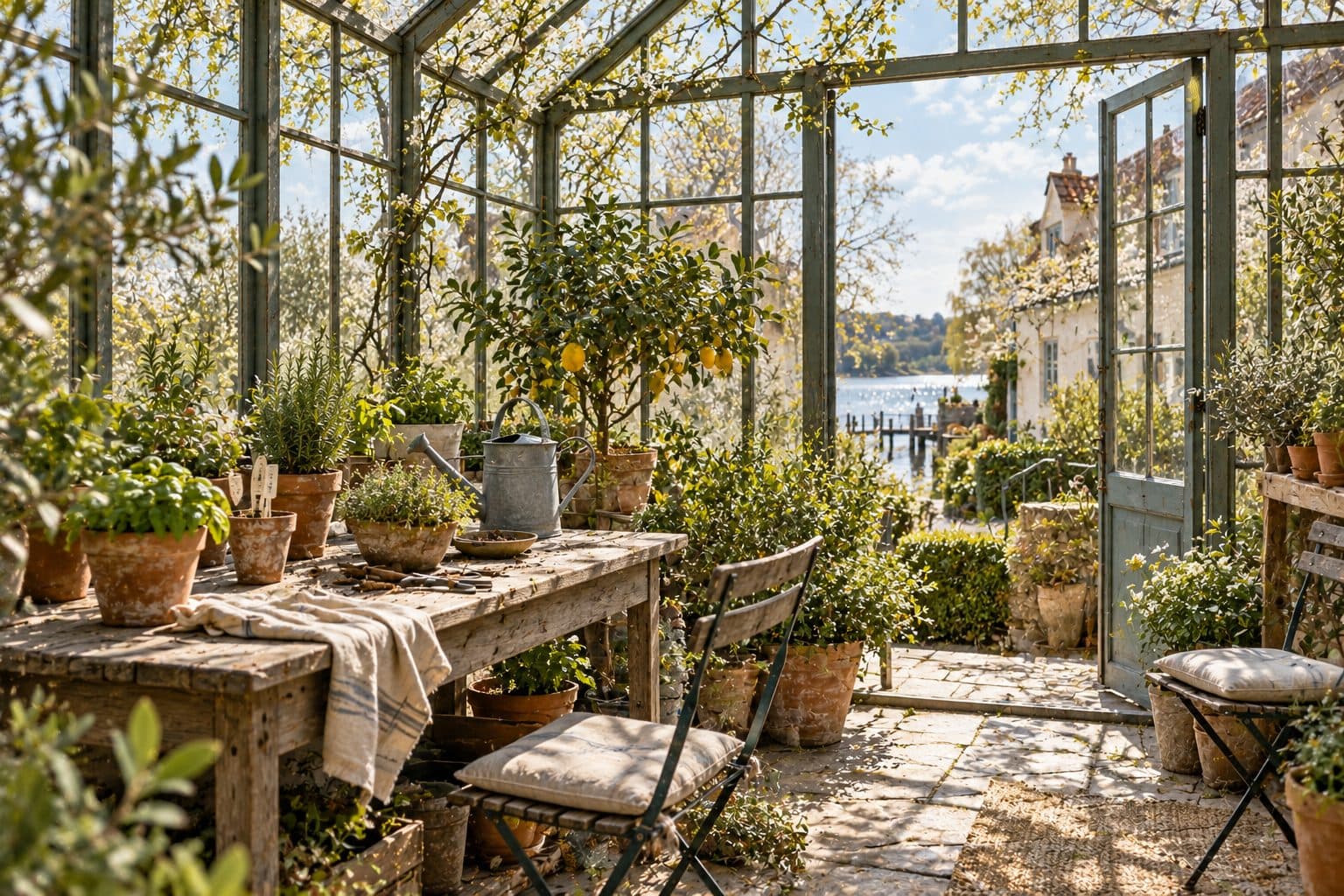
It drummed against the roof and ran in silver threads down the panes. Beyond the glass, the garden had become a blur of green and dark stone. The baker switched on the second lamp, and the lemon tree cast a large, rather glamorous shadow against the wall.
Ingrid unwrapped her parcel.
Inside was a battered tin.
Signe leaned forward.
“You found it.”
“Behind the spare iron. Where somebody put it.”
“I was being helpful.”
“Yes. I remembered that when I finally found it.”
She lifted the lid. Buttons filled the tin: pearl, wood, glass, tiny covered ones, enormous black ones that Nora wanted to handle immediately.
“These are yours?” she asked.
“Some. Signe used to add anything she thought I might need.”
“You did need them.”
“Once you gave me a bag of twenty-seven orange toggles.”
“And?”
Ingrid considered her.
“A very successful children's chorus.”
Signe laughed. The baker tipped a few buttons into her palm.
“Why bring them here?”
“I've been sorting the workroom. She always borrowed this tin. I thought she might as well keep it.”
Signe ran a finger over a dent in the lid.
“I dropped it down a staircase.”
“I remember. People were finding buttons for weeks.”
“Thank you,” Signe said, more quietly.
Ingrid reached for her coffee.
“You can thank me by explaining why you haven't told me about the summer production.”
Nora looked at Signe.
The baker put the buttons back in the tin, one by one.
“I was going to,” Signe said.
“So I hear.”
“Who told you?”
“The production manager. She called to ask if I knew anyone else for the team. She said you'd already made some very sensible requests.”
Signe glanced at Nora, then down at her skirt.
“It's only just been signed.”
Ingrid nodded.
“And now?”
Rain filled the pause.
Signe took a breath.
“I'm running the wardrobe.”
Ingrid smiled.
It changed her whole face. Nora could suddenly see the woman Signe might have stayed late to talk to after everyone else had gone home.
“Good,” Ingrid said. “I've been waiting for somebody to give you the keys.”
Signe laughed, then pressed her lips together.
The baker pushed the plate of biscuits towards her without speaking.
“I wanted to tell you properly,” Signe said.
“You have.”
“With a plan.”
“Do you have one?”
“Several.”
“Then you can send me the one you like best.”
Signe reached for a biscuit.
“I may have questions.”
“I should hope so.”
After that, it was easier.
Signe told them about the team she wanted, the fittings she'd scheduled and the actor who had already emailed to say he didn't wear brown.
“What colour is his costume?” Nora asked.
“Brown.”
Ingrid closed her eyes briefly.
“A promising start.”
The baker asked what Signe would wear on the first morning.
“Trousers. Good shoes. Something with pockets.”
“So they'll know who's in charge,” said Nora.
“So I can carry six pencils and a tape measure.”
“Both can be true.”
Nora liked watching her now. The small, careful smile had gone. She was talking with her hands, leaning forward, occasionally forgetting the biscuit until the baker reminded her.
Ingrid listened. Once she asked about the fitting room. Once she suggested somebody Signe might call.
When the conversation paused, Signe stood and smoothed the skirt of the dress.
“All right,” she said. “The sleeves.”
Ingrid reached for her glasses.
Nora saw Signe's fingers tighten on a fold of silk.
“They're meant to do that,” she said.
Ingrid looked up.
“Do what?”
“Gather there. Above the elbow.”
“I can see that.”
“I like them.”
Ingrid put her glasses on, examined the dress and sat back.
“So do I.”
For a moment, Signe simply stood there.
Then Nora laughed.
“We have been saying this for forty minutes.”
“I wanted a professional opinion.”
The baker raised an eyebrow.
“Careful.”
Signe looked at her, then at Nora.
“I would like to amend that statement.”
There was one alteration to make: a fastening at the back that caught on Signe's hair.
She changed behind a screen of hanging garden cloths while the baker stood guard at the door, although the only person approaching it was the dog, who wanted to know whether anything interesting had been put on the floor.
Back in her jumper and trousers, Signe laid the dress across the cleared end of the table.
Ingrid offered her a needle.
“I've got one.”
“Of course.”
She withdrew her hand and opened the button tin instead.
Nora watched the two women work beside each other. Signe changed the fastening. Ingrid sorted buttons into little piles for no reason beyond the pleasure of doing it. The baker found a glass jar for the pale ones.
“Those would look lovely on something,” she said.
“That's how it starts,” Nora told her.
“What?”
“First you buy a little linen. Then you begin having opinions about buttons.”
Signe looked up.
“Have you done anything with the linen?”
“I've moved it to a very attractive shelf.”
“Important first stage.”
The dog stretched beneath the table, pressed his nose against Ingrid's ankle and sighed.
She looked down.
“Is this a review?”
“A favourable one,” said the baker.
By the time Ingrid's taxi returned, the rain had softened.
The garden smelled of wet leaves. Across the roofs, a strip of pale evening sky had appeared above the river.
Signe helped Ingrid into her coat. Nora held the parcel paper while the baker wrapped two slices of cake for the journey.
“You don't have to feed everyone who leaves,” Signe said.
“I'm aware.”
Ingrid took the cake.
“I'm not complaining.”
At the door, she turned back towards Signe.
“Send me a photograph of the finished dress.”
“You just saw it.”
“I saw you worrying about the sleeves. I'd like one of you wearing it.”
Signe smiled.
“I will.”
They hugged. Then Ingrid went down the path, her parcel beneath her coat, lifting one hand towards them before she disappeared through the passage.
Inside, the lamps were still on. The rose-coloured dress lay over a chair, its new fastening neatly finished. On the high shelf, Nora's little blue Glasshouse sign stood between two pots.
“Try it on again,” the baker said.
Signe looked at her.
“Now?”
“Now.”
Nora took out her phone.
“We owe someone a photograph.”
Signe held the dress against herself, considering the light, then grinned.
“Both of you are getting in it.”
The baker began to protest.
“I've got flour on my jumper.”
“Excellent,” said Signe. “Wear it with confidence.”

Written by Esther
Esther is a photographer and storyteller, and the founder of Essy's Essentials - a seasonal home for stories, rituals, recipes and everyday luxuries.
More about Esther →