The Tea Cupboard Edit
A considered system for keeping a small, useful tea collection fresh, visible and suited to different moments of the day.
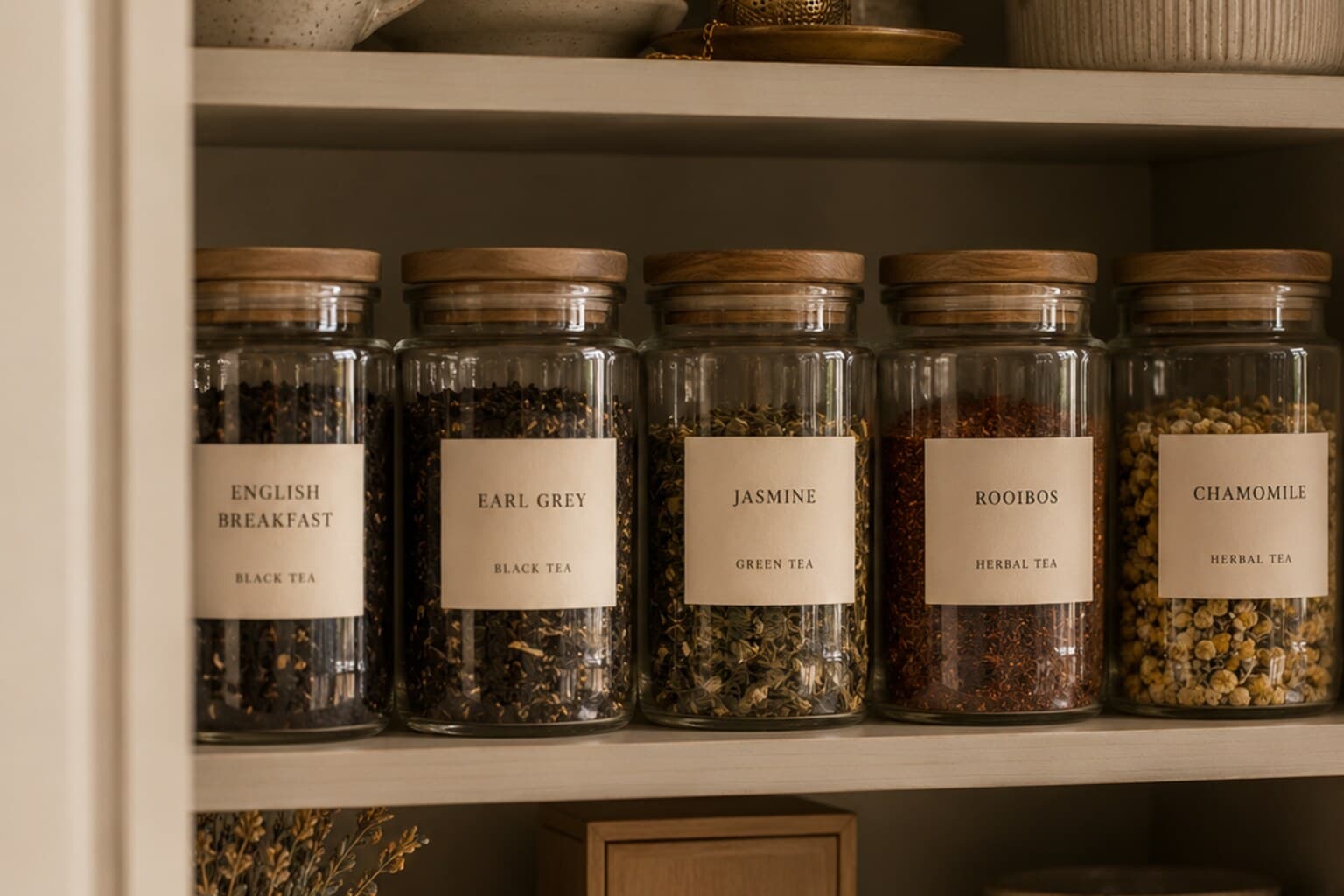
At a Glance
- Gather the tea collection
- Group by function
- Review freshness and condition
- Define the core collection
- Store loose tea clearly
- Keep accessories limited
- Create an evening section
- Rotate one seasonal tea
Tea cupboards often contain more variety than use - gift boxes, single flavours, open packets, herbal blends purchased for a particular mood, several nearly identical black teas. The collection grows, while the same few teas are prepared every day.
The Tea Cupboard Edit creates a smaller repertoire based on actual habits - morning, afternoon, after dinner, caffeine-free, guest-friendly, seasonal.
The goal is not minimalism for its own sake. It is to make the right tea easy to choose.
Gather the Tea Collection
Bring together tea stored in kitchen cupboards, drawers, gift boxes, work bags, pantry shelves and serving cabinets.
Review the collection as one category.
Group by Function
Morning: black tea, breakfast blends, green tea where preferred. Afternoon: Earl Grey, light black tea, white tea, flavoured blends. Herbal: mint, chamomile, rooibos, ginger, fennel. Seasonal: spiced autumn tea, citrus winter blends, floral spring tea, fruit infusions for summer. Guest tea: a small broad selection.
Grouping by moment may be more useful than grouping only by brand.
Review Freshness and Condition
Check best-before dates, packaging, moisture exposure, loss of fragrance, unidentified loose tea and damaged sachets.
Tea can lose flavour even when it remains technically usable. Follow supplier guidance for storage and shelf life. Discard products that have been compromised by moisture or contamination.
Define the Core Collection
A practical collection may contain one everyday black tea, one green or lighter tea, two or three herbal options, one decaffeinated tea, one seasonal blend, and one guest-friendly option.
Adjust according to actual use. There is no need to maintain every category when it does not suit the household.
Store Loose Tea Clearly
Use appropriate airtight containers. Label tea type, preparation temperature, steeping time, caffeine information and date opened where useful.
Do not rely on memory when several loose teas look similar.
Keep Accessories Limited
Useful tea tools may include a kettle, teapot, infuser, tea scoop, strainer, timer and cup. Keep only the accessories required for the preferred preparation method.
Specialist tools should not make an ordinary cup harder to prepare.
Create an Evening Section
Place caffeine-free options together - rooibos, chamomile, mint, ginger, lemon verbena. Check ingredients and suitability for personal circumstances.
Herbal teas can have active effects and may not be appropriate for everyone, particularly alongside medication or during pregnancy. Use reliable health guidance where relevant.
Rotate One Seasonal Tea
Keep only one or two seasonal blends open at a time - a spring floral blend, a summer mint or fruit infusion, an autumn spiced rooibos, or a winter citrus black tea.
This keeps the seasonal layer enjoyable rather than excessive.
The Checklist
- All tea gathered
- Duplicates identified
- Expired or compromised tea removed
- Core collection defined
- Loose tea labelled
- Caffeine-free options visible
- Accessories reduced
- Seasonal blends limited
- Cupboard easy to review
Pair It With
A useful tea cupboard does not offer endless choice.
It offers the right cup for the moment without searching through forgotten boxes.
Enjoyed this?
The Seasonal Letter brings more stories, recipes and rituals like this one - a few times a season, never more.

Written by Esther
Esther is a photographer and storyteller, and the founder of Essy's Essentials - a seasonal home for stories, rituals, recipes and everyday luxuries.
More about Esther →