Food & Kitchen
The January Jar: Marmalade and Proper Toast
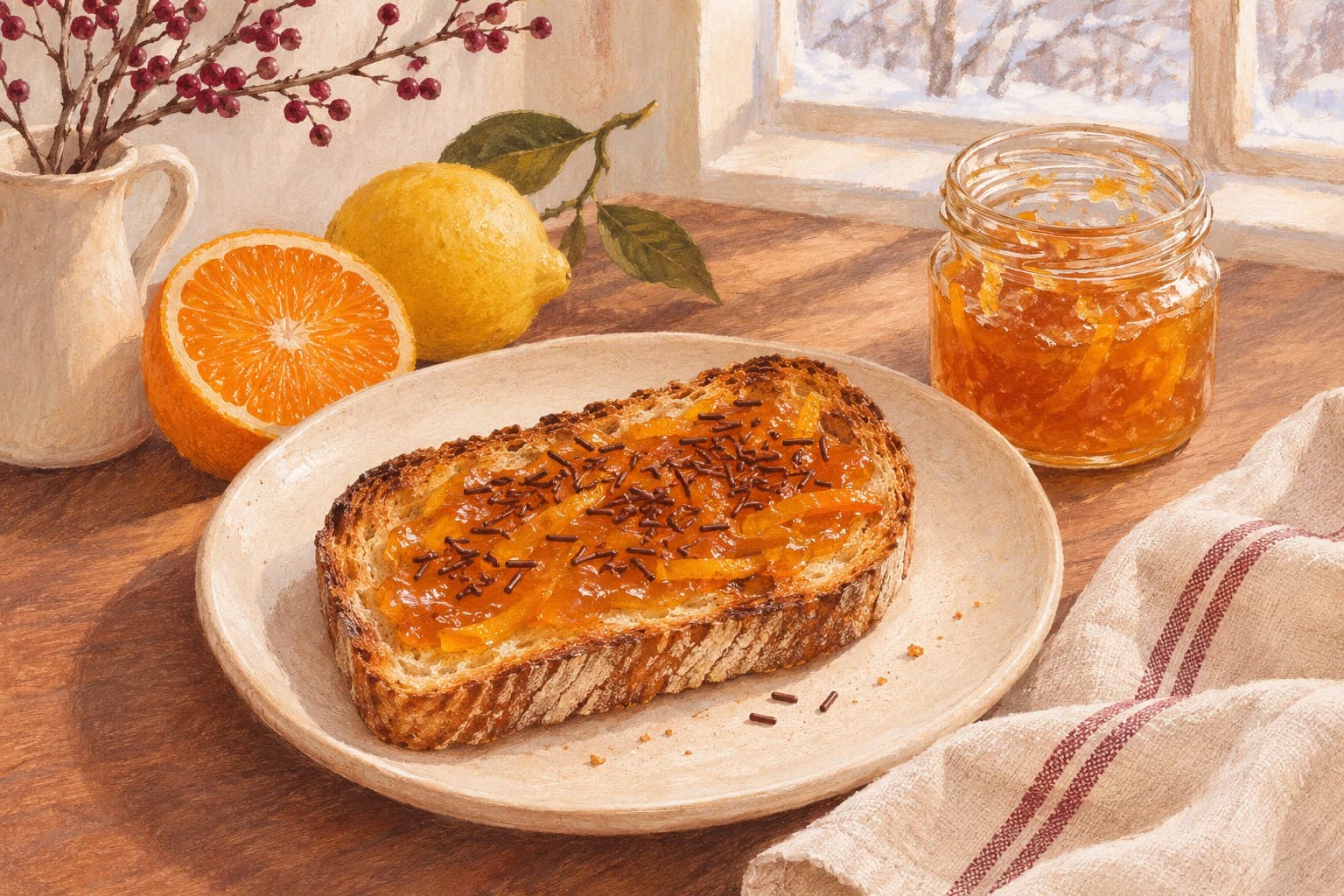
Orange marmalade with a little chocolate hagelslag, a good jar from a farm shop, and something properly crunchy underneath.
I love marmalade. I love jam, too, with one very definite exception: apricot. You can keep that one.
Give me a jar I am happy to open and some proper toast, though, and I am very easily pleased. Bonne Maman is a favourite, and I particularly like buying preserves from farm shops. I enjoy making citrus marmalade as well, but a bought jar has just as much of a place at my table.
The important bit, for me, is what goes underneath. I want something crunchy. Soft bread with a lovely topping is still missing the part I look forward to: that first bite through the toast.
Why marmalade belongs in January
There is a seasonal reason to bring marmalade to the table now. January is a key month for Seville oranges, the bittersweet fruit associated with traditional orange marmalade. Riverford's guide to marmalade-making is a useful introduction to that short winter opportunity.
You do not have to spend the month preserving to enjoy it. A jar you already love, a loaf you want to eat and a few minutes at the toaster are a perfectly good way in.
Orange marmalade, with a little hagelslag
One of my favourite combinations is orange marmalade on toast with a little hagelslag. For anyone outside the Netherlands, those are the small chocolate sprinkles we put on bread.
The orange and chocolate are lovely together, and I like having the crunch of the toast underneath. It is a simple combination, but it is very much my sort of thing.
If you want to try it, toast your bread until it has the crunch you enjoy, spread it with orange marmalade and add a little chocolate hagelslag. You can decide how much of each sounds good to you. This does not need a weighed recipe to become breakfast.
The fig-jam toast I would happily eat instead
My other favourite takes a different direction: sourdough toast, fig jam, cured ham and a little rocket.
There is the sweetness of the jam, the savoury ham and the freshness of the rocket, with that crisp bread holding everything together. This is the combination I think of when someone asks how I like to eat fig jam. Very happily, is the short answer.
Toast the sourdough, spread it with fig jam, add the ham and finish with a little rocket. Keep it easy to pick up and eat. You want a good bite of everything, including the bread.
Fig jam is a different preserve from citrus marmalade, of course. Both belong here because they are things I enjoy putting on toast. One is an orange-and-chocolate breakfast; the other is a sweet-and-savoury plate that would make a very good lunch.
If toast is already one of your favourite things, The Morning Toast Edit has more ideas for choosing bread and toppings.
The pleasure of finding a jar
I like Bonne Maman, but I especially enjoy buying preserves at farm shops. It gives me another way to choose something for the kitchen, alongside the familiar jar I already know I like.
That is part of the appeal of The Saturday Farm-Shop Round: a practical food shop can be an enjoyable part of the day in its own right.
If you would like to make your own
I have made citrus marmalade before, usually with a mixture of citrus fruits, and I enjoy doing it. I also prefer to use less sugar. I no longer have the exact proportions of the version I made, so I am pointing you towards a published recipe rather than pretending to reproduce it here.
Pomona's Orange Marmalade – Light & Fresh is a lower-sugar recipe from the pectin manufacturer. It uses their specific pectin and calcium mixture; follow the recipe's fruit preparation, quantities and storage instructions, including its stated citrus substitutions. It is a recipe to explore, not one I am claiming to have personally tested.
With a lower-sugar preserve, use a recipe designed for that approach rather than simply taking sugar out of a conventional one. Oregon State University's pectin guidance explains why the product and method matter. Follow the chosen recipe's keeping instructions, too, rather than assuming every homemade jar has the same shelf life.
Open the jar you want to eat
There is room for both kinds of January morning: the one when you feel like making marmalade, and the one when you simply want to make toast.
Apricot remains someone else's department.
Questions about the January jar
Why is January associated with marmalade?
January falls within the short winter season for Seville oranges, the bittersweet citrus used in traditional orange marmalade. It is a seasonal reason to think about marmalade, whether you make it yourself or enjoy a bought jar.
What do you put on toast with orange marmalade?
I like a little chocolate hagelslag. Spread the marmalade on crunchy toast and scatter the chocolate sprinkles over it.
What goes with fig jam on toast?
My favourite combination is sourdough toast with fig jam, cured ham and a little rocket. It is a lovely mix of sweet and savoury, with properly crunchy bread underneath.
Can I make marmalade with less sugar?
Yes, using a recipe and pectin designed for it. The linked Pomona's recipe is one published option. Follow its own ingredient and keeping instructions rather than reducing the sugar in an unrelated recipe.
Keep Reading

Written by Esther
Esther is a photographer and storyteller, and the founder of Essy's Essentials - a seasonal home for stories, rituals, recipes and everyday luxuries.
More about Esther →