Food & Kitchen
A Winter Supper You Can Sit Down To
A menu for four, with the cake made yesterday and room for the host at the table.
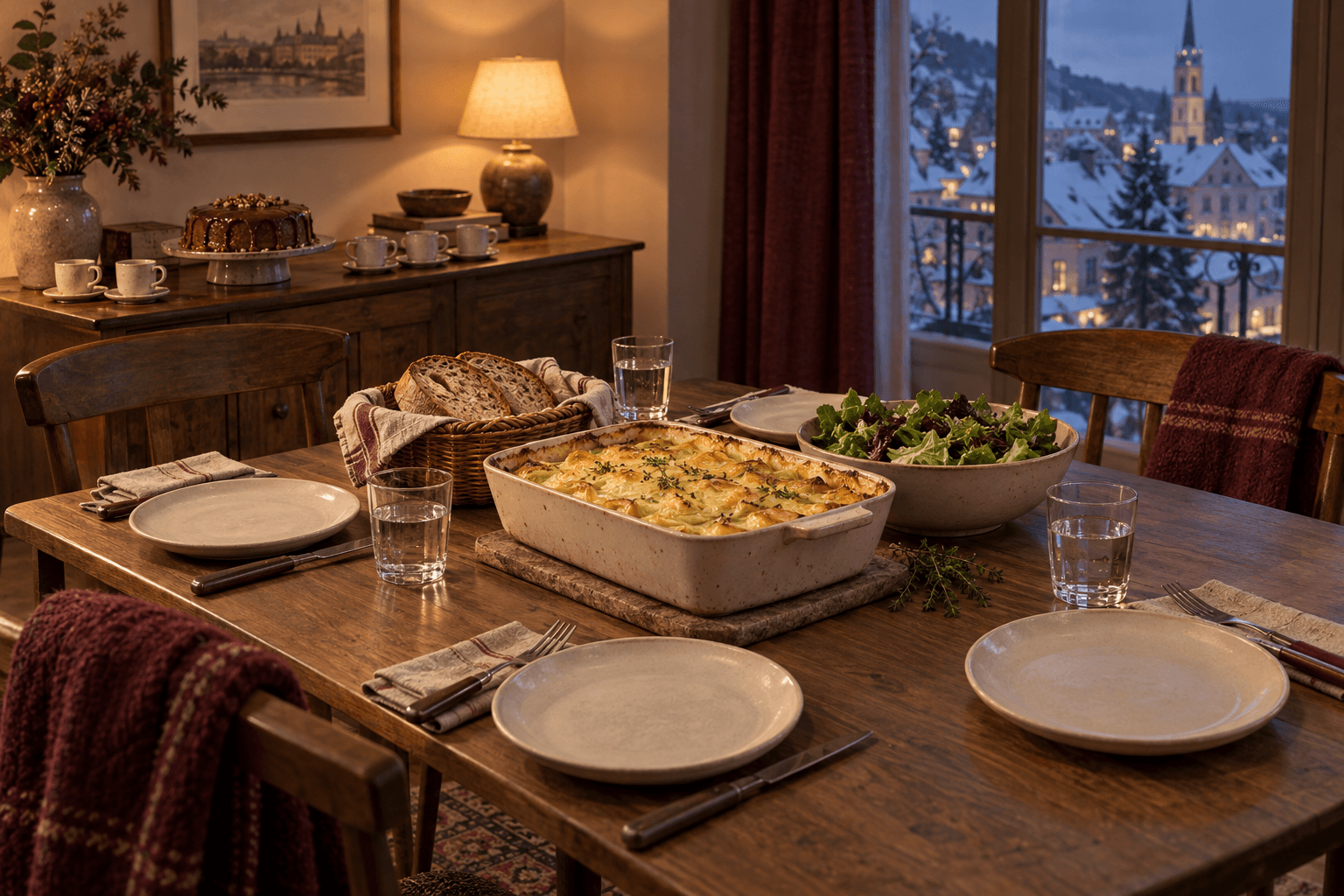
“Set four places. One of them is yours.”
The best part of inviting people for supper should not happen while you are in another room. A little planning can put the work before the doorbell: one main dish finishing in the oven, a salad ready to dress and a cake that needs only slicing.
This Hollowpine menu is for four people in total, including the host. Make the hazelnut coffee cake the day before, then cook the potato and leek bake on the evening itself. Serve both from dishes you already own. There is no separate starter to time and no hot dessert competing for the oven.
Hollowpine is the fictional winter village at Essy's Essentials, inspired by the warmth of Viennese cafes and the ordinary life around a shared table. This menu borrows the oven supper from The Last Saturday and the cake from The Cake That Wouldn't Wait. It is an invitation to bring their feeling home, rather than recreate a scene exactly.
Use the full Creamy Potato and Leek Bake with Thyme and Hazelnut Coffee Cake with Coffee Glaze recipes for quantities, method and storage. The bake serves four as a main; the cake makes ten slices. Serve four slices and keep the remainder according to the recipe. You do not need to scale the whole cake down for one evening.
Ask about dietary requirements before settling the menu. Both recipes contain dairy; the cake also contains hazelnuts, eggs and wheat. The bake includes mustard. Check the bread, dressing and other ingredient labels too. Use vegetarian cheese if needed. The lactose-free options in the recipes still contain milk ingredients and are not milk-allergy alternatives.
Choose a Menu with a Quiet Final Ten Minutes
Look at what each dish needs immediately before serving. A main course needing constant stirring, a sauce needing attention and a starter requiring individual plating can all be reasonable choices separately. Together, they occupy the same person at the same moment.
Here, the bake does its final cooking in the oven. The salad waits undressed in the fridge. The bread needs no heating. Dessert is already complete.
The last ten minutes have only a few jobs: let the bake rest, dress the salad, put the food on the table and call everyone through. Keep those minutes clear of an extra course added because the menu looked short on paper.
The Day Before: Let the Cake Have the Kitchen
Allow the cake its full preparation, baking and cooling time - approximately two and a half hours in all, much of it unattended. Glaze it only when completely cool. Store it as the recipe directs, without fresh cream added.
Check that the serving dish fits your oven and that there is a heatproof place for it on the table. The bake uses a deep dish of approximately 24 x 20 cm, with a capacity of about 2.5 litres. Take out the serving spoon, cake knife and the plates you will actually use.
This is also a good moment to check the chairs. Four places should mean four comfortable places, including your own. A folded blanket over the back of a chair is useful if the room runs cool. It need not become a new table theme.
Earlier on the Day: Prepare the Things That Can Wait
Set the table and make space in the fridge. Wash and thoroughly dry the salad leaves, then refrigerate them in a suitable covered container. Choose a dressing you already enjoy and keep it separate, following its storage instructions.
Grate the cheese, wash and slice the leeks, and measure the other ingredients if useful; keep perishable ingredients refrigerated until needed. Leave peeling and slicing the potatoes for the cooking session so they can go straight into the recipe.
Put coffee cups, tea and a cake knife somewhere accessible. Clear one small area for used plates. You should be able to put dinner things down without first dealing with yesterday's washing-up.
For a little nostalgia, use the serving spoon, bread basket or cake plate that already has a history. One familiar object gives the table more character than a set of things bought to match the season.
A Workable Evening Timetable
This example aims for guests at 18:30 and supper around 19:10. It includes a little room for the potatoes to need longer. Use the recipe's doneness checks rather than serving an undercooked dish to meet the clock.
17:35 - heat the oven to 190C conventional / 170C fan and begin the bake recipe, including the slicing, leek cooking and potato simmering, while the cake, table and salad are already prepared.
Around 18:20 - put the assembled bake in the oven, on a baking tray, and set a timer for 35 minutes.
18:20-18:30 - clear the preparation area, slice the bread and put out water, while the main course cooks without continuous attention.
18:30 - welcome your guests and offer a drink. Stay within reach of the oven timer. No starter or dessert preparation remains.
18:55-19:00 - check the bake: a knife through the middle should meet no resistance. If needed, cover loosely and cook for another 5-10 minutes. The salad is still undressed; the bread is ready.
Once cooked - rest the bake for ten minutes. Dress the salad, bring out bread and place the dish on a heatproof trivet.
Around 19:10, or a little later - sit down and eat. Dessert needs only slicing and drinks.
If the potatoes take longer, tell people supper will be a few minutes later. There is no second hot dish losing its moment while you wait.
Put the Meal Within Reach
Set the bake where it can be served without passing a heavy hot dish from person to person. Keep its handles clear and place the serving spoon nearby. Put the salad and bread where guests can help themselves comfortably.
If the table is small, serve from a nearby surface instead. A generous table does not need to hold every serving dish at once. Remove decorative objects before you make anyone balance a plate beside them.
Offer a straightforward welcome: “Help yourself to bread; the potatoes just need a few minutes.” It gives people something to do and tells them that arriving has not interrupted a performance.
Once everyone has food, take your own place. A pan can soak while a conversation continues.
Leave Dessert Out of the Countdown
When the meal has settled, ask whether people would like cake and coffee. Bring the cake to the table or slice it on the sideboard. It does not need warming, a sauce or another garnish to become dessert.
This is where the evening can loosen. Cups can replace wine glasses. Someone may move to a different chair. The table can look like a meal has happened there.
For the part that comes after the food, The After-Supper Half Hour offers a Hollowpine ritual for staying together a little longer. You do not need a second activity planned as carefully as the meal.
Clear Enough, Then Return
Take care of food that needs chilling without turning the rest of the evening into a kitchen reset. Divide leftover bake into small portions, cool and refrigerate within two hours, then use within 48 hours or freeze. Follow the recipe for reheating.
Put the remaining cake away as its recipe directs. Refrigerate any perishable accompaniments promptly. The rest of the clearing can be a few practical movements, rather than a reason to disappear for half an hour.
The Menu
Main
- Creamy Potato and Leek Bake with Thyme.
- Prepare and bake on the day; rest for ten minutes before serving.
Alongside
- Green salad and sliced bread.
- Wash and dry the leaves in advance; dress them just before eating.
Afterwards
- Hazelnut Coffee Cake with Coffee Glaze.
- Bake, cool and glaze the day before; slice when wanted.
Drinks
- Water at the table; other drinks by preference; coffee or tea with cake.
- Choose something simple to offer without making individual drinks throughout dinner.
Questions About an Easy Winter Supper
What can I cook for a winter dinner party without being in the kitchen all night?
Choose one oven main, an easy side and a dessert that is already finished. This menu uses potato and leek bake, salad, bread and a cake made the day before. It leaves some preparation on the day, but little active work once guests arrive.
Can I make the whole meal the day before?
The cake can be made ahead. The bake recipe also has a cook-ahead option, but this timetable is specifically for a freshly assembled bake. A whole refrigerated dish needs longer to heat through; do not substitute it into the fresh-bake timings without allowing for that.
Is this menu enough for six?
The potato bake serves four as a main or six as a side. This plan is for four diners in total. For six main-course portions, revise the quantities, dish arrangement and cooking plan rather than stretching four portions or assuming a deeper dish cooks at the same speed.
Do I need a starter?
This menu goes straight to a substantial main course, followed by cake. If people arrive hungry, offer a little of the bread while the bake finishes. A separate starter would add another serving stage without being necessary to the plan.
Can I make it lactose-free?
Use the lactose-free substitutions already listed in both recipes, including the dairy in the cake batter and the bake's cheese, milk, cream and butter. Check all labels and individual needs. Lactose-free dairy is still dairy; this is not a milk-free menu.
The Hollowpine feeling comes from the room being used: coats put away, food passed around, somebody asking for another small slice. Give yourself enough space in the plan to enjoy those moments.
Set four places. One of them is yours.

Written by Esther
Esther is a photographer and storyteller, and the founder of Essy's Essentials - a seasonal home for stories, rituals, recipes and everyday luxuries.
More about Esther →