Christmas
How to Host Christmas Without Missing Christmas
If everyone else gets to enjoy Christmas while you're producing Christmas from the kitchen, the plan needs changing. Plan, buy, prep, delegate, close the kitchen - and sit down.
9 min read
“The closer you get to Christmas, the fewer decisions you should still have to make.”
I love cooking for people.
I love thinking about what we're going to eat, finding recipes, setting a beautiful table and making something special for people I love.
What I don't love is realising halfway through dinner that everybody else has been having a wonderful Christmas while I've spent most of mine checking oven temperatures.
Hosting Christmas should not mean missing Christmas.
And for me, the difference is almost always preparation.
I start planning Christmas dinner in early December
Not cooking.
Planning.
At the beginning of December, I start thinking about who will be where on which day and what I might want to make.
Our Christmas isn't exactly the same every year.
Bas and I usually spend Christmas Day together, just the two of us. Boxing Day varies. Sometimes we eat with my brother's family and sometimes everyone comes to us.
If they're here, these days that can mean cooking for nine.
I actually like that our Christmas can change from year to year.
But it means I need to know which Christmas I'm hosting before I start designing the menu.
Plan for the Christmas you're actually having.
Make the menu fit the number of people
Cooking Christmas dinner for two and cooking for nine are completely different jobs.
When it's just Bas and me, I can make something more elaborate purely because I feel like it.
Bas loves beef Wellington, for example, so that's something I enjoy making for him.
I also love a Sunday-roast sort of Christmas dinner: roast beef, good potatoes from the oven, green beans and proper comforting sides.
When more people are coming, I think differently.
Every additional component creates another timing problem.
More dishes do not automatically make dinner more special.
Sometimes they just make the oven more complicated.
Choose where you're going to make an effort
I don't think everything on a Christmas table needs to be difficult.
If I'm making a beautiful main course, I don't also need six technically impressive side dishes and a dessert that requires individual plating at precisely 20:17.
Decide where you want the moment to be.
Maybe it's the beef Wellington. Maybe it's a beautiful starter. Maybe you've found a brilliant dessert.
Put your energy there.
Everything surrounding it is allowed to be simpler.
I look everywhere for ideas in December. Pinterest, food blogs and magazines are very good for this. I particularly like browsing recipes from Miljuschka, Foodies and delicious. and seeing what catches my attention.
But inspiration isn't an instruction.
You don't have to make everything you save.
Shop backwards from Christmas
Anything that keeps can be in our house a week before Christmas.
I see absolutely no benefit in standing in a packed supermarket on 24 December buying something I could have bought seven days earlier.
So I divide the shopping.
Pantry ingredients, drinks and anything else with a decent shelf life: early.
Fresh ingredients: usually the day before.
And wherever possible, I order.
We have local butchers and farm shops where I can place an order in advance and simply collect the fresh things on 24 December.
The closer you get to Christmas, the fewer decisions you should still have to make.
Put everything into lists
I am not relying on my festive brain to remember nine people's Christmas dinner.
I make lists.
Sometimes they're simply in the Notes app on my phone. I use them for supermarket shopping, things I need to order and whatever else is still outstanding.
If groceries can be ordered online, even better.
A Christmas hosting plan doesn't need a beautiful printable planner with seventeen tabs.
It just needs to get information out of your head.
At minimum, I want to know: what I'm serving, what I need to buy, what I can order, what I can make early and what genuinely has to happen on the day.
Make dessert before Christmas Day
Dessert is one of the easiest places to buy yourself time.
If I can make it one or even two days ahead, I will.
Nobody at the table knows whether you made their dessert at 3pm that afternoon or yesterday.
They also don't care.
And by the time dessert arrives, I definitely don't want to disappear into the kitchen and start a new cooking project.
Every little job you remove from Christmas Day creates more space for Christmas Day.
Or make dessert an experience instead
One year we did s'mores for dessert.
Everyone went outside and made their own over an open fire.
Was that a traditional formal Christmas dessert?
No.
Was it memorable?
Absolutely.
Sometimes a dessert you don't plate at all is the one everyone talks about afterwards.
Set the table before you need it
This is one area where I do like to go all out.
If we're having a proper Christmas dinner, I want the table to feel special.
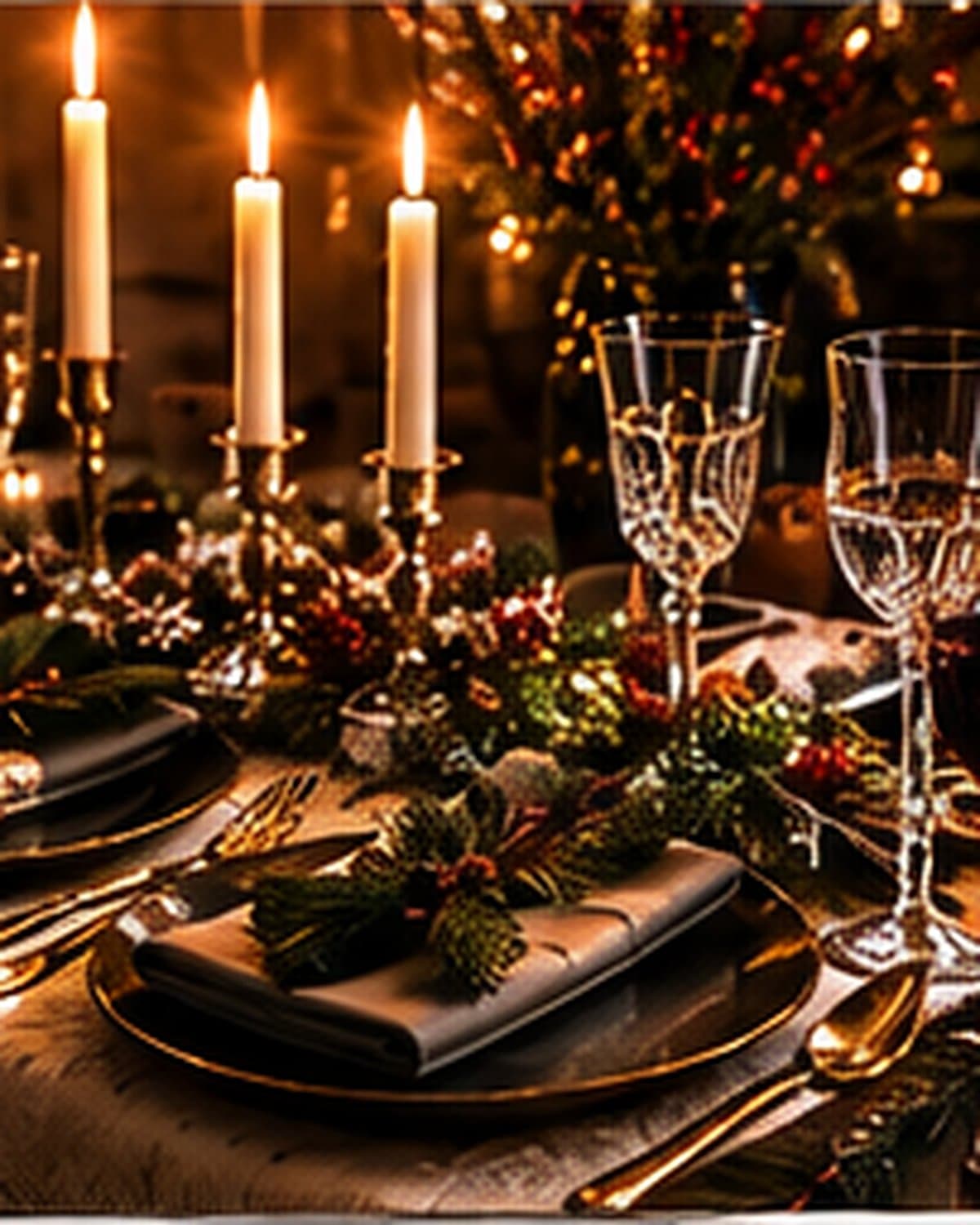
Table linen. Proper place settings. Charger plates. Candles. All of it.
I enjoy doing that.
But because I enjoy it, I want to enjoy actually setting it too.
Do it early.
The table can sit there looking beautiful for a few hours.
It will survive.
Your guests are allowed to know where the fridge is
At our house, people are welcome to get their own drinks.
If there's champagne or something I specifically want to serve, of course I'll bring that out.
But I am not spending an entire Christmas gathering monitoring everyone's glass.
Tell people where things are.
Let them help themselves.
Better still, ask them for help when you need it.
Hosting people doesn't mean serving them every second they're in your house.
Work backwards from the moment you want to eat
Multiple courses become much easier once you stop thinking in recipes and start thinking in time.
Decide approximately when you want the main course on the table.
Then work backwards.
What needs the oven? At what temperature? What can rest? What can stay warm? What needs your attention during the final ten minutes? What can already be finished?
Oven space is particularly important.
Four dishes that all need different temperatures at exactly the same time are not a menu.
They're a logistics problem.
Change one.
If you're nervous, do a test run
Particularly if you're hosting quite a few people or making something you've never attempted before, there is absolutely nothing wrong with practising.
Make the important part of the meal the weekend before.
You don't have to recreate all three courses.
Test the thing you're worried about.
You'll learn how long it really takes, which pan you need, whether the recipe is remotely realistic and whether you even like it.
Don't test your entire culinary personality on Christmas Day
I love trying something new at Christmas.
I do it almost every year.
But there's a difference between introducing something new and making every single element unfamiliar.
Anchor the meal with things you know.
Try the new recipe alongside them.
And please don't choose something purely because it looked extraordinary on Pinterest.
Pinterest doesn't have to wash your pans afterwards.
Ask for help
I am the person who plans and cooks in our house.
Bas isn't particularly interested in taking over the Christmas menu, and that's fine.
He'll think along if I ask him and he'll help when I need him.
The important part is the second half of that sentence: when I need him, I ask.
You don't get an additional Christmas medal for doing everything yourself.
You are allowed to delegate jobs without delegating the entire meal.
Decide when the kitchen closes
This may be the most important step.
At some point, stop producing Christmas.
Sit down.
Eat the food.
Drink the wine.
Listen to whatever story someone is telling.
Look at the table you spent time making beautiful.
You cooked something lovely for people you love.
Enjoy being one of them.
There will always be a plate that could be cleared. Something that could be wiped. A pan soaking somewhere.
It can wait.
My Simplest Christmas Hosting Rule
If you're hosting Christmas for the first time
- Make a plan and ask for help.
- Decide the menu early.
- Buy the things that keep early.
- Order whatever can be ordered.
- Make anything ahead that won't suffer for it.
- Test the part you're nervous about.
- Give guests permission to look after themselves.
- And don't build a menu that requires you to disappear for half the celebration.
- Christmas dinner doesn't need to prove how good you are at hosting.
- It's something lovely you're making for people you love.
- And if you've planned it properly, when everyone sits down to enjoy it - you should be sitting there too.
Related Editorial

Written by Esther
Esther is a photographer and storyteller, and the founder of Essy's Essentials - a seasonal home for stories, rituals, recipes and everyday luxuries.
More about Esther →