Makeup, Lightly
The Art of Quiet Makeup
A considered approach to makeup that enhances presence without making beauty feel complicated, corrective or overworked.
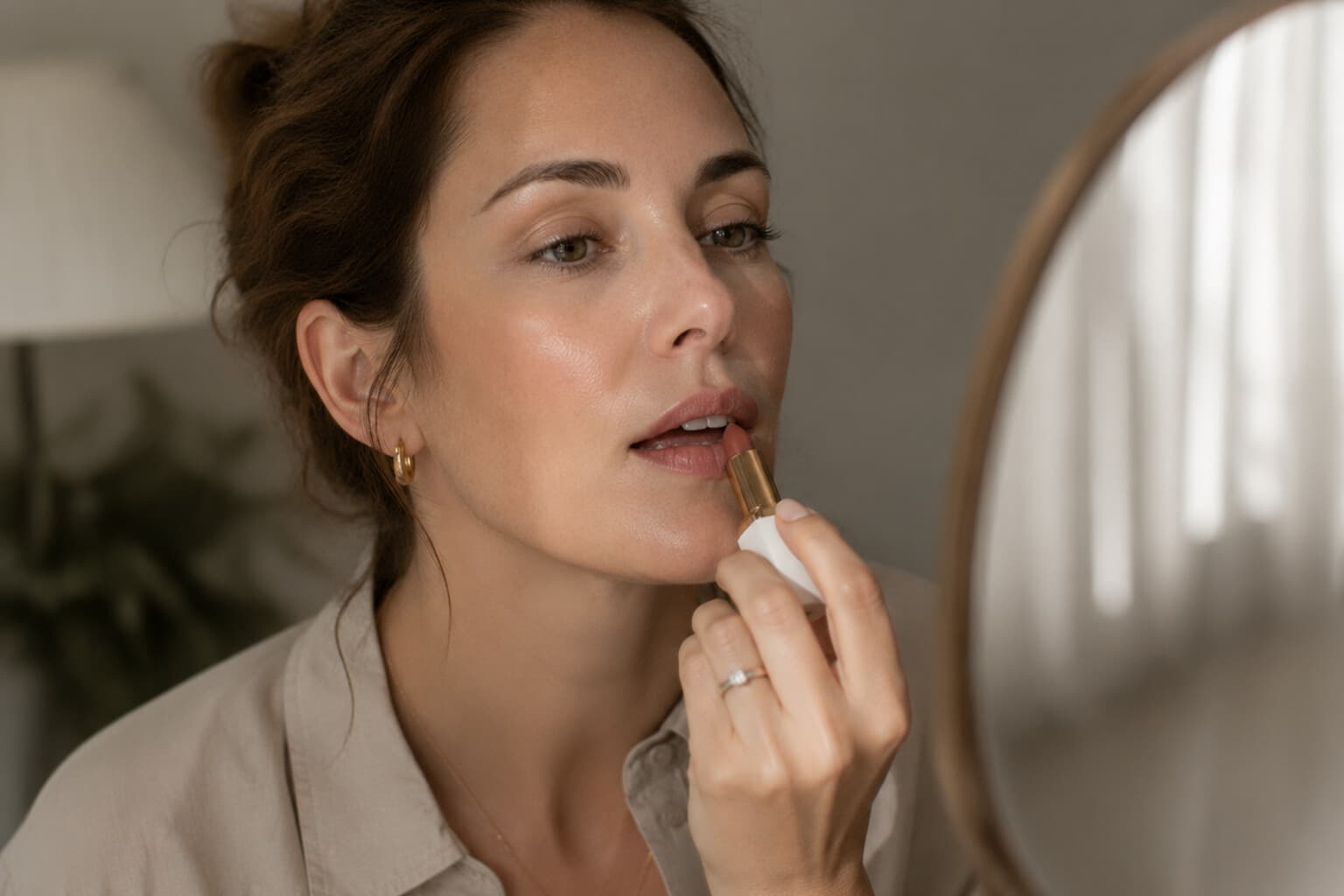
Makeup can be expressive - it can change with mood, clothing, season and occasion. But everyday makeup does not need to transform the face in order to feel effective.
Quiet makeup begins with restraint - a small amount of coverage, a little colour, definition where it helps, and a finish that still allows skin, features and expression to remain visible. The aim is not to create a flawless surface. It is to look rested, balanced and recognisably yourself.
Begin with the Desired Effect
Before choosing products, define the result. You may want to look fresh, polished, softly defined, more awake, even-toned, warm, natural or elegant.
These words are more useful than following a fixed list of steps.
Work with the Face, Not Against It
Quiet makeup pays attention to natural skin texture, face shape, eye shape, brow direction, lip tone and existing colour in the cheeks. Instead of covering everything, choose where small changes create the greatest effect.
For some people this may be brows and lips, for others complexion and mascara, or blush and a softly defined eye.
Use Less Product in More Precise Places
A light base may be applied only where needed. Concealer may be placed around the inner corners of the eyes, areas of redness, individual marks, or the sides of the nose.
A small amount blended well often appears more natural than a full layer applied automatically.
Keep Skin Visible
Skin has texture, pores, movement, fine lines and natural variation. Makeup should not need to erase all of these in order to be successful.
Choose a finish that looks comfortable at conversational distance, not only under close inspection.
Create Balance
Quiet makeup usually benefits from balance rather than equal intensity everywhere. If the lip is stronger, keep the eyes softer. If the eyes are more defined, use a restrained lip. If the complexion is luminous, keep powder strategic.
One area may lead - the others should support it.
Choose Shades That Belong to You
Useful shades often reflect tones already present in the lips, cheeks, hair, eyes and wardrobe - muted rose, soft berry, warm beige, taupe, brown, peach, terracotta or plum.
The most flattering shades are not always those labelled for a particular season or trend - they are the ones that remain harmonious in natural light.
Let Tools Support the Finish
A small set may include fingers, one complexion brush, one blush brush, one eye brush, a brow spoolie, and an eyelash curler where desired.
Tools should make application easier, not create another complicated system.
Accept Variation
Makeup will look different on warm days, cold days, tired mornings, fresh skin, dry skin, and in different lighting.
The goal is not exact repetition - it is a familiar overall effect.
Pair It With
Quiet makeup does not ask the face to become something else.
It adds a little definition, a little warmth and enough polish to let the person remain at the centre.

Written by Esther
Esther is a photographer and storyteller, and the founder of Essy's Essentials - a seasonal home for stories, rituals, recipes and everyday luxuries.
More about Esther →