Beauty Rituals & Everyday Care
The Art of Everyday Beauty
A calm, considered approach to personal care that supports daily life without turning beauty into another demanding routine.
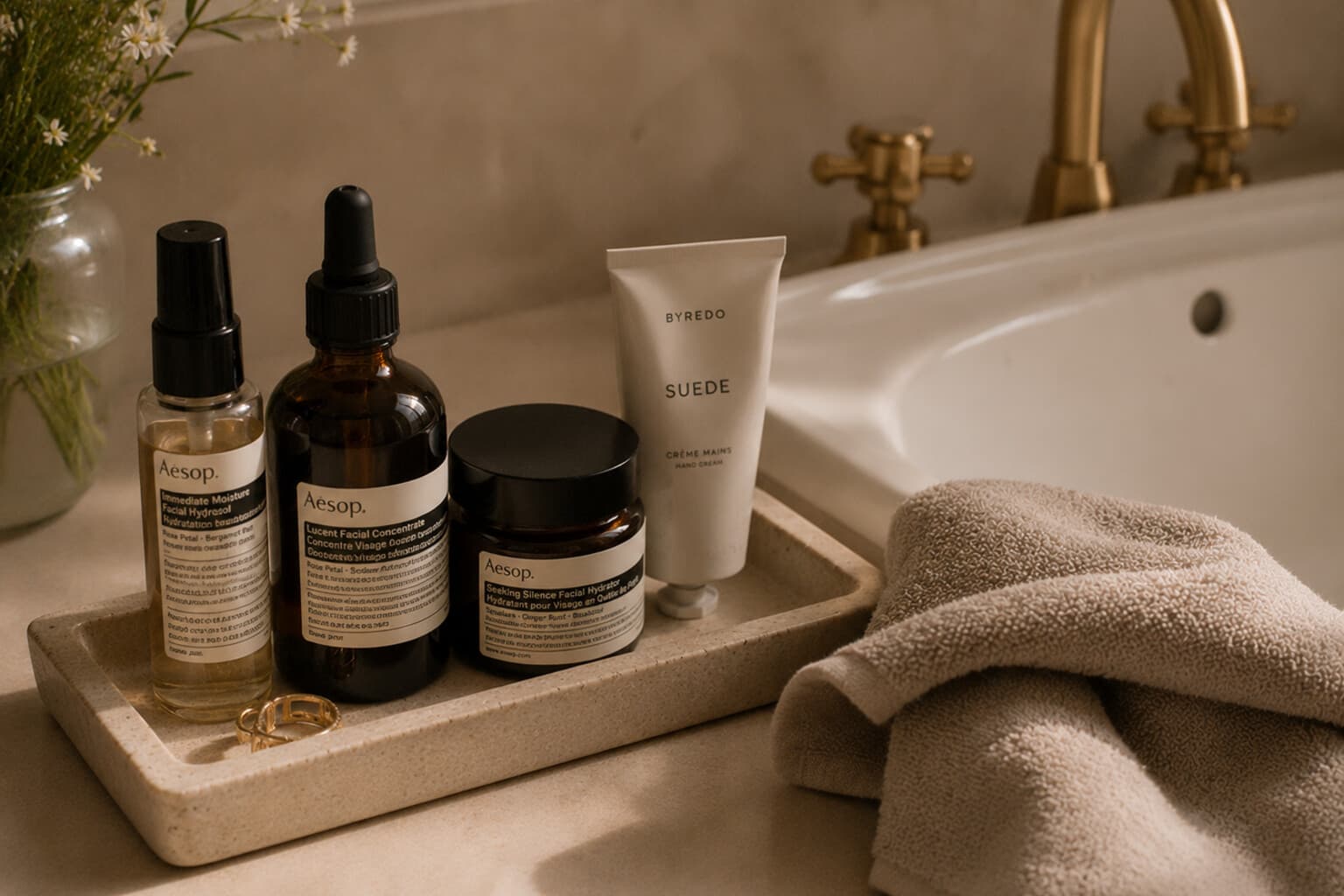
Beauty routines are often presented as projects - more products, more steps, more techniques, more visible improvement. But everyday care does not need to be built around constant correction.
At its most useful, beauty is a quiet form of maintenance - cleansing the skin at the end of the day, brushing the hair before bed, applying hand cream after washing up, taking a few minutes to get ready before leaving the house, replacing a product only when it is genuinely finished. These small actions may not appear transformative, but they create consistency.
The purpose of an everyday beauty ritual is not to perform perfection. It is to feel cared for, prepared and comfortable in your own presentation.
Begin with How You Want to Feel
Before reviewing products or routines, define the desired result - fresh, polished, rested, softly put together, comfortable, prepared for the day, or calm at bedtime.
The routine should support this feeling. It does not need to copy someone else’s beauty standard.
Build Around Essential Care
A dependable routine usually begins with a few practical categories - skin cleansing, moisture and comfort, sun protection where appropriate, hair care, dental care, body care, hand and nail care, personal grooming, makeup where desired, and fragrance where desired.
Not every category needs an elaborate product system. One reliable product may be enough.
Separate Care from Correction
Care focuses on comfort, cleanliness, protection, maintenance and consistency. Correction focuses on eliminating perceived flaws, chasing constant improvement, responding to every new concern, and changing products too frequently.
A routine may include targeted products, but it should not make the face or body feel like a permanent problem to solve.
Keep the Routine Proportionate
A beauty routine should fit the time available, the household schedule, skin and hair needs, personal energy, budget, and storage space.
A ten-step routine that is completed twice a month may be less useful than a simple routine followed consistently.
Choose Products by Function
Ask of each product what it does, when it is used, whether it performs that role well, whether another product is doing the same thing, and whether it would be repurchased.
This keeps the collection connected to use rather than aspiration.
Let Repetition Create Refinement
Daily beauty becomes easier when actions occur in a familiar order - cleanse, moisturise, brush teeth, brush hair, prepare clothes, apply fragrance.
The sequence reduces decision-making. It also makes it easier to notice when a product is no longer working.
Use Beauty to Support Transitions
A short ritual can mark the movement between parts of the day. Morning care signals the day is beginning. Returning-home care signals outside demands are finished. Evening care signals the body may slow down.
These transitions can be valuable even when the routine itself is brief.
Keep Room for Pleasure
Practical care does not need to feel purely functional. Pleasure may come from a beautifully scented body lotion, a soft towel, a favourite hairbrush, a small tray beside the sink, warm lighting, or a fragrance associated with the season.
One pleasurable detail can make a basic routine feel personal.
Pair It With
Everyday beauty is not an event. It is a rhythm.
A few useful actions repeated often enough to create comfort, ease and quiet confidence.

Written by Esther
Esther is a photographer and storyteller, and the founder of Essy's Essentials - a seasonal home for stories, rituals, recipes and everyday luxuries.
More about Esther →