Belgian Beef Stew with Homemade Chips
Our absolute favourite: slow-cooked beef in dark beer, with mustard, ontbijtkoek and a little sambal, served over proper homemade chips.
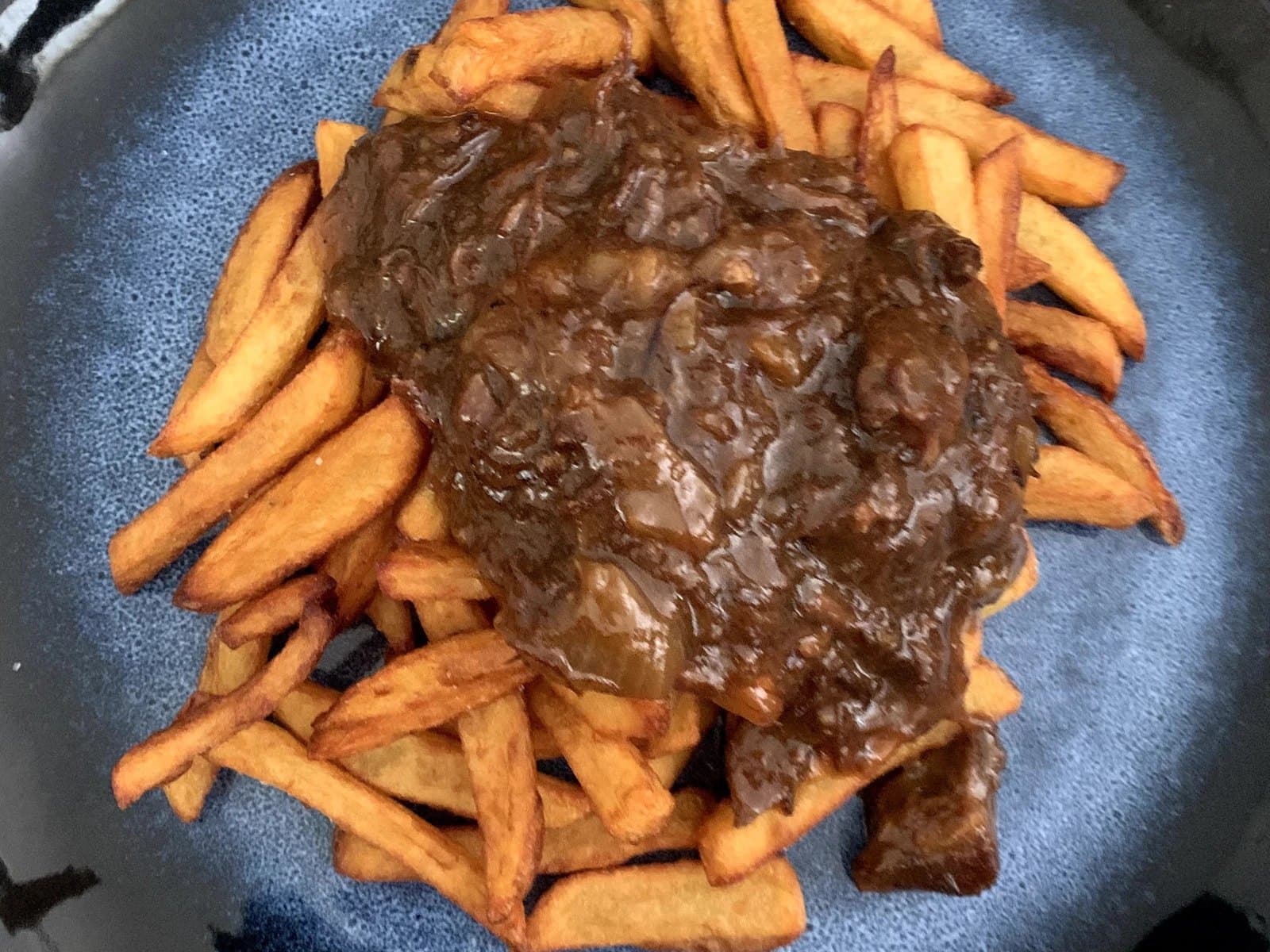
for slow winter days and a very good plate of chips
Dark beer, mustard, ontbijtkoek and six patient hours.
Download the printable recipe (PDF)If you ask me what comfort food looks like in our house, this is it. Belgian beef stew with homemade chips is an absolute favourite for Bas and me, and my version has changed over the years until it became the one we make now.
There are four large onions, dark brown beer and three slices of ontbijtkoek spread thickly with mustard. I also add sambal oelek, because I like a little heat. The beef has most of the day to become tender: I usually have it gently simmering from about ten in the morning until four in the afternoon.
The chips matter just as much. I prefer Bintje potatoes, always peeled. Skin-on chips are simply not my thing. Mine are cut a little thicker than French fries, fried twice and left to cool completely between the two rounds.
I make enough stew for four portions. We eat two and freeze two for another dinner. The potato quantity below is the generous amount I prepare for the two of us, with some left over; it is not a four-person quantity matched to the whole pan of stew.
Recipe at a glance
- Stew: 4 portions - two for dinner and two for the freezer.
- Chips: 1.5 kg potatoes, Esther’s generous batch for two, with extra.
- Stew timing: about 6 hours of gentle simmering, plus preparation and browning.
- Chips timing: about 5 minutes per batch at 150°C, complete cooling, then about 5 minutes per batch at 180°C. Allow extra time for peeling, cutting, rinsing and working in batches.
- Equipment: a heavy casserole with a lid, a deep-fat fryer suitable for your chosen fat, a colander and a clean tea towel.
The ingredients I use
For the beef, I use sukadelappen, the Dutch cut sold as feather blade or blade for braising in Britain. Ask your butcher for a cut suitable for long, slow cooking and cut it into large pieces.
The beer is 330 ml of dark brown beer. Corsendonk or a dark brown beer from Hertog Jan are examples of what I use. Choose the dark brown style rather than assuming any bottle from those brands is the same.
Ontbijtkoek is Dutch spiced breakfast cake. Keep that name on your shopping list: it is the ingredient in my version, rather than ordinary bread or an iced ginger cake. I spread the slices with Dijon before they go on top of the stew.
For the liquid, use ready-to-use beef stock with the richness of a fond. The 350 ml is the liquid amount going into the pan; if your stock or fond is concentrated, dilute it according to its label first.
For frying the chips, I use liquid frying fat, such as Diamant, or beef dripping, sold as ossewit, when I want the more traditional version.
Ingredients
Stew — 4 portions
- About 1 kg feather blade or blade beef for braising (sukadelappen), cut into large pieces
- Butter, a generous knob for frying the onions, plus more as needed for the beef
- 4 large onions, peeled and very roughly chopped
- 330 ml dark brown beer
- 350 ml ready-to-use beef fond or rich beef stock
- 3 slices ontbijtkoek, each about 1 cm thick
- 3 tablespoons Dijon or French mustard
- 3 bay leaves
- 3 whole cloves
- 1 scant tablespoon sambal oelek
- Salt and black pepper, to taste
Chips — generous batch for two
- 1.5 kg Bintje potatoes
- Liquid deep-frying fat or beef dripping, enough for your fryer’s recommended fill level
Method
How I make the stew
- Cook the onions first. Melt a generous knob of butter in the casserole and fry the roughly chopped onions until softened and starting to colour. Lift them out and set aside.
- Brown the beef in batches. Add more butter as needed. Brown the large pieces of beef well, working in small batches and setting each batch aside as it is ready. Give the meat room. For me, that brown crust is an important part of the flavour. If the pan is crowded, the meat releases liquid and steams instead of getting the colour I want. Keep the heat high enough to brown the beef without burning the butter or the browned bits in the pan.
- Loosen the browned bits with beer. With the beef out of the pan, pour in the beer and scrape up the browned bits from the base. Return the beef and onions, then turn the heat right down.
- Add the fond, sambal and herbs. Pour in the 350 ml of ready-to-use fond or rich stock and stir in the sambal oelek. Add black pepper and a little salt, bearing in mind that the fond may already be seasoned. I push the cloves into the bay leaves to help keep them together, then add them to the pan. Count them in so you can remove all three cloves and all three bay leaves before serving.
- Lay the mustard-covered ontbijtkoek on top. Spread the three slices thickly with the mustard and lay them on top of the stew. Let them soften into the sauce as it cooks, gently stirring them through once they have broken down.
- Simmer gently for about six hours. Set the lid slightly askew and keep the stew at a very gentle simmer on the lowest suitable hob heat. I usually cook mine from about ten until four. Check it occasionally and stir gently so the sauce does not catch. If it is reducing too far before the beef is tender, add a small splash of water. The endpoint matters more than the clock: the meat should be very tender and yield easily to a fork, with a rich sauce around it.
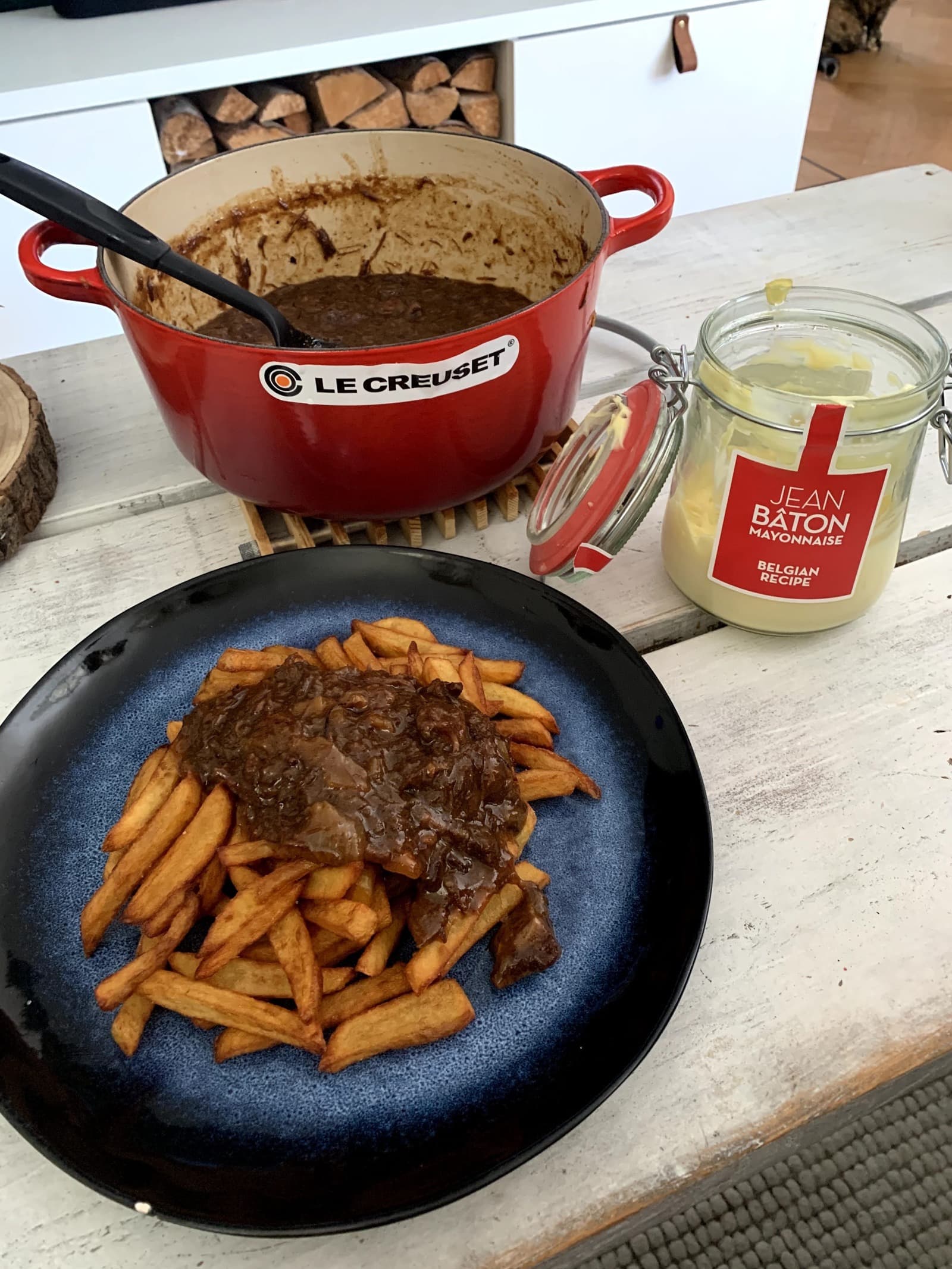
- Finish and serve. Remove the bay leaves and cloves, check the seasoning and spoon the stew over the freshly cooked chips. Keep the two portions for another day separate from what you are serving now.
How I make the chips
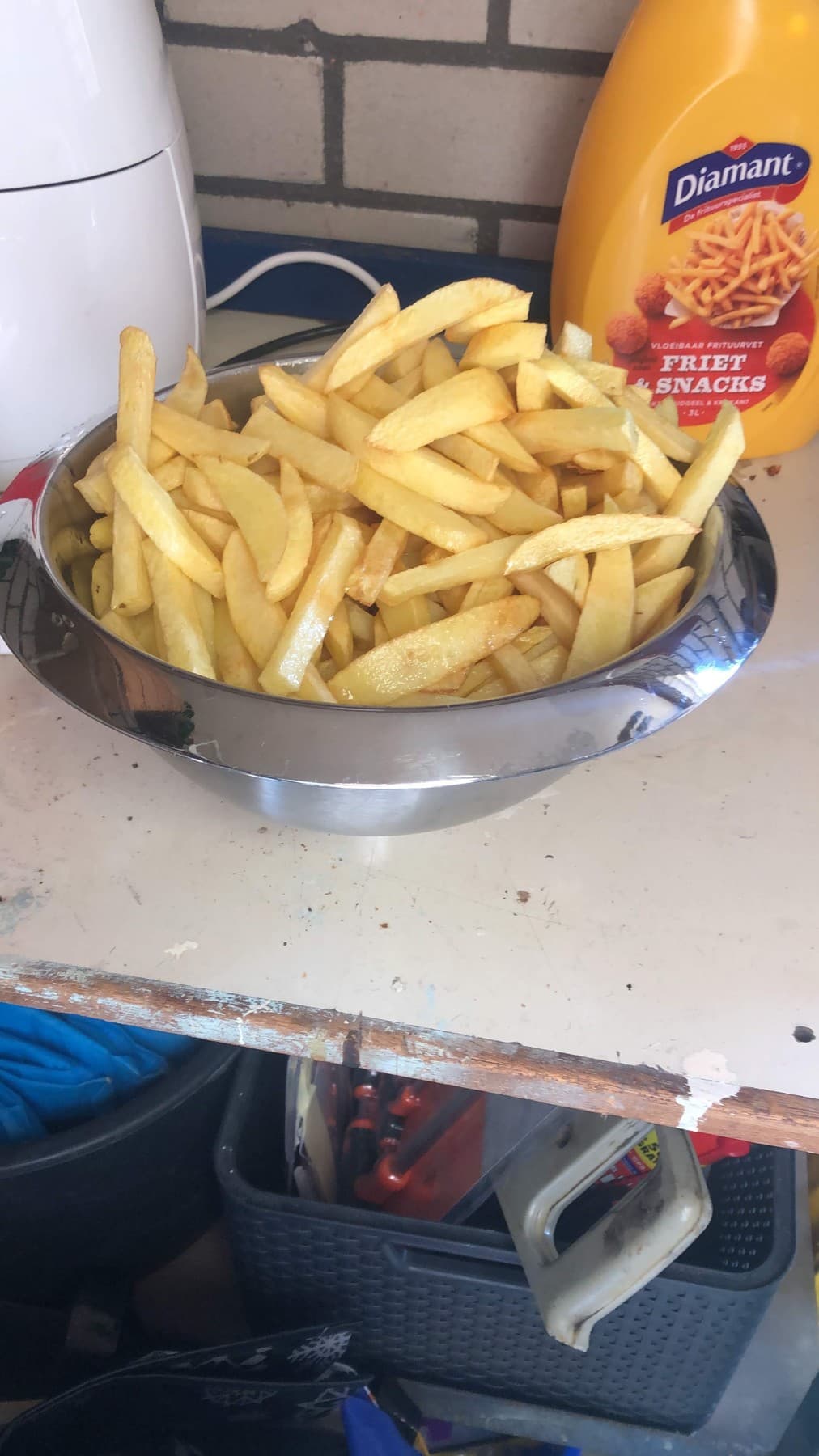
- Peel and cut. Peel the Bintjes and cut them a little thicker than French fries. Keep the pieces as even as practical so they cook at a similar rate.
- Rinse and dry thoroughly. Put the cut potatoes into cold water, then rinse them again in fresh cold water. Drain and dry thoroughly on a clean tea towel before frying.
- First fry: 150°C. Heat the frying fat to 150°C. Fry in batches for about 5 minutes each. At this stage the chips should be cooked through but still pale; they are not ready for their final colour yet. Avoid overfilling the basket and let the fat return to temperature between batches.
- Cool completely. Lift out and drain each batch, then spread the chips out and let them cool completely before the second fry. Do the first fry while the stew is still cooking, so there is time for that cooling step before dinner.
- Second fry: 180°C. When you are ready to eat, bring the fat to 180°C and fry the cooled chips in batches for about 5 minutes, until crisp and golden. Watch the colour and lift them out sooner if needed; potato size and your fryer will affect the exact time. Aim for golden chips rather than dark brown ones.
- Put dinner together. Drain the chips and serve straight away with the hot stew spooned over them. This is the plate I look forward to: tender beef, plenty of sauce and homemade chips underneath.
The two portions for another day
I deliberately make extra stew for the freezer. Divide the spare stew into smaller containers so it cools quickly, and refrigerate or freeze within two hours. Use refrigerated leftovers within 48 hours or freeze them. Defrost frozen stew in the fridge, then reheat once until steaming hot all the way through, stirring as it heats.
The Food Standards Agency’s guidance on cooking and leftovers is a useful reference for storing and reheating cooked meals.
A winter dinner worth making time for
This is the kind of food I mean when I talk about comfort food in winter. It takes time, but most of that time belongs to the slow simmer.
For another winter meal, browse the recipes in Hollowpine. And if dinner is followed by an evening under a blanket, The Watching Room has somewhere to start choosing a film.
Recipe questions
Can I make the stew ahead?
Yes. I make four portions so that two can go in the freezer for another meal. Cool and store the spare portions promptly, then reheat only the amount you plan to eat until steaming hot throughout.
Why do you add sambal to Belgian beef stew?
I like a little heat, so my version includes a scant tablespoon of sambal oelek. It is one of the changes I have made over the years to suit our taste.
Do the chips need two rounds of frying?
That is how I make them: about 5 minutes per batch at 150°C, complete cooling, then about 5 minutes per batch at 180°C. Keep an eye on doneness and colour rather than relying on the timer alone.
Which potatoes do you use for homemade chips?
I prefer Bintjes, always peeled and cut a little thicker than French fries. I prepare a generous 1.5 kg batch for the two of us and usually have some left over.
Read Also
Enjoyed this?
The Seasonal Letter brings more stories, recipes and rituals like this one - a few times a season, never more.

Written by Esther
Esther is a photographer and storyteller, and the founder of Essy's Essentials - a seasonal home for stories, rituals, recipes and everyday luxuries.
More about Esther →