The Working Life Edit
How to Start Journaling When You’re Busy
A journal on the bedside table, a few words when your head feels full, and permission to leave the page alone. A personal way to begin, even with a busy working life.
8 min read
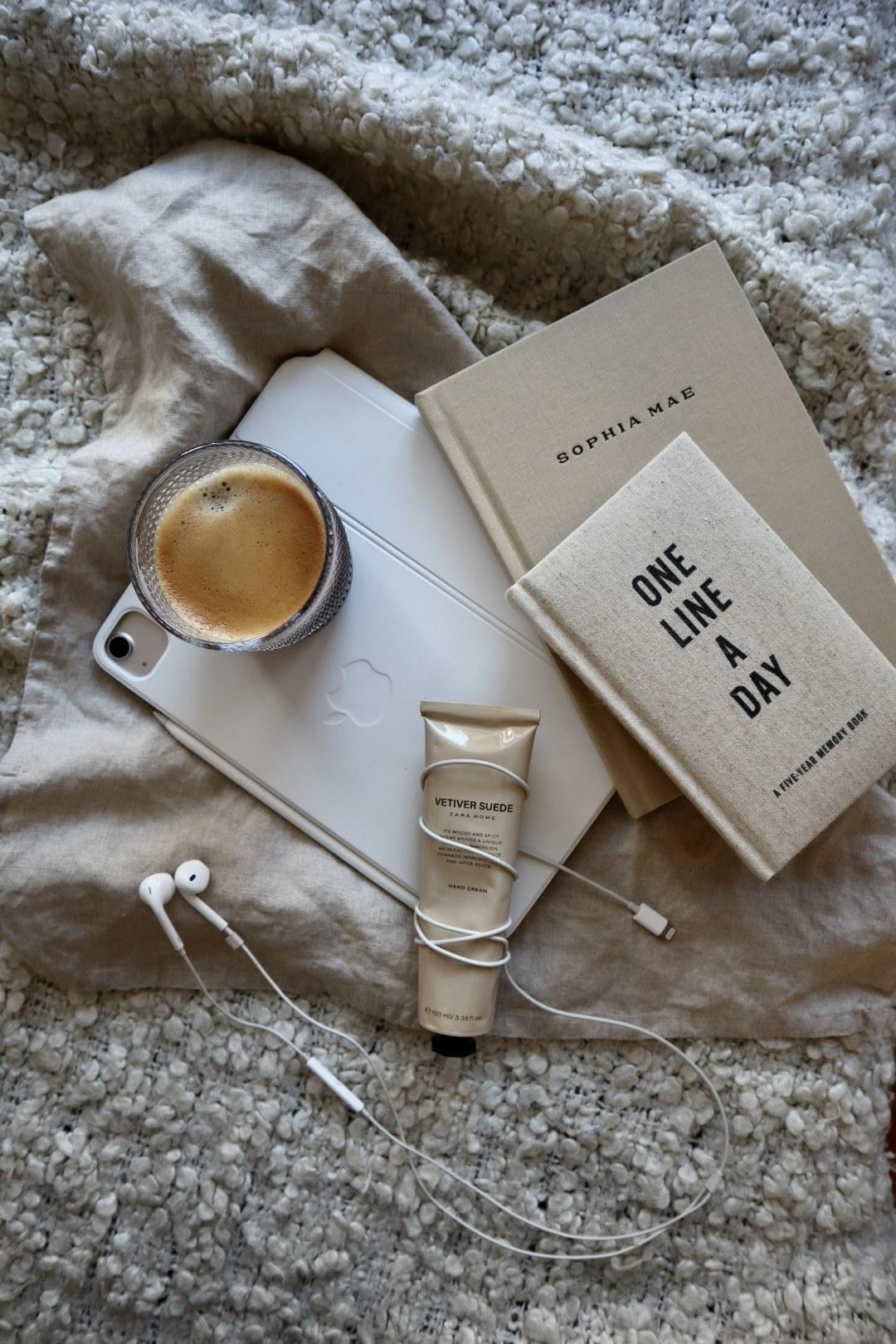
A few of my journals, with room for different kinds of days.
If you’re wondering how to start journaling when you’re busy, begin with a notebook within reach and one thing you want to put on the page. A sentence, a few loose words or a doodle can be enough. You can stop there, and you don’t have to come back tomorrow.
The moment I most often want to reach for a journal is just before I go to sleep. I get into bed with a full head, and writing gives me somewhere to put some of what I’m still carrying from the day. That is why I keep a journal on my bedside table: close enough to pick up when I feel like it.
As a manager, I know what it is to have plenty on your plate. Alongside my working life, I have this little editorial world, a home and all the ordinary things that need a bit of attention. By bedtime, I sometimes want to get a few thoughts out of my head.
I also have more than one journal. I doodle in them. Occasionally, I add a sticker, a little something I’ve found, or a Post-it with words I wanted to keep. And I give myself permission to leave them alone.
That last part matters to me as much as anything I put on the page.
Start with the journal you’ll actually want to open
You can begin with an ordinary notebook and a pen. If you already have an unfinished journal somewhere, you can open it at the next blank page. There is no need to buy anything before you start.
A journal with questions can be useful if you like having somewhere to begin. A blank notebook gives you room to write sideways, draw in a corner or let one thought take up a whole page. A small memory book suits the days when you only want to record a moment.
Choose whatever feels inviting to you. You don’t have to decide how you’ll use every page before you’ve written on the first one.
I like having different journals available. What I want to put down can vary, and I’m quite happy for the book I reach for to vary too.
Find a small opening in the day you already have
For me, that opening is bedtime. My journal lives on the bedside table because that is where I tend to want it.
You might prefer a few minutes with your coffee, a quiet lunch break or a little time at the weekend. If your working days are unpredictable, it may be more useful to keep a notebook nearby than to promise yourself a particular hour.
Try placing it wherever you’re most likely to want to write, with a pen alongside it. Let it be available. Whether you open it is still up to you.
If you have two minutes, you can write for two minutes. If you feel like carrying on, you can. There is no minimum number of pages to complete before you’re allowed to close the book.
What to write when your head is full
You don’t need to describe your whole day. Start with the thought that is taking up the most room, even if it seems small or unfinished.
Perhaps you’re still thinking about a conversation. Perhaps there is something you need to remember tomorrow. Perhaps you simply want to write that you’ve had enough for one day.
These are a few starting points to borrow when the blank page feels a little too blank:
- What is still on my mind tonight?
- What am I trying to remember for tomorrow?
- What felt like a lot today?
- What small moment would I like to keep?
- What would I like a little more space for?
- What can I leave unfinished for now?
Choose whichever question feels useful. You can answer in a handful of words and ignore all the others.
An entry could be as simple as this:
“Still thinking about that conversation. I can decide what to say tomorrow. For tonight, I’ve written it down.”
That is an example, rather than a page from my own journal. Yours might be much messier, shorter or completely unrelated to work.
I use journaling mainly to help empty my head when there is a lot in it. I don’t expect every entry to produce an answer. Sometimes putting the thought somewhere is all I wanted to do.
You can doodle when you don’t feel like writing
Some evenings, I don’t fancy writing a whole story. I do, however, feel like drawing something or having a little scribble.
So that is what I do.
It doesn’t have to be beautiful. I’m making these pages for myself, and I don’t need the drawing to turn into anything in particular.
If words feel like too much, you could draw a few shapes, make a pattern around the date or write one word and doodle around it. You can leave the rest of the page empty.
Every so often, I’ll add a sticker, something I’ve found or a Post-it. I might save a saying I came across that day because it caught my attention. Those little additions make the journal feel personal to me.
There is no need to gather supplies for this. If something comes your way and you’d like to keep it, there can be a place for it between the pages.
It’s perfectly fine to have more than one journal
I want to say this quite plainly, because I have several: you are allowed to have more than one journal.
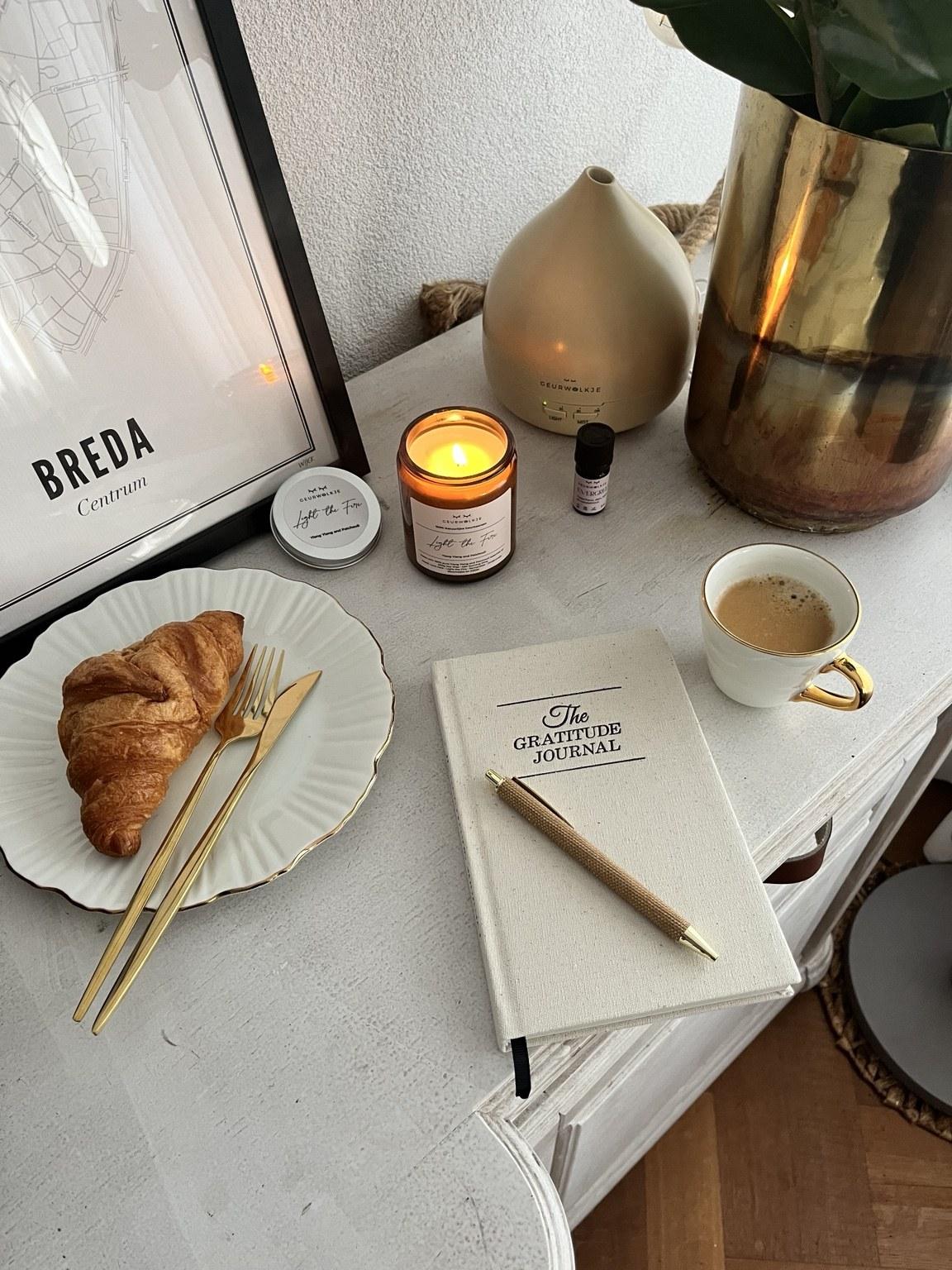
You might like a small book for brief memories and another with space to draw. You might enjoy a gratitude journal sometimes and want a completely blank page at other times. You can also keep everything together if that is easier.
My own books don’t need to become a carefully managed system. Having several doesn’t mean I have to fill in several entries whenever I sit down.
If you’re starting out, one notebook is plenty. If you already own a few, you can use whichever you feel like opening. Nothing needs to be transferred, colour-coded or caught up before you begin.
Let the page be honest, especially after a busy working day
When you spend much of the day choosing your words carefully, it can be lovely to have somewhere private to be a little less polished.
You can write that something was frustrating. You can acknowledge that you were pleased with yourself. You can change your mind halfway through a sentence.
A gratitude prompt is there if it appeals, but you don’t have to find a lovely lesson in a difficult afternoon. Equally, a small good thing is worth recording without a long explanation: a kind message, a particularly good coffee, something that made you laugh.
If you’re writing about work, keep other people’s confidential information out of your personal journal. A few words about your own thoughts are usually enough to capture what you wanted to explore.
There is room here for the rest of your life too. Your journal can hold the things that have nothing to do with your job title.
Miss a day. Or several. Then come back when you want to
I don’t believe journaling needs the pressure of an unbroken daily routine.
If a daily moment suits you, enjoy it. If you reach for your journal only when you have something on your mind, that can be your way of using it.
You don’t have to account for the days in between. Open the book where you left off, add today’s date if you like, and start with whatever is there now. A dated page can stay blank.
This feels particularly worth remembering in January, when a fresh notebook can so easily become another resolution to keep up with. You can begin because you’re curious, because your head feels full or simply because you’d like somewhere of your own to write.
You’re allowed to discover what suits you as you go.
Frequently Asked Questions
How do I start journaling if I have very little time?
Keep a notebook and pen somewhere convenient, then write one thing that is on your mind when you have a spare moment. A sentence or a few words is a complete place to start. You don’t need to set aside a long session.
What should I write on the first page of my journal?
Try finishing the sentence “What’s on my mind today is…” or record one moment you’d like to remember. You can also begin with a doodle. The first page doesn’t need an introduction, a plan or a promise to write every day.
Is it better to journal in the morning or at night?
Choose the time that suits your life and what you want from the page. I prefer just before bed because that is often when I notice how full my head feels. A morning coffee or a quiet weekend moment may suit you better.
Do I have to journal every day?
No. You can write daily if you enjoy it, occasionally, or whenever you feel you have something to put down. In this approach, there is no schedule to maintain and no need to catch up on missed entries.
Can I draw or doodle in a journal instead of writing?
Yes. A personal journal can include drawings, scribbles, stickers, saved words and little pieces of paper. I often doodle when I don’t feel like writing at length. Your pages don’t have to meet anyone else’s idea of what a journal should look like.
Is it okay to use more than one journal?
Yes. I have more than one myself. You can use different books for different kinds of entries, or simply pick whichever you feel like opening. You don’t need to write in all of them or organise them into a system.
A little room beside the bed
For all the beautiful notebooks and possible prompts, the part I come back to is very simple. My journal is on my bedside table, ready when I want it.
Some nights I want words. Sometimes I’d rather doodle. On other nights, the book stays closed.
If you’d like to start, put a notebook somewhere within reach. When you feel like opening it, begin with whatever is on your mind. You can let that be enough for tonight.
For more small ways to make space in your day, explore the rituals at Essy’s Essentials. For the practical side of everyday life, visit Life, Beautifully Organised.
Words and photographs by Esther, founder of Essy’s Essentials. This article draws on her own experience of journaling alongside a busy working life.

Written by Esther
Esther is a photographer and storyteller, and the founder of Essy's Essentials - a seasonal home for stories, rituals, recipes and everyday luxuries.
More about Esther →