The Working Life Edit
How to Plan Your Work Outfits for the Week
My Sunday-evening clothing rail, a favourite blazer and shoes I can actually walk in.
6 min read
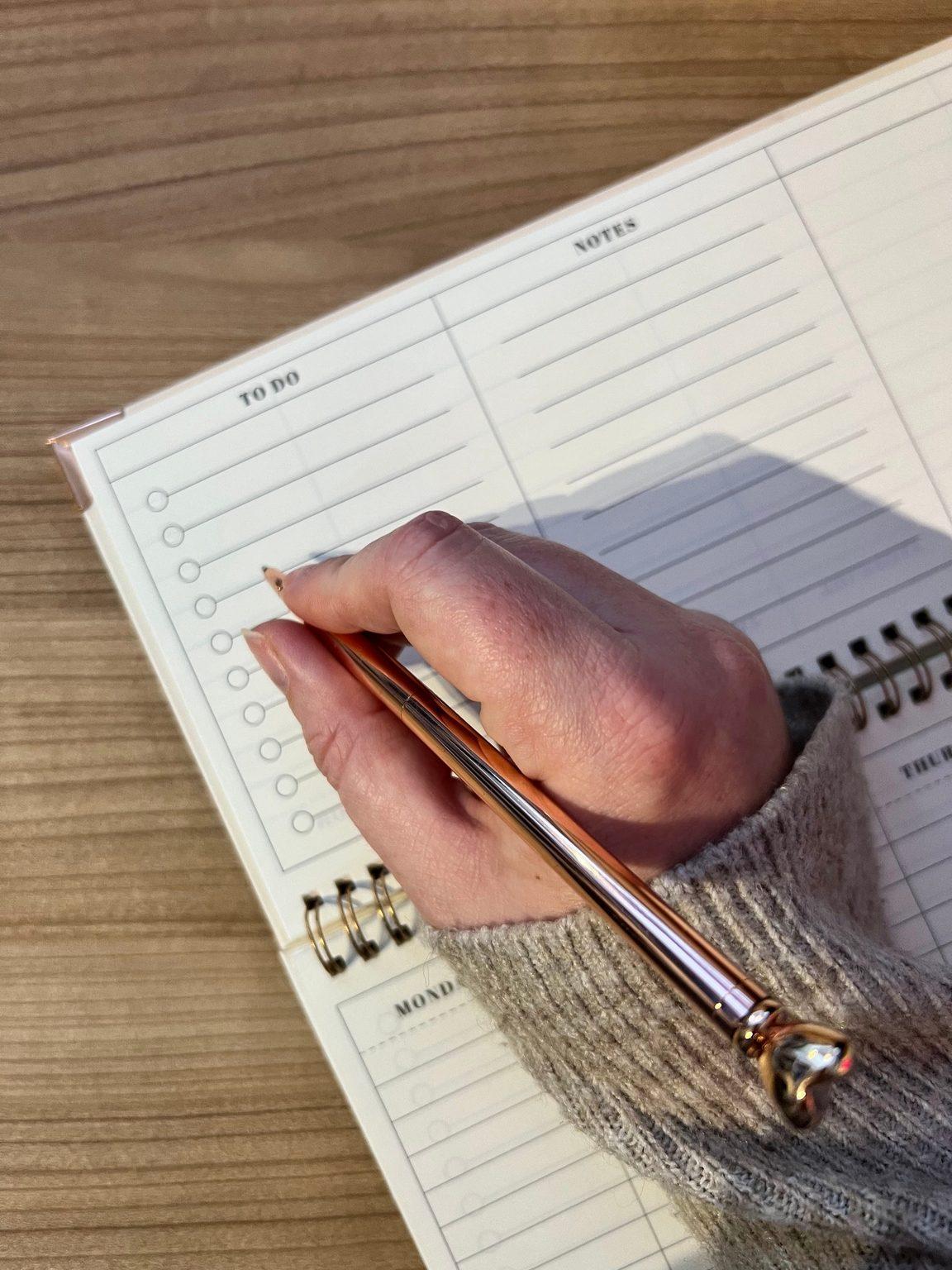
My weekly planner, ready for the week ahead.
To plan your work outfits for the week, look at where you’ll be, how much walking each day involves and who you’re meeting. Choose suitable shoes, build outfits from clothes you already own and hang the combinations together. Keep them flexible enough to swap when the morning arrives.
I have a clothing rail in my bedroom. On Sunday evenings, especially before a busy week with several days away from home, I hang up most of what I think I’ll wear.
I do this before going to bed, so there is less to work out on the mornings when I need to leave. It gives me a few ready-made choices, and I still change my mind quite regularly.
Start with the week in your diary
Before choosing clothes, I look at the locations I’ll be working from. How far will I need to walk? What sort of day am I going to have? Who am I meeting?
Those details make the outfit much easier to choose. A day involving a long walk calls for different shoes from one where I’ll barely be on my feet. A meeting that feels particularly important may make me reach for a favourite jacket.
You can begin with a quick glance at your own week:
- Which days will you be at home or on location?
- How much walking or standing is involved?
- Are there meetings for which you want to dress differently?
- What will the weather and your workplace require?
The last question is a practical addition for your own planning. The first things I personally think about are the location, the walking and the people I’ll meet.
Choose shoes you can comfortably use
I refuse to walk a long distance in very high heels. So the shoes come into the decision early, and I adapt the outfit around them.
It is easy to put together a combination that looks lovely on the hanger and forget the journey it needs to make. Think about the whole day: the walk from parking or public transport, the buildings you’ll move between and the time you’ll spend standing.
Use your workplace’s requirements and your own comfort as the starting point. You don’t need a new pair of shoes to make this useful; you need to choose from the ones that work for your day.
Build around a piece you love wearing
I often wear a blazer. I love them, so I hang one up and decide what goes with it: perhaps a dress underneath, perhaps trousers, then the rest of the outfit.
If I’m meeting a senior director, I’ll quite happily choose my loveliest jacket for that day. I enjoy dressing for the occasion and feeling good in what I’m wearing.
Your starting piece might be a favourite knit, a dress or a pair of trousers you always feel comfortable in. Put the main pieces together so you can see the combination. If choosing accessories takes time in the morning, you could add those too; you don’t have to organise every detail for the exercise to help.
Think about your hair while you’re there
I also consider how I’d like to wear my hair. I enjoy a half-up style and find it looks lovely and professional on me. On more relaxed days, I might choose a high ponytail.
That is a personal style preference. It doesn’t mean a particular hairstyle is required to look professional. I simply like considering the whole look, and it is one less decision to make while getting ready.
You may be perfectly happy wearing your hair the same way every day. Keep the parts of preparation that are useful to you.
Give home-working days their own version
I prepare less for the days I work from home. Often, the lower half of the outfit is a pair of leggings or joggers with lovely thick woolly socks.
My clothing rail earns its place particularly in the weeks when I’m out of the house a lot. I don’t need to make every home-working day as organised as a day with an early departure.
If your week mixes home and office days, prepare the mornings that tend to feel rushed first. You can leave the easier ones to themselves.
Change your mind when you want to
Quite often, I wake up and don’t fancy the outfit I’ve chosen.
I’ll look at what is hanging there for later in the week and swap. Or I’ll open the wardrobe and choose something comfortable, perhaps a lovely jumper and leggings, if that suits the day.
Giving yourself that room matters. The preparation is there to make getting dressed easier. You can use a different option when your mood, plans or the weather changes.
If something repeatedly stays on the rail unworn, notice why. Perhaps it isn’t comfortable for the day you keep assigning it to. Perhaps you simply prefer another combination. That is useful information for the next Sunday evening.
Frequently Asked Questions
When should I plan my outfits for the week?
I usually do it on Sunday evening before bed, particularly ahead of busy office weeks. Choose a moment when you know enough about the coming days to make useful decisions. You can also prepare just the next day.
Do I need a separate clothing rail?
No. I use one because I have it in my bedroom. A section of your wardrobe or a few grouped hangers can serve the same purpose. Make the combinations easy to see without buying extra storage.
How do I choose work shoes before an outfit?
Look at the walking, standing and workplace requirements for the day. Choose a pair that suits those needs, then build the rest of the outfit around it. That is particularly useful when you work across different locations.
What if I don’t want to wear my planned outfit?
Swap it with another day or choose something else that suits your plans. I do this regularly. Having prepared options can still help even when you don’t wear them in the original order.
A little help for the morning
If getting dressed is something you’d like to make easier this year, start with the next busy day. Check the location, choose the shoes and hang up a combination you like.
The rest of the week can follow if you find it useful. And when the morning comes, you still get to decide.
This is one part of my Sunday reset, with plenty of room left for enjoying Sunday itself.
Written by Esther, founder of Essy’s Essentials, from her own working-week routine.

Written by Esther
Esther is a photographer and storyteller, and the founder of Essy's Essentials - a seasonal home for stories, rituals, recipes and everyday luxuries.
More about Esther →