AI for Everyday Life
Creating Seasonal Meal Plans With AI
A practical way to plan meals around the season, use what you already have and make grocery shopping simpler.
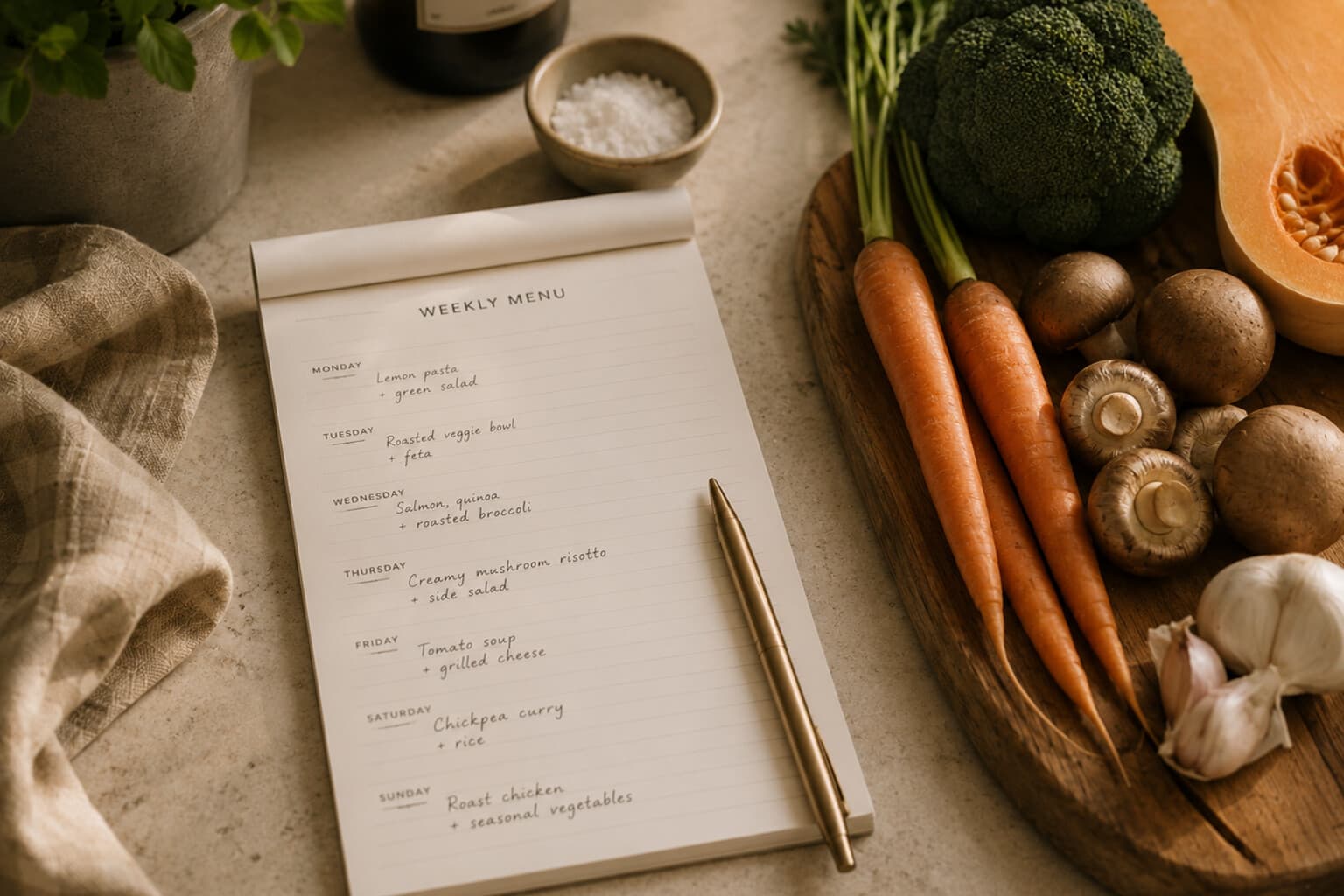
Seasonal meal planning does not need to mean creating an elaborate menu for every day.
It can simply mean paying attention to what feels suitable now. Lighter meals when the days are warm. Soups, roasted vegetables and baked dishes when evenings become cooler. Recipes that use ingredients at their best. Food that suits the actual rhythm of the week.
AI can help turn those preferences into a practical meal plan, but it needs more direction than a simple request for seven recipes.
Begin With the Week You Actually Have
Before choosing meals, look at the calendar. Identify busy evenings, days when you have more time to cook, evenings when leftovers would be useful, meals eaten outside the home, and any guests or special plans, and ingredients that need to be used.
The goal is not to create seven impressive dinners. The goal is to make eating well easier throughout the week.
Choose a Seasonal Direction
Tell AI which season you are planning for and how you want the meals to feel - fresh and light, warm and comforting, simple and rustic, suitable for warm evenings, cosy but not too heavy, inspired by early autumn, or built around spring vegetables.
This creates a more coherent plan than combining unrelated recipes.
Use Overlapping Ingredients
A useful meal plan should reduce waste and make shopping simpler. Ask AI to reuse ingredients across several meals.
For example, one bunch of herbs might be used in a pasta dish, a tray bake and a salad. Roasted vegetables might become a side dish one evening and a soup or lunch the next day. A loaf of bread might accompany dinner and later become toast or croutons.
Explicitly ask for overlapping ingredients and leftovers. Otherwise, AI may create a plan that requires a completely different shopping list for every meal.
Include Different Energy Levels
Not every evening offers the same amount of time or motivation. Create a balanced plan containing one or two meals that require almost no preparation, two simple cooked meals, one meal that creates useful leftovers, one slightly more special seasonal meal, and one flexible evening for leftovers, something from the freezer or eating out.
This rhythm is more sustainable than expecting the same level of cooking every day.
Seasonal Inspiration
Spring may include
- Asparagus
- Peas
- Fresh herbs
- Lemon
- Leafy greens
- Light pasta dishes
- Simple tarts
Summer may include
- Tomatoes
- Courgettes
- Peaches
- Berries
- Fresh cheeses
- Salads
- Grilled vegetables
Autumn may include
- Apples
- Pears
- Pumpkin
- Mushrooms
- Root vegetables
- Warm spices
- Tray bakes
Winter may include
- Cabbage
- Leeks
- Potatoes
- Citrus fruit
- Beans
- Slow-cooked dishes
- Soups and baked meals
A Few Questions First
- Does every meal suit the time available?
- Are there too many similar meals?
- Will fresh ingredients be used before they spoil?
- Are quantities realistic for the household?
- Are any ingredients unnecessarily expensive or difficult to find?
- Does the grocery list include items already at home?
- Is there enough flexibility for plans to change?
Prompts to Try
Seasonal meal planning
The Seasonal Meal Plan Prompt
A seasonal meal plan built around what you already have, your busiest evenings and one grouped grocery list.
Create a seasonal meal plan for [number] days and [number] people. The season is [season], and I would like the meals to feel [describe atmosphere]. My busiest evenings are [days]. I have more time to cook on [days]. Meals should generally take no more than [number] minutes. Please use overlapping ingredients, include at least one leftovers meal and avoid unnecessary specialist ingredients. These are the ingredients I already have: [add ingredients]. These are my preferences or dietary requirements: [add information]. Create the meal plan first. Then provide one grouped grocery list divided into produce, bakery, chilled items, pantry and other items. Ask me up to three questions before creating the plan when important information is missing.
Do not enter confidential, financial, medical or otherwise sensitive personal information into an AI tool.
From The Essy Cabinet
Explore AI for a Beautifully Organised LifePair It With
Frequently Asked Questions
How do I get AI to create a genuinely useful seasonal meal plan?
Give it more direction than a request for seven recipes. Start from the week you actually have (busy evenings, days with more time to cook, ingredients that need using), choose a seasonal direction or mood, ask explicitly for overlapping ingredients, and include meals for different energy levels rather than assuming the same effort every night.
Why does an AI meal plan sometimes need a different shopping list every night?
Because overlapping ingredients have to be requested explicitly - otherwise AI may combine unrelated recipes that each need their own separate shopping list. Asking it to reuse ingredients across meals (a bunch of herbs across three dishes, roasted vegetables becoming next day’s soup) keeps shopping and waste down.
What ingredients suit each season?
Spring leans toward asparagus, peas, fresh herbs and lemon; summer toward tomatoes, courgettes, peaches and berries; autumn toward apples, pears, pumpkin and mushrooms; and winter toward cabbage, leeks, potatoes and citrus, with more slow-cooked dishes and soups.
How do I check whether a meal plan will actually work for my week?
Ask whether every meal suits the time you actually have, whether there are too many similar meals, whether fresh ingredients will be used before they spoil, whether quantities are realistic for your household, and whether the grocery list already includes what you have at home.
These are suggestions rather than rules. Availability, budget and personal preference remain more important than creating a perfect seasonal menu.
The best meal plan is not the most ambitious one.
It is the one that makes the week easier, uses food thoughtfully and still leaves room for a meal chosen simply because it feels right for the season.
A Note on This Content
The content on Essy’s Essentials is intended for general inspiration, personal organisation and educational purposes. It does not constitute personal financial, investment, tax or legal advice. Always consider your own circumstances and seek qualified advice where appropriate. Any amounts shown are illustrative examples only, never a recommendation for what you personally should save or spend.

Written by Esther
Esther is a photographer and storyteller, and the founder of Essy's Essentials - a seasonal home for stories, rituals, recipes and everyday luxuries.
More about Esther →