Home & Living
How to Bring Amberfell Home
Amberfell is not an autumn decorating theme. It is warmer light, deeper texture, rain held at the window and rooms that make staying in feel like the better plan.
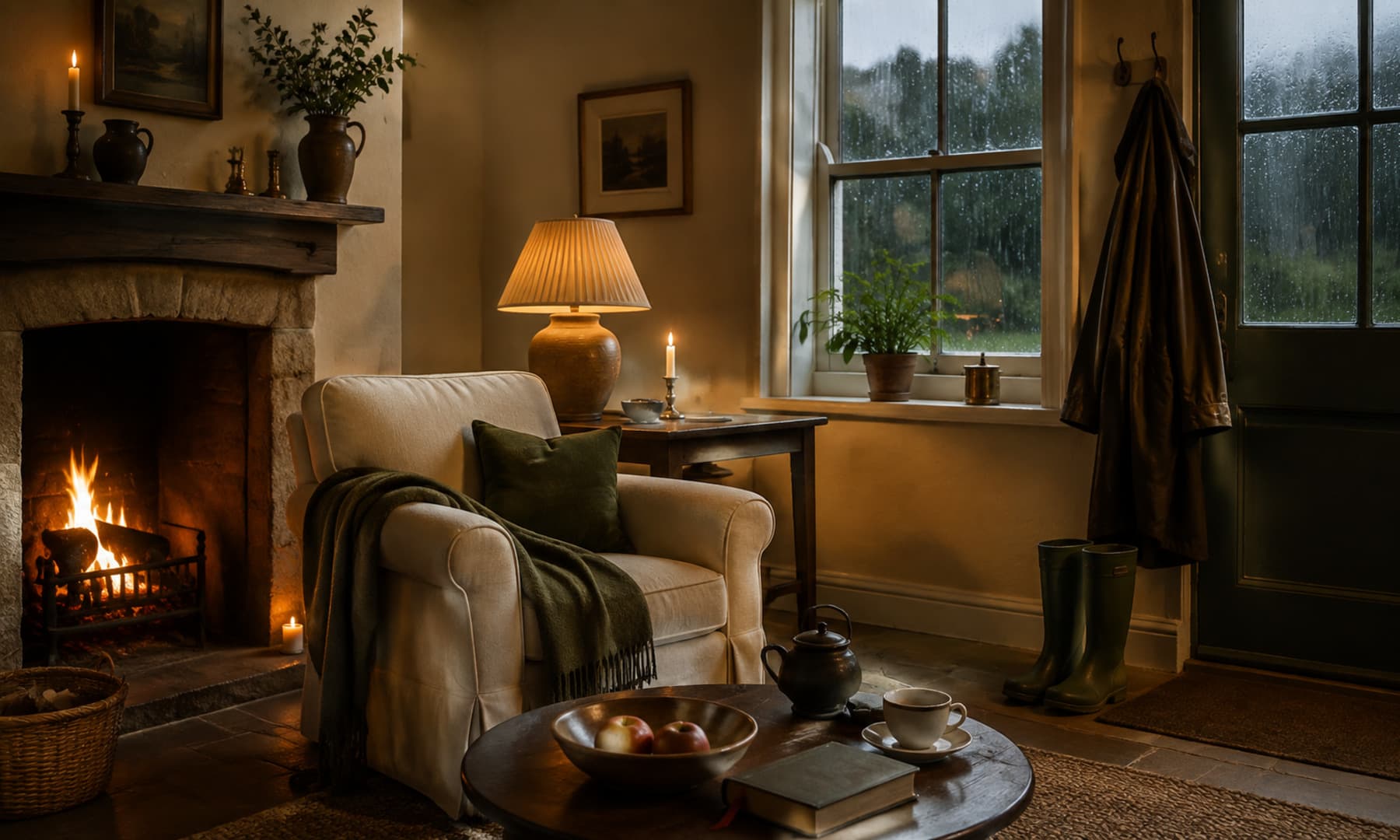
“Amberfell begins when the room stops performing for the season and starts making the season comfortable.”
Amberfell should not arrive in a house as a delivery of orange cushions, artificial leaves and pumpkins lined up on every available surface.
It arrives through use.
A lamp switched on while there is still grey daylight in the room. A wool throw moved to the chair where someone actually reads. Wet boots given a proper place at the door. The deeper mug brought to the front of the cupboard. Curtains that frame the rain rather than shutting the afternoon away.
The feeling is warmer and fuller than summer, but never crowded. It is comfortable without becoming sleepy, layered without becoming dark and seasonal without needing to announce autumn by name.
Begin with comfort, not decoration
Before adding anything, notice where the room becomes less comfortable as the weather changes.
Which chair feels exposed once the window turns cold? Where is the light too bright after sunset? Which floor asks for something softer underfoot? Where does a wet coat land? Which room becomes abandoned because the useful lamp is on the other side?
Amberfell begins by removing those small frictions.
Move the chair. Bring the lamp closer. Put the throw within reach. Clear the route from the door. Turn the side table so it can hold a book and a cup without either balancing precariously.
A room feels more luxurious when it supports the moment before anyone has to ask it to.
Bring the light lower
Autumn does not require a darker home. It requires a gentler relationship between light and shadow.
Switch on lamps before the room has become fully dim. Use several lower sources where possible: a table lamp near the sofa, a reading light beside a chair, a small pool of light in the hallway. Let the ceiling light remain practical rather than atmospheric.
Warm bulbs make wood, wool and skin feel richer, but warmth should not become orange. The room still needs enough clear light to read, cook and move safely.
Think of the window as one layer of light. Grey daylight, rain on glass and a lamp reflected after dusk create depth that no collection of seasonal objects can reproduce.
For placement, temperature and the balance between task and atmosphere, continue with The Layered Lighting Guide.
Let texture carry the season
Texture changes the temperature of a room before colour does.
Bring forward wool, brushed cotton, corduroy, bouclé, velvet used sparingly, heavier linen and ceramics with a matte or softly speckled surface. Keep a smooth element beside them - polished wood, smoked glass, brass or a plain glazed cup - so the room does not become visually heavy.
Layer according to touch, not quantity.
One substantial throw is more convincing than several small blankets distributed for effect. A wool cushion beside a quiet linen one creates more depth than five cushions in competing autumn colours. Curtains may become fuller, but they should still open easily and allow the window to remain part of the room.
The aim is not to make every surface soft.
It is to place softness where the body meets the home.
Deepen the palette without making the room dark
Amberfell rests on cream, oat, mushroom and warm taupe. These lighter tones keep the rooms open when the days become shorter.
Depth comes through tobacco brown, walnut, muted olive, forest green, oxblood used as a pinprick and the softened black of iron or a dark frame. Amber belongs in reflected light, glass and polished wood rather than across every textile.
Use colour in unequal amounts.
Let cream and mushroom form the largest field. Ground it with wood and one deeper green or brown. Add brass or bronze as a small warm glint. If a rust or auburn tone already exists in a rug, artwork or old book, allow that to carry the traditional autumn note.
There is no need to add orange simply because the calendar has changed.
Make the window part of the room
In summer, an open window extends the room. In Amberfell, the window becomes a reason to stay close to it.
Move a chair or small table where the weather can be seen. Keep the sill quiet enough for rain and changing light to remain visible. If curtains frame the view, let them fall naturally rather than covering every edge of glass.
A room can feel protected without feeling closed off.
Watch the rain while the room remains warm. Leave one lamp reflected in the pane. Put the book beside the chair before you intend to read it. The outside weather and inside comfort should belong to the same composition.
Do not manufacture the effect with artificial leaves or permanent droplets. The real season will provide enough variation if the window is allowed to show it.
Use wood and metal as the grounding layer
Dark or medium-toned wood gives pale upholstery and linen somewhere to settle. It may appear in a side table, tray, frame, chair arm or the surface of a well-used dining table.
The finish does not need to match from room to room. Repeated warmth matters more than identical stain.
Brass, bronze and blackened metal work best as small points of structure: a lamp stem, handle, tray edge, candlestick or frame. Their role is to catch light and define shape, not to become an autumn metallic theme.
If the room already contains warm wood and one aged metal, begin there. Clean it, move it into better light and let it be noticed again.
Keep useful warmth visible
Amberfell looks lived in because the objects that create comfort are not hidden until a photograph or guest requires them.
Leave the throw folded over the arm of the chair. Keep the book where it will be opened. Bring the everyday mug forward. Place the slippers where cold feet actually look for them. Let a small tray hold the cup, bookmark and hand cream that belong to the evening.
This is not permission for every practical object to remain out.
Choose the things that support the next few hours. Put away what belongs to another task, another room or another season.
Useful objects create a story when they are ready for use. Unresolved objects create noise.
Create one place that makes staying in easy
Do not try to make the whole house feel like Amberfell at once.
Choose one place.
A reading chair near the window. One end of the sofa with a side table and proper lamp. A corner of the kitchen where coffee can be drunk while something bakes. The bed on a Sunday morning with a stable tray and an extra pillow.
Give that place everything it needs and very little it does not.
Light within reach. Somewhere stable for a drink. One warm textile. The book, newspaper or small task that belongs there. Enough empty space to sit down without moving a decorative arrangement first.
The quiet luxury is not the chair or lamp itself.
It is that the room has already made staying possible.
Let autumn enter naturally
The best seasonal details have a life beyond decoration.
A bowl of pears that will be eaten. A branch gathered after pruning. A natural wreath that can weather at the front door. A few leaves seen through the window. One small squash used later in the kitchen.
Use one or two, not all of them.
Avoid artificial leaf garlands, staged piles of firewood without a working fire, bowls filled permanently with decorative acorns and multiple pumpkins used only to fill empty space.
Empty space is not a seasonal problem.
Often it is what allows the one natural detail to feel generous rather than themed.
Allow signs of the day to remain
Amberfell should not look as though everyone left the room just before the photograph was taken.
A cup may remain beside the book. The blanket may carry the fold of the person who used it. A newspaper may wait on the table. The kitchen light may be on because someone is still there.
Keep the signs that belong to the current moment.
Clear packaging, abandoned chargers, yesterday's post and objects waiting to be taken elsewhere. Leave the half-read book, not the full contents of the bag beside it.
Comfort becomes convincing when a room shows evidence of attention rather than evidence of styling.
The Amberfell Home Edit
This edit begins with what the house already owns.
01 - One lower light. Move or switch on one lamp before dusk. Let it create a useful pool of light rather than illuminate the room indiscriminately. Amberfell moment: the lamp appears in the rainy window before the evening has fully arrived.
02 - One substantial textile. Bring forward the wool throw, corduroy cushion or heavier linen that changes how the room feels against the body. Amberfell moment: leave it folded where it can be taken without first disturbing the room.
03 - One deeper material. Use existing walnut, dark wood, smoked glass, bronze or stone to ground the lighter palette. Amberfell moment: move it into the edge of the lamplight and let the surface do the work.
04 - One prepared place. Choose the chair, sofa end, kitchen corner or side of the bed that will make staying in easiest. Amberfell moment: put the book and stable place for a drink there before they are needed.
05 - One natural seasonal sign. Use pears, a branch, a wreath or one small squash - something real, restrained and allowed to change. Amberfell moment: let it be useful, weather naturally or disappear when its moment has passed.
06 - One surface left quiet. Clear the coffee table, windowsill, bedside table or kitchen corner enough for light and texture to become visible. Amberfell moment: stop before the empty space asks to be filled again.
Translate Amberfell room by room
At the entrance
- Keep the route dry, clear and properly lit.
- Give current coats, umbrellas and wet footwear one dependable place.
- Use one natural wreath or branch if wanted; do not crowd the step.
- Begin with The Autumn Doorstep Ritual before adding anything decorative.
In the kitchen
- Switch on one warm lamp before the window turns fully dark.
- Keep a wooden board, stoneware mug and folded cloth where they are genuinely used.
- Let pears, apples, bread or a cooling bake provide the seasonal still life.
- Leave enough counter free for cooking; abundance should come from food, not props.
In the living room
- Move one seat closer to useful light and a stable surface.
- Combine one substantial warm textile with quieter existing upholstery.
- Ground pale tones with wood, smoked glass or one dark frame.
- Keep the window and at least one surface visually calm.
In the bedroom
- Add warmth through the layer nearest the body before adding decorative cushions.
- Keep the palette quiet enough for morning light to remain visible.
- Place a book, water and one lamp within easy reach.
- Continue with The Autumn Bed, Properly Lived In for the full room edit.
In the bathroom
- Bring forward one generously sized towel and the richer body care already in use.
- Add a small wooden, stone or bronze-toned element if it already belongs there.
- Keep surfaces clear enough for the room to feel warm rather than visually close.
- Let steam, texture and good light create comfort without spa clichés.
What Amberfell is not
Amberfell is not an orange room assembled for three months of the year.
It is not a mantel covered with pumpkins, candles and artificial leaves. It is not a dark filter placed over every corner. It is not a shopping list of blankets, mugs and seasonal signs. It is not clutter renamed as cosiness.
- No Halloween imagery.
- No pumpkin overload.
- No artificial leaves or permanent seasonal garlands.
- No room made too dark to use comfortably.
- No new object without a purpose or a proper place.
- No covering every surface in the name of warmth.
- No saving the comfortable chair, good glass or best blanket only for guests.
A ten-minute Amberfell reset
The room does not need to be redecorated. It only needs to feel ready for the weather and the next few hours.
- Clear the route from the door to the room.
- Put away three objects that belong elsewhere.
- Switch off the brightest unnecessary light.
- Switch on one lower lamp.
- Bring one warm textile within reach.
- Place a book and a stable spot for a drink where you will sit.
- Leave one surface almost empty.
Read Also
Amberfell is not something the room wears.
It is the way the room receives you when the rain begins.

Written by Esther
Esther is a photographer and storyteller, and the founder of Essy's Essentials - a seasonal home for stories, rituals, recipes and everyday luxuries.
·
More about Esther →