HALLOWEEN AT AMBERFELL · DECORATING
The Grown-Up Guide to Halloween Decorating
How to make Halloween feel atmospheric, theatrical and just a little unhinged — without making your house look ridiculous.
I have a slight problem with the phrase tasteful Halloween.
It tends to imply that the grown-up way to decorate for Halloween is to remove almost everything that makes Halloween fun.
One tasteful pumpkin. A black candle. Perhaps a branch, if we’re feeling particularly reckless.
I disagree.
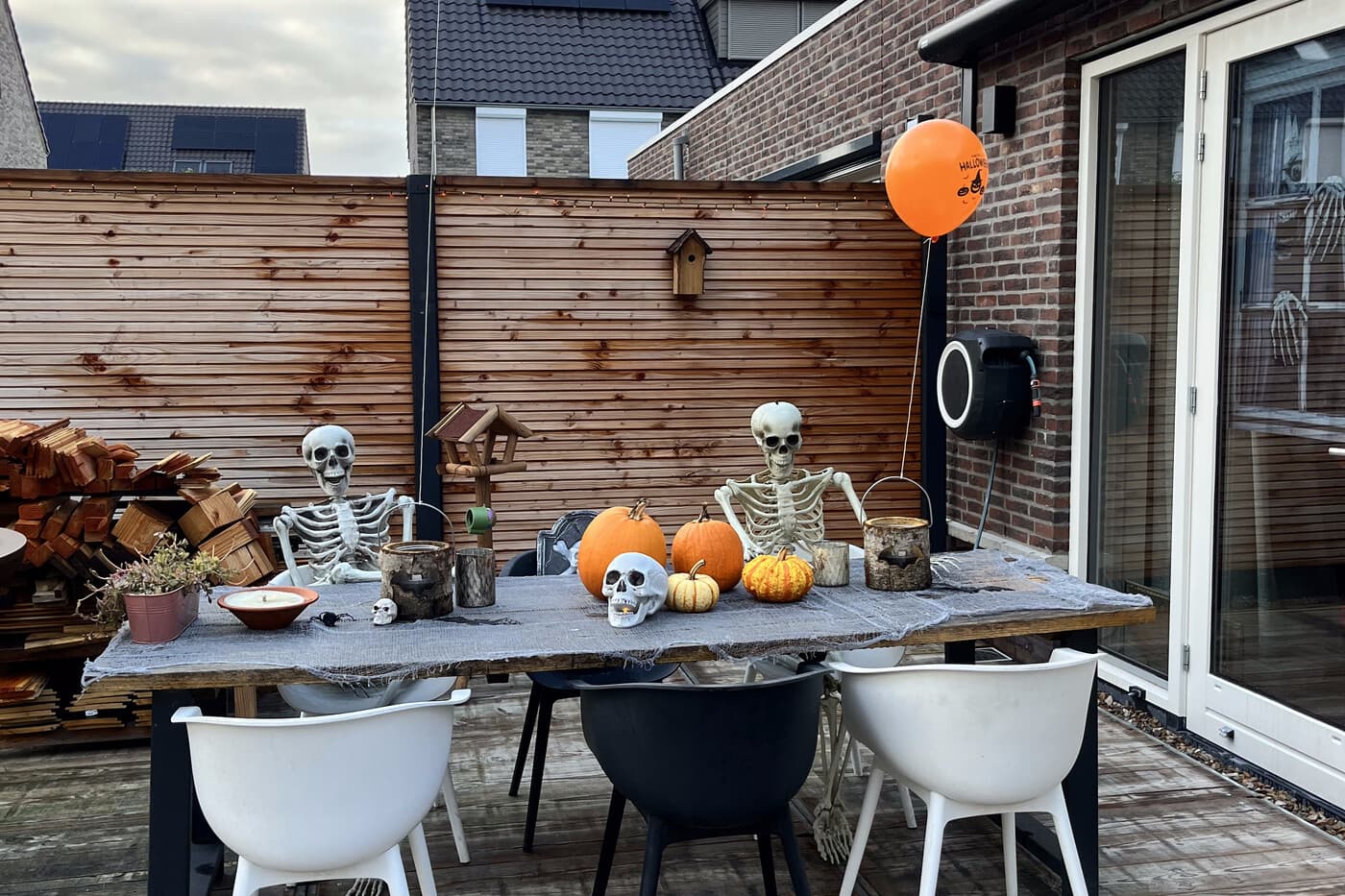
At our house, there are skeletons. There are cobwebs. There is a fog machine. Things move when people aren’t expecting them to. By the time Halloween actually arrives, parts of the garden look as though somebody has made a series of increasingly questionable decisions after dark.
And I love it.
The trick isn’t to make Halloween smaller.
It’s to make it feel intentional.
After several years of turning our home and garden into our own slightly ridiculous October world, these are the rules I keep coming back to.
01
Start With the Lights
Before the skeletons, before the cobwebs, before anything starts moving unexpectedly: sort out the light.
Halloween looks infinitely better when you stop trying to light the entire space.
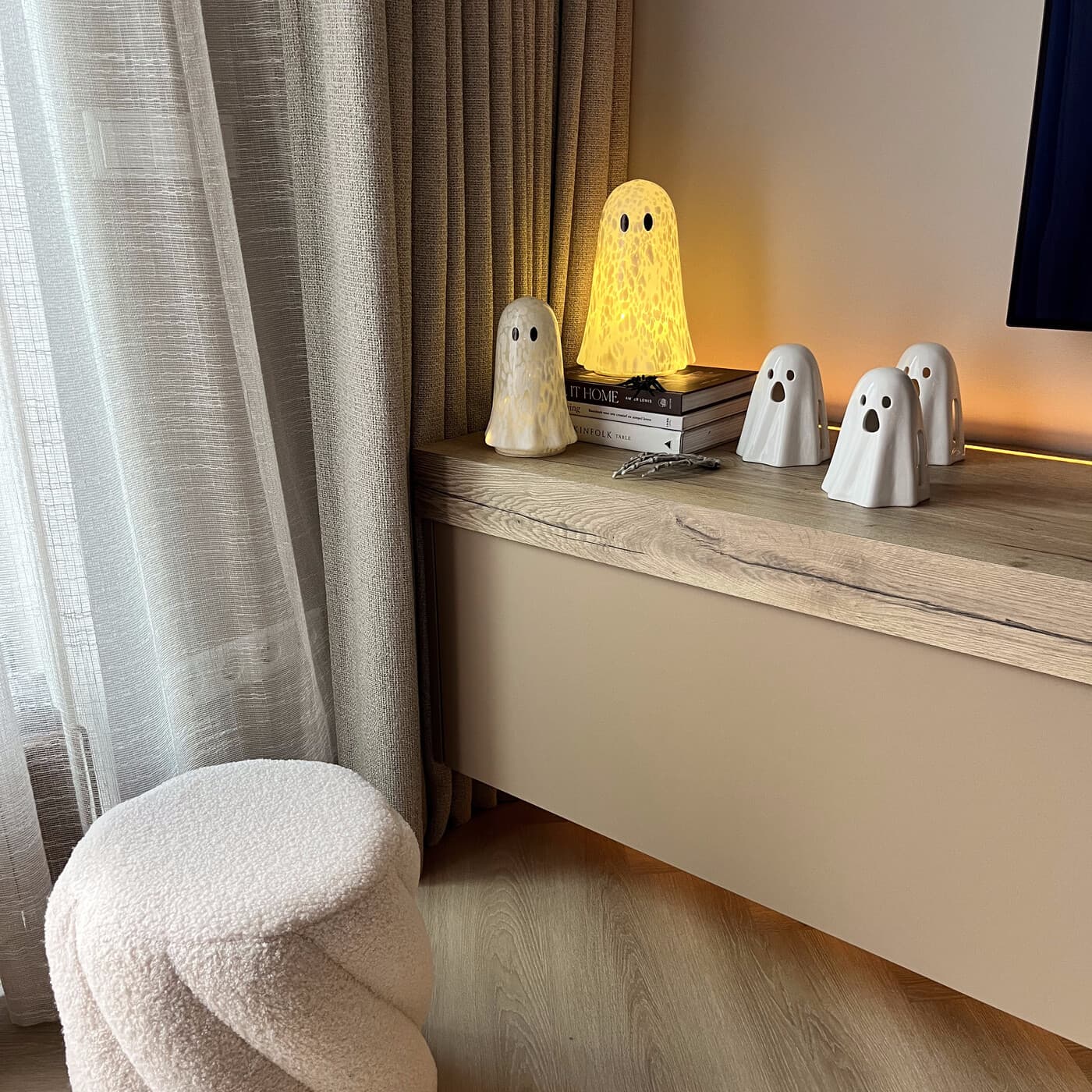
We use small pools of warm light instead — candles on the table, low lamps, strings of warm bulbs outside and darkness deliberately left between them.
That darkness is doing half the decorating for you.
THE RULE
Light what you want people to notice. Let the rest disappear.
02
Pick a Palette Before You Pick a Skeleton
Halloween shops are very good at convincing you that black, bright orange, purple, green and flashing blue should all live happily together.
They should not.
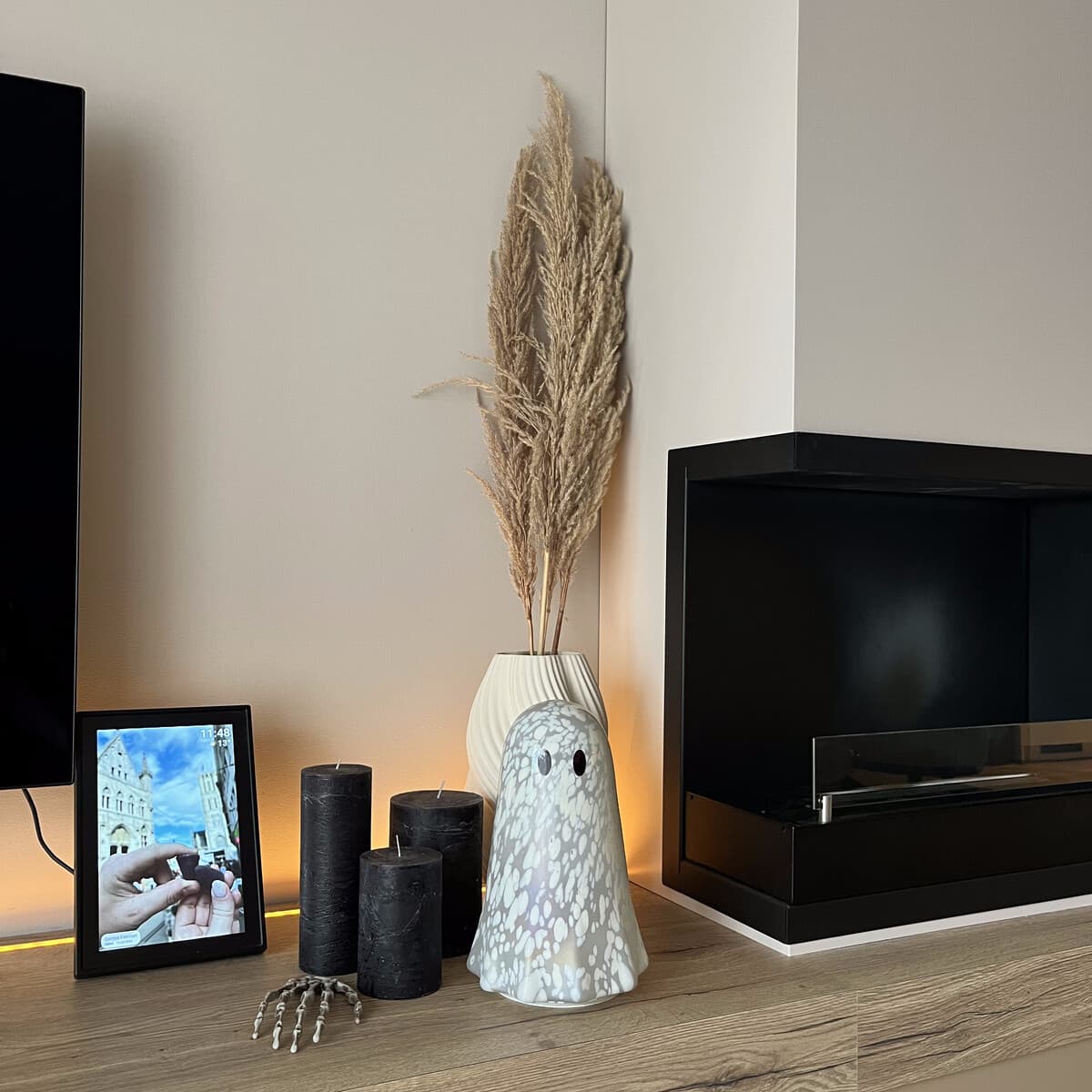
Our starting point is much closer to the house itself: black, old gold, candlelight, warm wood, bone, smoke and the muted orange of actual pumpkins.
Once that palette is established, even something objectively ridiculous — such as a full-sized skeleton at dinner — somehow starts behaving itself.
THE AMBERFELL PALETTE
Black · Bone · Old Gold · Warm Wood · Smoke · Pumpkin · Candlelight
Not because Halloween needs to be neutral.
Because giving all the nonsense the same visual language is what makes it look intentional.
03
Use Fewer Things. Make Them Bigger.
Twenty-seven small Halloween decorations scattered around a room usually look like twenty-seven things you need to put away.
Three larger moments look like a decision.
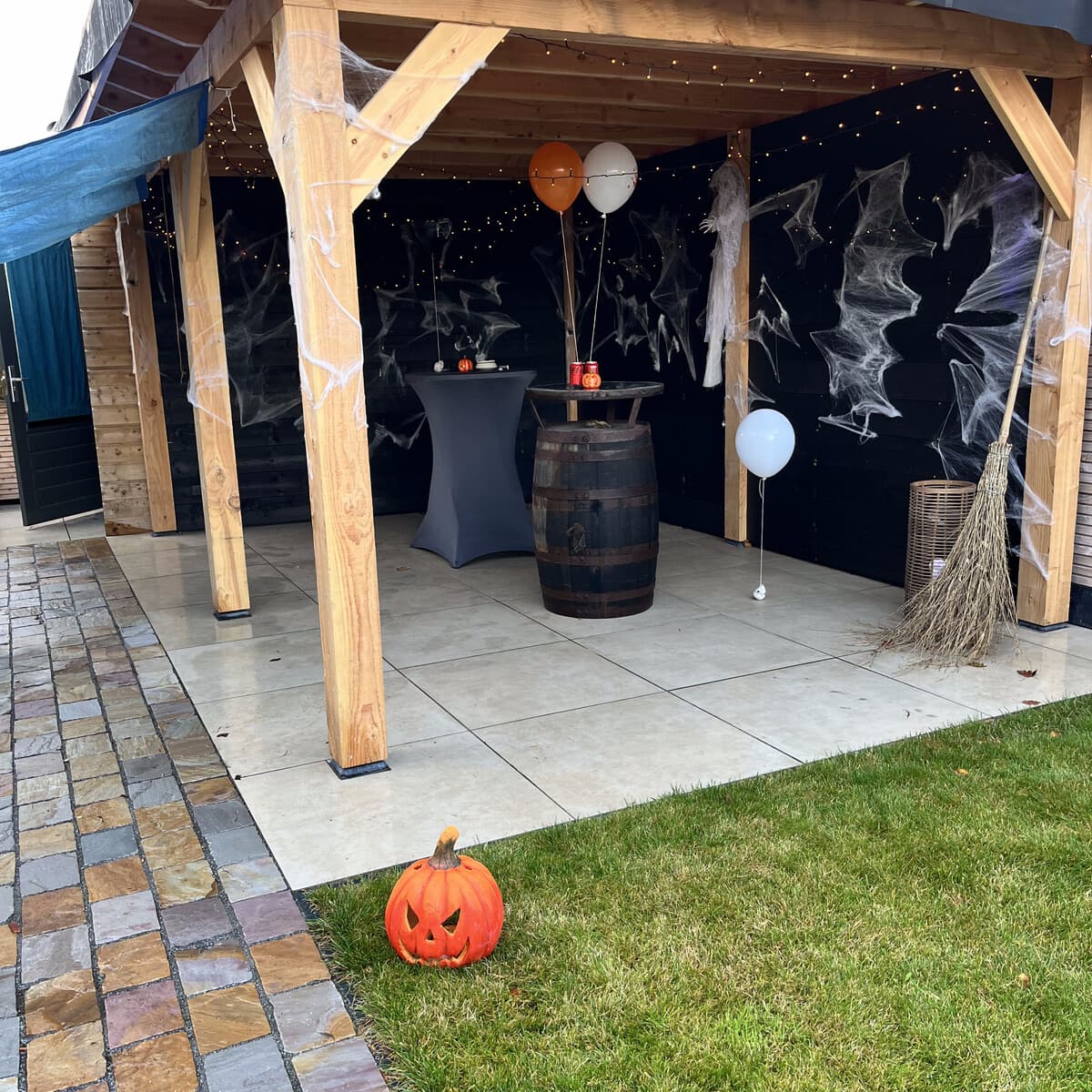
I would rather have a skeleton sitting properly at the table, one enormous stretch of cobweb over the pergola and a single ridiculous moving creature in the garden than a tiny ghost on every available surface.
Choose the places people naturally notice.
- The entrance.
- The table.
- The place everyone gathers outside.
- The corner they only discover later.
Then make those moments count.
THE RULE
Build scenes, not collections.
04
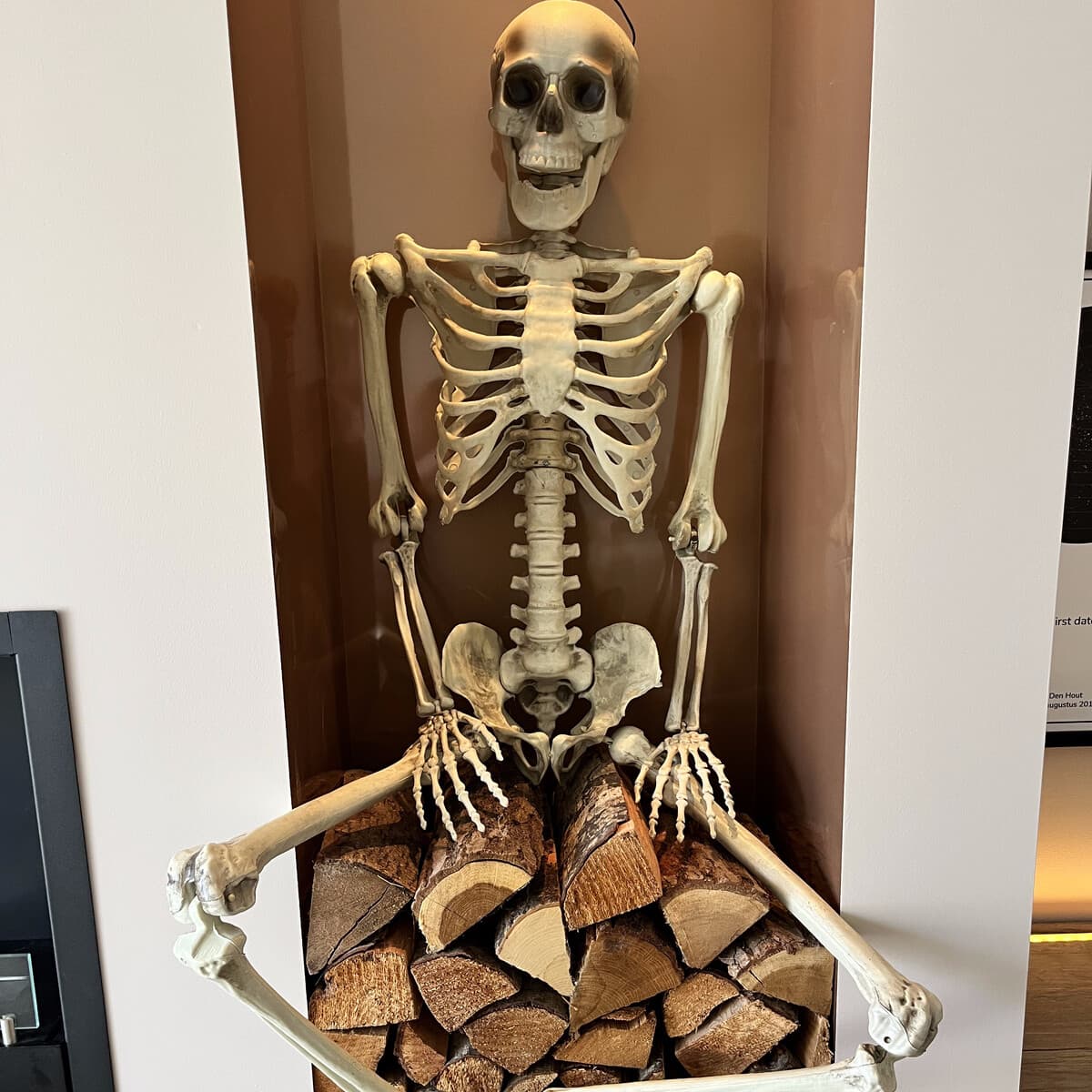
The Skeleton Is Not the Problem
Skeletons aren’t tacky.
Badly placed skeletons are tacky.
Give one a job.
Sit it at the table. Let it wait beside the firewood. Put one somewhere guests only notice after they’ve been in the garden for ten minutes.
The joke becomes much better when the skeleton appears to have been there before everyone else arrived.
And this is where I think grown-up Halloween sometimes gets unnecessarily serious.
You are allowed to make your house beautiful and put a skeleton at the dinner table.
Both things can be true.
05
Cobwebs Need Something to Cling To
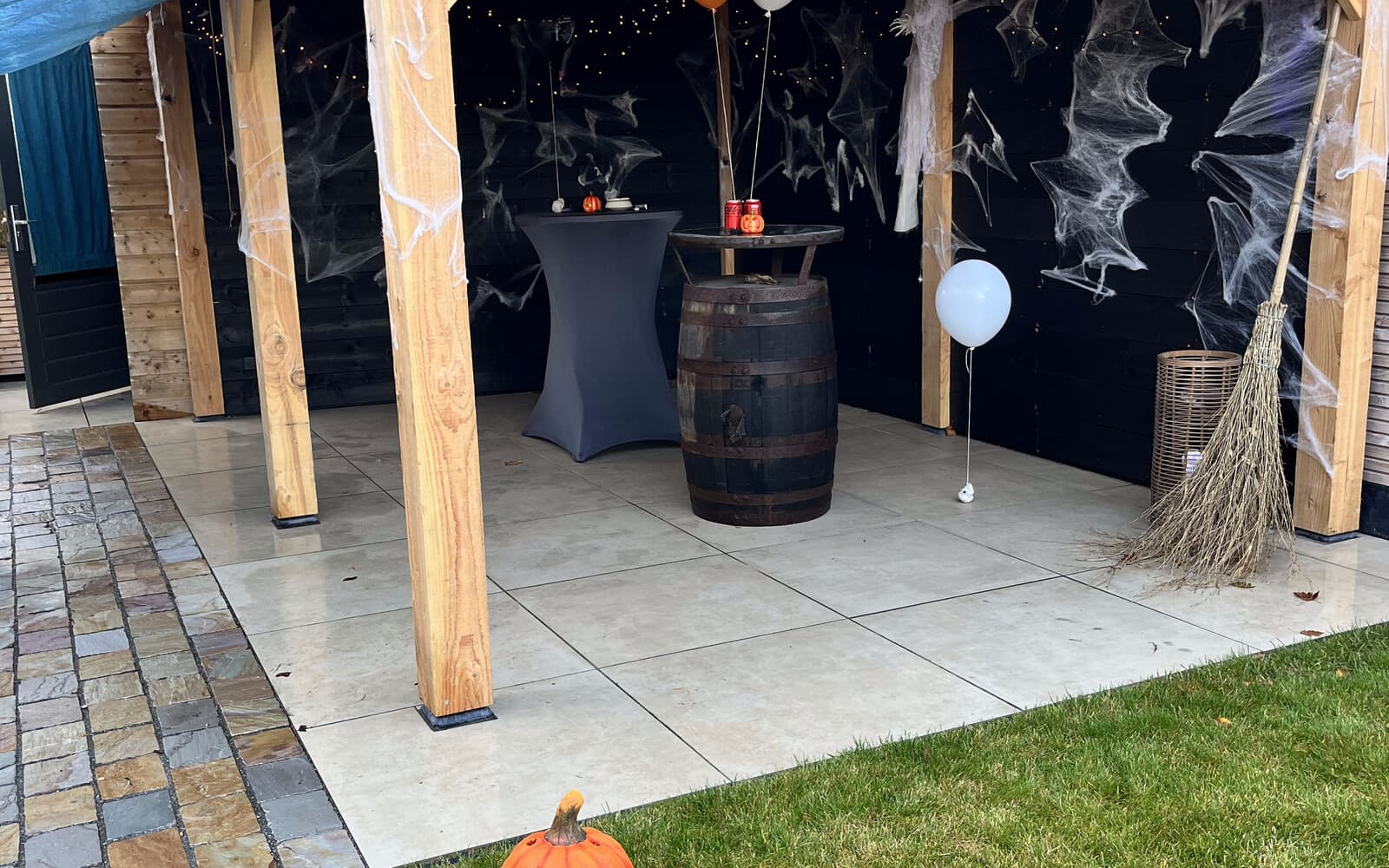
Fake cobweb is one of those Halloween materials that can look either wonderfully atmospheric or as though someone has attacked the garden with a bag of synthetic loft insulation.
The difference is restraint.
Stretch it thin.
Much thinner than you think.
Let it catch on beams, corners, branches and objects that a real web might conceivably find interesting.
You want strands and pockets of web, not an entire garden wrapped in a white duvet.
And then stop.
Preferably slightly before you think you’re finished.
ESTHER’S NOTE
You will still be finding pieces of it in November. This is simply the price of art.
06
Let One Thing Move
Static decoration establishes the scene.
Movement changes it.
We use animatronics sparingly because one thing moving unexpectedly is much more effective than an entire garden performing at once.
Place it somewhere it belongs in the scene rather than somewhere it can simply jump at people.
The best moment isn’t necessarily the scream.
It’s the two seconds beforehand when someone looks at it and thinks:
Was that moving before?
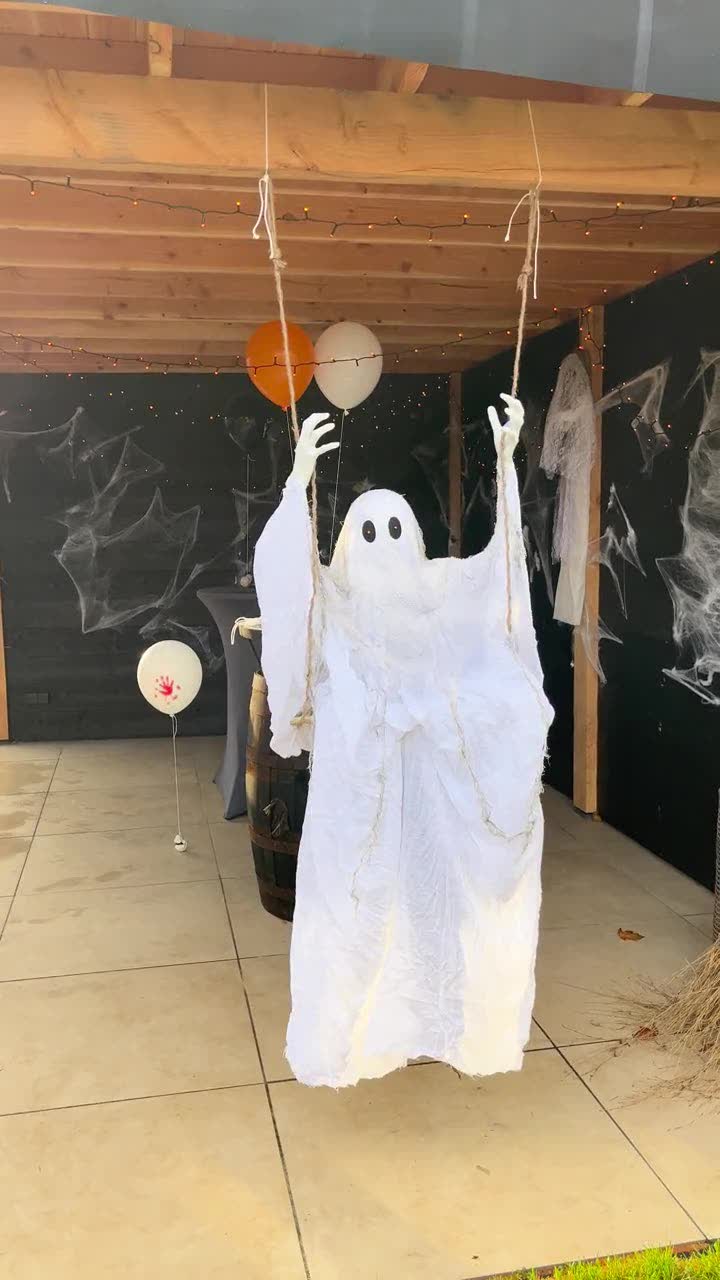
One of ours, waiting under the pergola.
07
Make the Table Part of the Decor
The table shouldn’t suddenly feel as though it belongs to a completely different party.
Bring the same palette through.
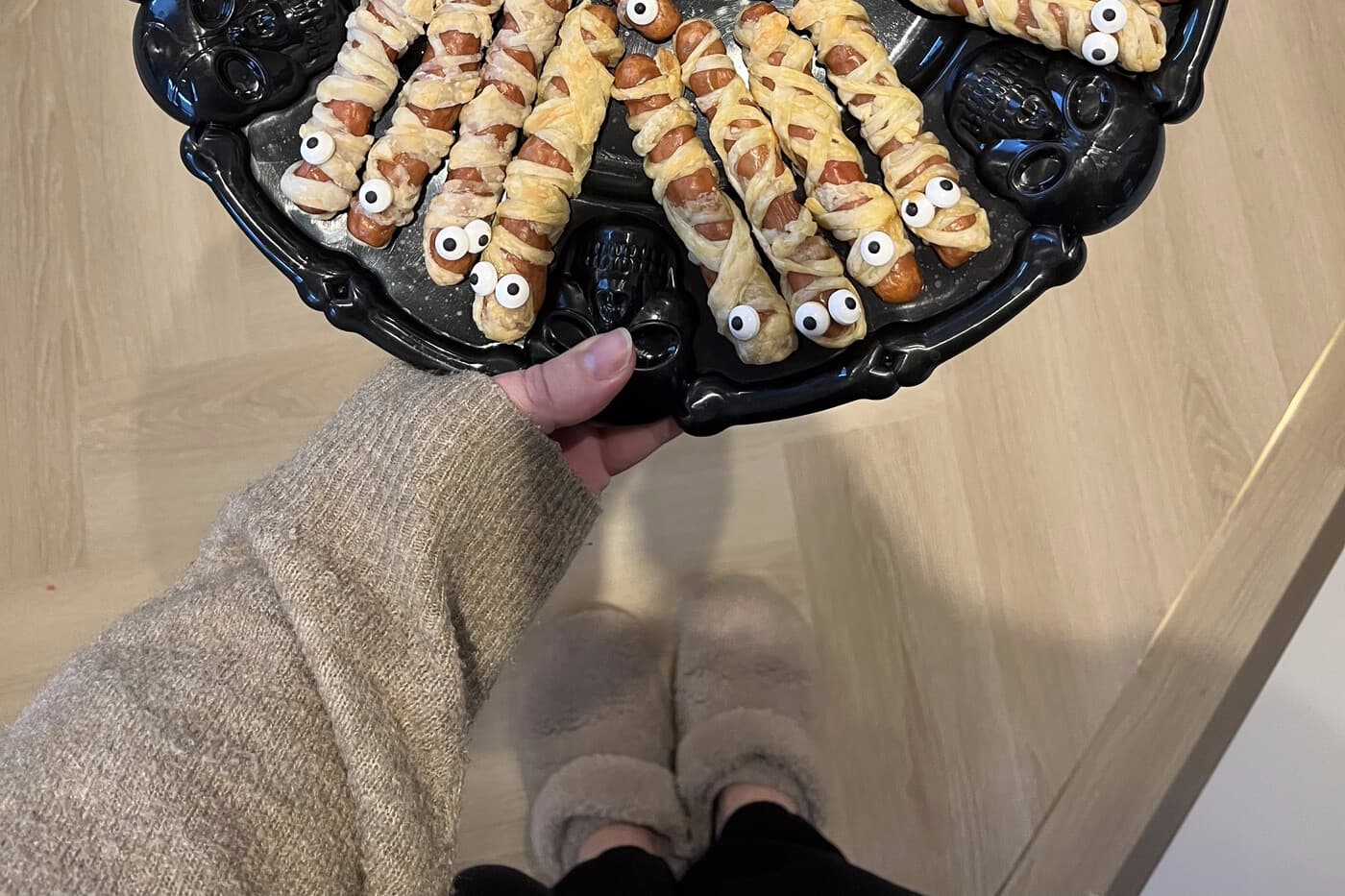
Black candles. Old glassware. Dark serving boards. Warm metal. Linen or paper in colours that already exist elsewhere in the room.
Then let the food remain food.
Nobody needs an olive pretending to be an eyeball unless they genuinely enjoy making olives pretend to be eyeballs.
A few theatrical details are enough.
The atmosphere should tell people it’s Halloween before the sausage does.
ACTUALLY HAVING PEOPLE OVER?
Halloween Party at Amberfell
The fog machine is already out.
Come to the Party →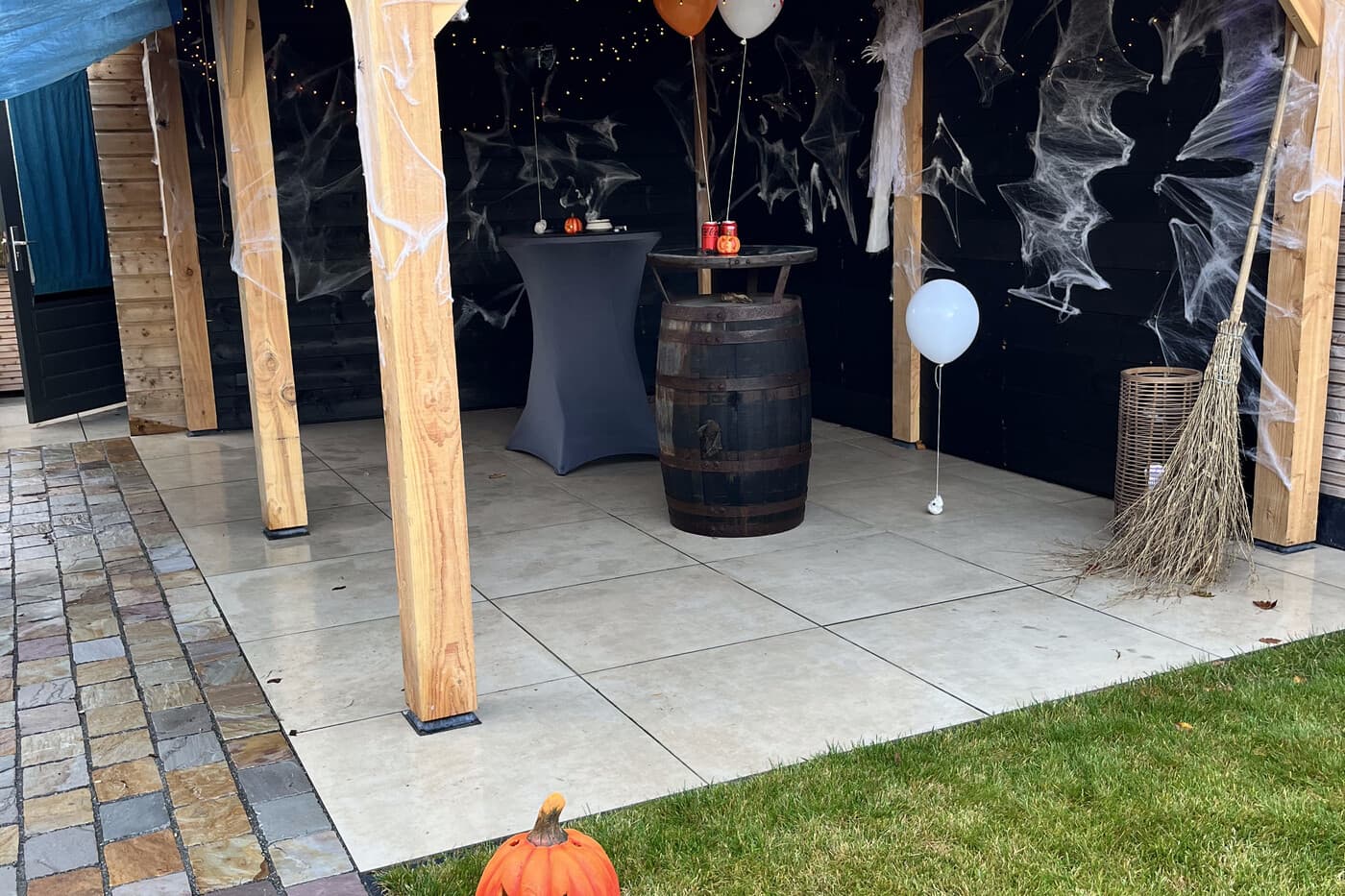
08
Don’t Decorate Everywhere
The spaces you leave alone matter.
If every surface, doorway and corner contains a Halloween moment, your eye stops noticing any of them.
We concentrate ours where people naturally gather or pass: the entrance, the table, the pergola, the garden and a few quieter corners.
Somewhere between those moments, the house gets to breathe.
It also makes the decorated spaces feel more theatrical.
You leave one world.
Walk a few steps.
And enter another.
That little pause is useful.
09
Save Something for After Dark
This is perhaps my favourite rule.
Don’t show everything at four in the afternoon.
Some decorations should only really exist once the candles are lit, the fog machine is on and the garden beyond the windows has disappeared.
A dark corner that looks slightly underwhelming in daylight can become the best part of the garden at nine o’clock.
A skeleton becomes stranger.
Cobweb catches the light.
Fog hides the edges of things.
And anything that moves becomes considerably less funny.
Halloween doesn’t need to look spectacular in daylight.
It needs to feel spectacular when people arrive.
The Amberfell Rule
If there is one rule behind all of it, it is this:
Atmosphere first. Halloween second.
Not because Halloween needs toning down.
Quite the opposite.
Once the atmosphere is right, you can get away with an extraordinary amount of nonsense.
Including, apparently, several skeletons, a fog machine and something hanging from the pergola that moves by itself.
Which is exactly how I like it.
Continue Into Halloween at Amberfell
Halloween doesn’t end with the decorating.